
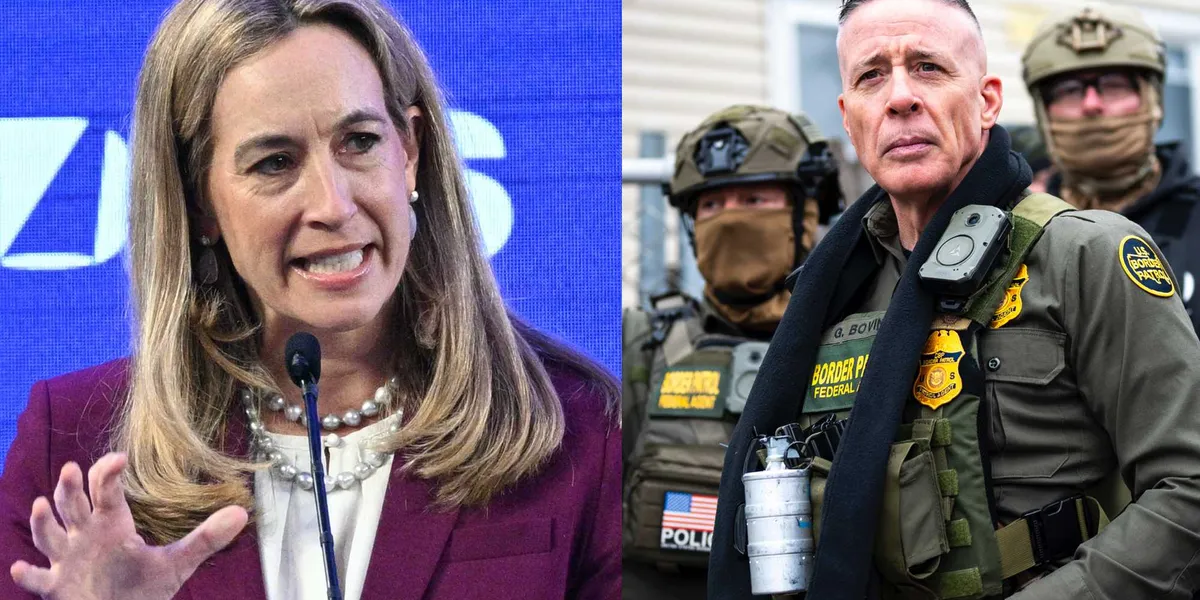
Greg Bovino is at the center of a fresh political clash after leveling a sharp accusation at New Jersey governor Mikie Sherrill, saying her rhetoric is helping stir the kind of anger that can spill into real-world trouble. The back-and-forth lands in the middle of the immigration fight, where state leaders, federal officials, and campaign-season politics keep colliding in a loud, messy, and highly charged way.
Bovino’s criticism taps into a familiar pressure point in American politics: the line between hardball messaging and language that pushes people too far. When immigration becomes the battlefield, every statement gets amplified, every jab gets replayed, and every accusation instantly gets pulled into the next news cycle.
Sherrill, a prominent voice in New Jersey politics, has been part of the broader Democratic response to federal immigration enforcement, and that has made her a target for tough pushback. Bovino’s comments frame the dispute not just as a policy disagreement, but as a question about the tone leaders use when tensions are already running hot.
The issue matters because immigration debates rarely stay neatly inside committee rooms or press conferences. They spill into neighborhoods, workplaces, and campaign rallies, where frustration can build fast and political language can take on a life of its own.
That is what gives Bovino’s accusation its punch. By suggesting Sherrill’s approach is feeding political violence, he is putting the spotlight on the responsibility public figures carry when they speak to angry crowds and highly divided audiences. It is the kind of charge that can reshape the conversation in an instant.
New Jersey has become a familiar stage for this kind of conflict because the state sits right in the middle of national arguments over border security, sanctuary policies, and how aggressively immigration laws should be enforced. Local politics may look like local politics on the surface, but the stakes keep tying back to Washington.
For Republicans, the argument is straightforward. Leaders should cool the rhetoric, back law enforcement, and stop treating immigration enforcement like a political stunt. From that angle, Bovino’s comments land as a warning about what happens when officials fan the flames instead of lowering the temperature.
Democrats, on the other hand, often argue that strong criticism of enforcement tactics is fair game, especially when they believe those tactics are too harsh or poorly aimed. That clash keeps the fight alive, because both sides see themselves as defending public safety while accusing the other of reckless language.
What makes the moment more volatile is the public mood. Voters are tired of chaos, but they are also deeply split over immigration, and that split makes every headline feel bigger than it should. A single accusation can turn into a proxy war for broader frustrations about crime, borders, trust, and control.
Even when the facts of a policy dispute are complicated, the politics around it often turn simple and brutal. One side says enforcement is necessary and overdue, the other says it is harmful or politically driven, and then the fight moves from policy details to personal blame. That is where the temperature rises and the room for nuance disappears.
Bovino’s attack on Sherrill also reflects how quickly immigration has become tied to election messaging. Candidates and officials know the issue can motivate supporters, but they also know it can ignite outrage that is hard to contain once it spreads across social media and cable news.
In that kind of environment, words do more than score points. They shape how people see authority, fairness, and the limits of political combat, which is why accusations of fomenting violence hit so hard and linger so long. The fight in New Jersey is just one more sign that immigration is no longer only a policy debate, but a test of who is willing to turn down the heat before something breaks.
