
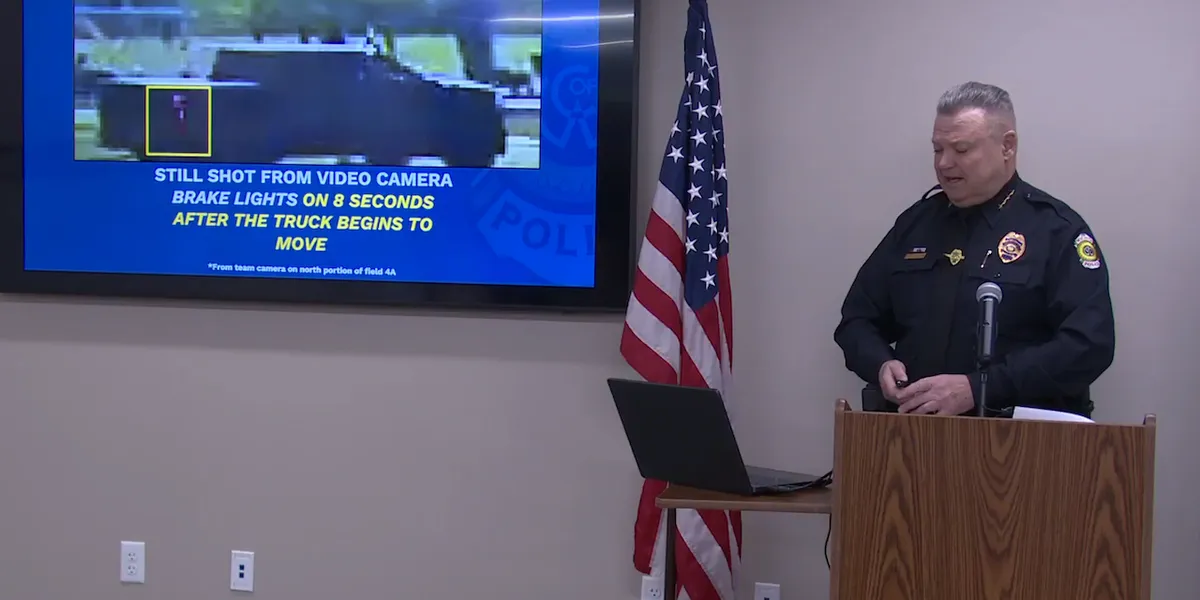
A Wichita case tied to a deadly crash on a soccer field has ended without criminal charges, after investigators and prosecutors reviewed what happened and decided the driver would not be charged. The decision comes after a horrifying scene that left a 6-year-old boy and a 35-year-old man dead, and it has drawn intense attention because the driver was the mother of a child who had been on the field. The ruling puts the focus on evidence, intent, and the tough line prosecutors have to walk in tragic accidents.
The fatal crash unfolded in a place where families expected safety, not disaster. A truck struck people on a soccer field in Wichita, turning a routine day into a scene of panic and grief, with two lives lost and others left to absorb the shock. Cases like this often raise immediate questions about negligence, responsibility, and whether a bad outcome should automatically mean a crime occurred.
In this case, the district attorney’s office said no charges will be filed against the mother behind the wheel. That decision suggests prosecutors did not find enough proof to support a criminal case, even with the terrible outcome and the deep pain left behind. The law can be blunt that way, demanding more than outrage and heartbreak before it calls something a crime.
Still, the human toll is impossible to miss. The dead included a young boy and an adult man, both of whom were caught in a moment that should never have happened. For the families involved, the legal answer may feel far too small compared with the loss they are carrying.
Criminal cases tied to fatal accidents usually turn on a narrow set of facts. Prosecutors have to look at whether the driver acted recklessly, whether there was impairment, whether a mechanical issue played a role, or whether the crash was a tragic mistake without the kind of conduct the law punishes. If those elements are not there, the system may have no criminal path to follow, no matter how devastating the result.
That does not make the outcome easy to accept. People often hear “no charges” and think it means no one cares, but the reality is messier than that. Prosecutors can acknowledge the grief, the chaos, and the pain while still deciding that the evidence does not clear the legal bar for a conviction.
For the community, the case leaves behind a heavy mix of anger, sadness, and unanswered questions. Soccer fields are supposed to be places of movement, noise, and families gathered along the sidelines, not the backdrop for a fatal crash. When tragedy hits in a setting like that, it changes how people see the space long after the scene is cleared.
The decision also shows how hard it is for public officials to handle incidents that sit right at the edge between accident and crime. Some events are so awful that they demand a full investigation, but not every death leads to charges. The law, for all its limits, still depends on proof, not just pain.
As the case settles into its legal conclusion, the personal loss remains raw. The child’s age alone makes the story hit hard, and the death of a 35-year-old man adds another layer of sorrow to an already brutal day. Even without criminal charges, the crash will not fade quickly for the people who lived through it or for a city trying to make sense of how it happened.
