
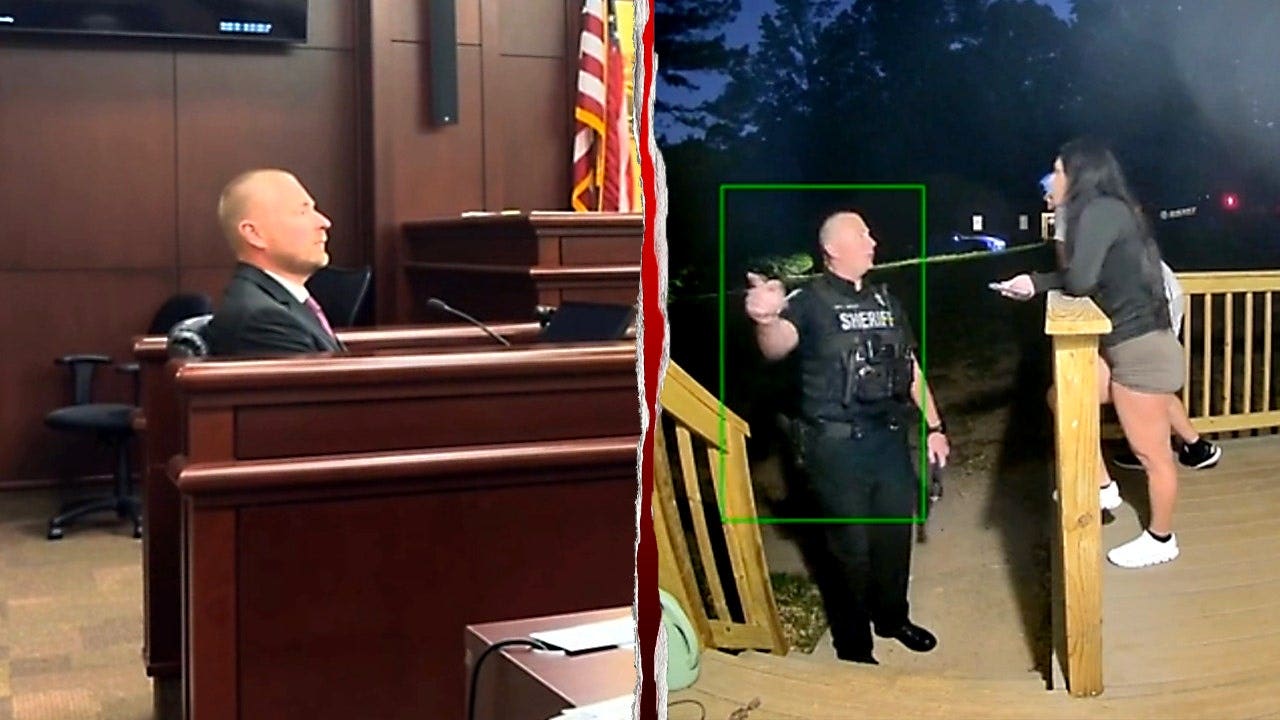
What starts as a routine police visit can spiral into something far uglier when power, technology, and online harassment collide. In this Georgia case, a mother says a deputy crossed lines in the field, then crossed them again online, turning a family dispute into a months-long ordeal that dragged in license plate cameras, fake social accounts, and AI-altered images. The result left a child scared, a mother fighting for protection, and a sheriff’s office trying to clean up the wreckage after the damage was already done.
Natasha Lopez says the trouble began when then-Cherokee County Sheriff’s Corporal Charles Mills showed up outside her home while looking into her adult son. She says deputies had her family outside, demanded they leave, and never produced the search warrant she believed was required before entering the house. Lopez says she questioned the move immediately and ended up arrested in front of her children, who watched the scene unfold from start to finish.
According to Lopez, things only got stranger after she publicly pushed back on the arrest. She says a fake Facebook page called Not So Noble appeared and began reposting personal details, mocking her, and targeting her children with material she describes as deeply invasive. The posts allegedly included unredacted records and AI-generated images meant to humiliate her, which she says made the situation feel less like online drama and more like a sustained attack.
The sheriff’s office tells a different version of the arrest itself. It says Mills believed evidence tied to the traffic investigation could be inside the residence and that he moved to secure the home before seeking a warrant from a judge. The department also says Lopez interfered with lawful orders, and prosecutors later reviewed body-camera footage before deciding there was probable cause to keep the case moving.
But the biggest shock came later, when the man at the center of the arrest was tied to the online harassment. Mills was fired after investigators concluded he was responsible for the fake page’s content, and prosecutors later disclosed that he was the page’s creator and owner. Lopez says that revelation hit hard because the same officer who arrested her was also the person feeding the account that attacked her family.
The case has also put a spotlight on Flock cameras, the license plate reader system Lopez says may have helped direct police to her home. She believes records from those cameras were used to track a vehicle connected to her son’s girlfriend, then turned into a chain of surveillance that reached her front door. Supporters of the technology call it a useful crime-fighting tool, but this case shows how quickly it can become a privacy nightmare when access is abused.
Lopez says the harassment did not stop with rude posts or trash talk. She says the fake account escalated into intimate-looking AI images and repeated attempts to spread them across platforms, including shared folders she says were meant to make the material easy to find. Even after reporting the content, she says new versions kept popping up, which made every fresh notification feel like a fresh punch in the gut.
The fallout inside her own home has been just as brutal. Lopez says her youngest son, who was 9 when deputies came through the house, still worries that police will return and take his mother away again. She says he needed therapy after the arrest, and the online posts added another layer of fear because they reached into the family’s private life and tried to poison it from the inside out.
There are still open questions about how the personal records were obtained and whether anyone else helped create or spread the content. Lopez wants more than a firing and more than a protective order, and she says the people involved should face real accountability. She also wants lawmakers to put stronger limits on license plate cameras, arguing that policies alone are not enough when an officer can twist a system meant for public safety into something far more personal.
For now, the court fight continues, and so does the strain on the family. Lopez says the legal process has been expensive, exhausting, and emotionally draining, but she still believes staying quiet would have been worse. The way she sees it, backing down would only make it easier for the next family to get hit the same way.
