
• National Guard operations in Washington, D.C.
• Hegseth’s expanded vehicle and equipment authorization
• Trump’s crime crackdown in the capital
• Pushback from D.C. officials over the military presence
• Calls for more oversight and pressure on the deployment
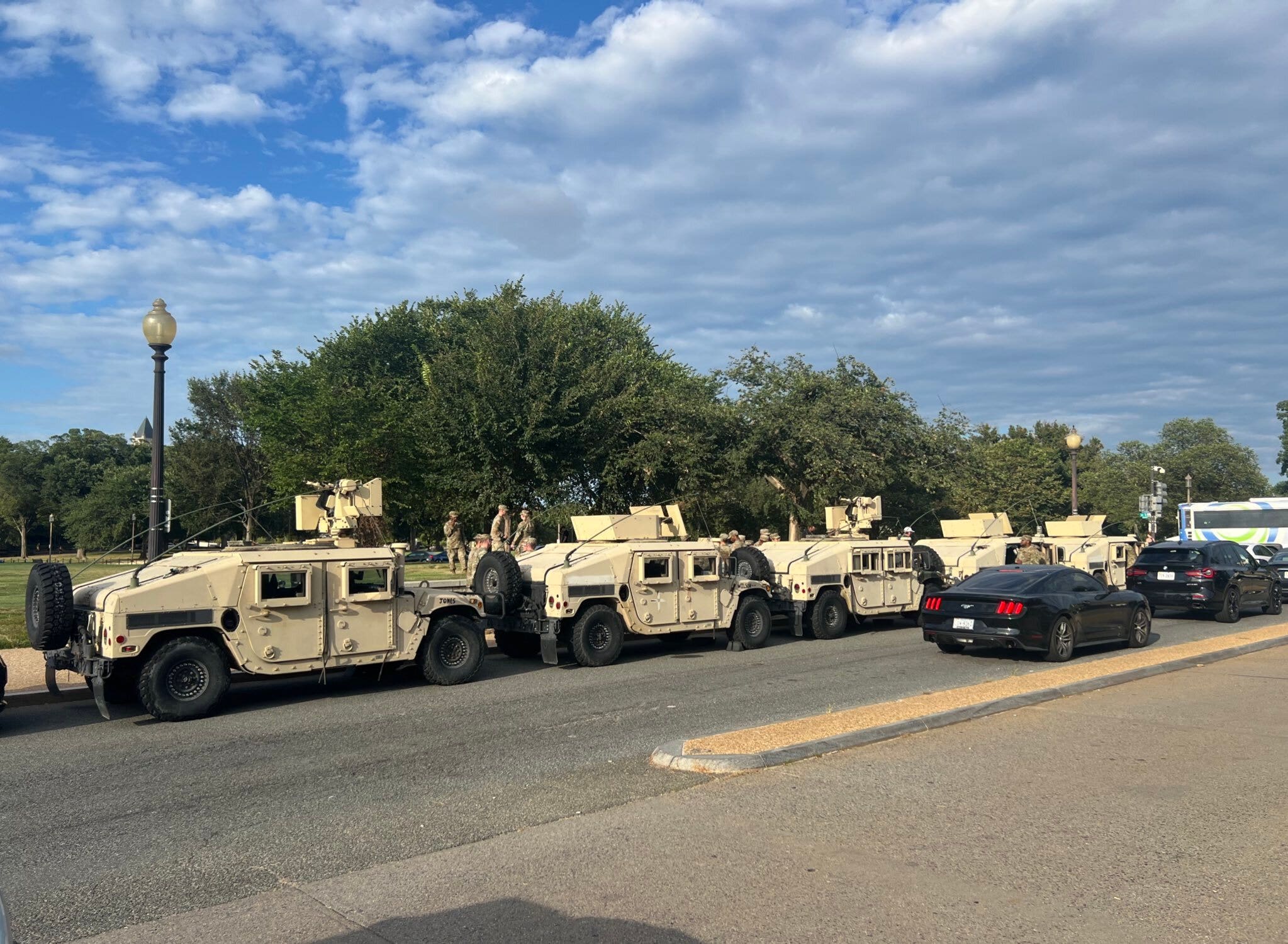
National Guard troops in Washington, D.C. are getting a wider set of tools to work with, and that shift is already stirring up fresh backlash from local leaders. Pete Hegseth has signed off on expanded support that includes marked patrol cars, Humvees, tactical vehicles, boats, and other equipment meant to keep the deployment moving. The setup reflects how far the federal response has gone as the capital remains a central front in the fight over crime and public safety.
According to Pentagon officials, the Oct. 29 memo allows as many as 60 marked patrol cars, along with military tactical vehicles and D.C. National Guard maritime assets. It also covers up to 20 light towers and generators, which gives troops more reach for nighttime operations and longer shifts. The practical message is simple: this is not a short, symbolic presence, but a sustained security mission with real hardware behind it.
Roughly 3,000 National Guard troops are already deployed in the city as part of President Donald Trump’s crime crackdown. Supporters say the surge is about restoring order, helping federal and local law enforcement, and making public spaces feel safer again. Critics, though, see the mission as heavy-handed and say the federal footprint has gone too far.
A War Department official said the authorization is part of the broader “Make D.C. Safe and Beautiful mission,” language that captures the administration’s pitch in plain terms. The same official said the updated guidance permits the use of Guard personnel and capabilities in support of law enforcement operations across the district. That keeps the mission tied closely to the administration’s broader law-and-order push rather than a narrow military assignment.
The move also lands in the middle of a bigger debate over what role the National Guard should play in the capital at all. Politico first reported the authorization, which follows Hegseth’s earlier decision to allow Guard troops to carry service-issued weapons when their mission requires it. Each step has widened the scope of the deployment and sharpened the political fight around it.
Local opposition has been loud, especially from D.C. Councilmember Brooke Pinto, who chairs the council’s public safety committee. At a recent hearing, she said, “I am very hopeful and optimistic that we now have the partners we need at the state and congressional level to push back and demand that this unnecessary, harmful and unlawful military presence be removed from the district,” she said during the hearing. Her comments lined up with the council’s broader effort to challenge the federal approach and put more pressure on the White House and Pentagon.
Pinto also called on newly elected Democratic governors in Georgia, Iowa, Nevada, Ohio and Texas to pull the 628 troops she said their states have sent to Washington. That appeal shows how the dispute has stretched beyond city limits and into a wider partisan clash over state cooperation. The message from D.C. officials is clear enough: they want governors, lawmakers, and federal agencies to stop treating the capital like a test case for permanent troop presence.
She also pressed congressional Democrats to step up oversight of federal law enforcement in January, including requirements for visible badges and body cameras. That demand fits the broader criticism that the current operations need stricter guardrails and more transparency. For now, though, the federal government is moving in the opposite direction, giving troops more equipment and more room to operate as the debate around safety, force, and authority keeps heating up.
