
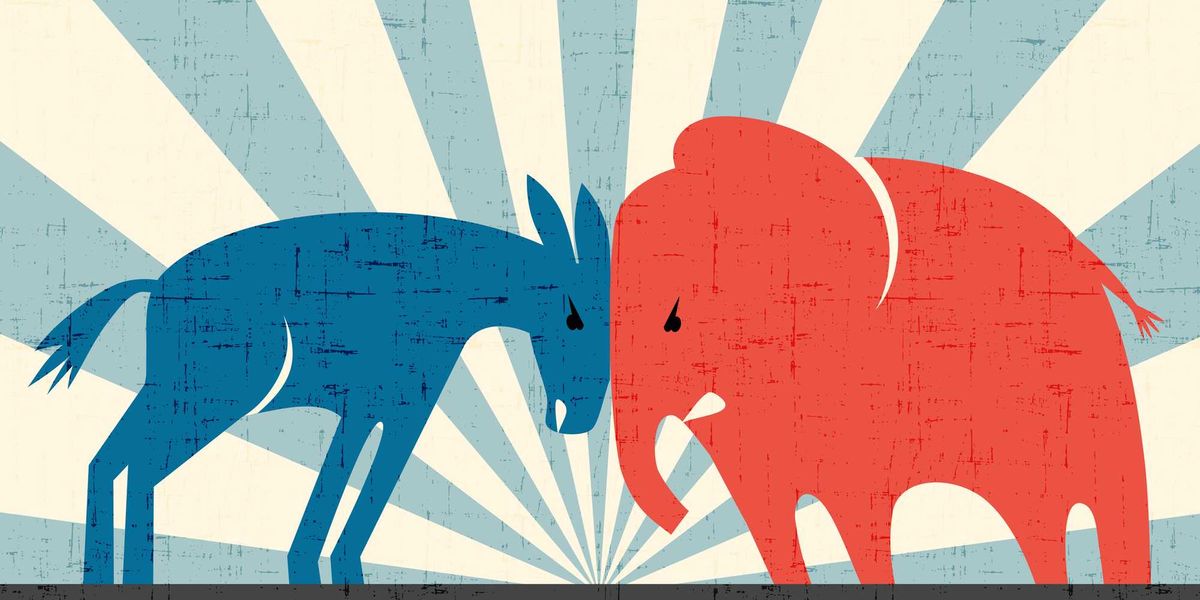
Republicans have a simple, potent message going into the 2026 midterms: the contrast between red states and blue states is getting harder to ignore. One side is showing lower costs, more freedom, and a steadier sense of normal life, while the other is stuck explaining why everyday expenses keep climbing and basic order feels shaky.
That divide is not just about party labels. It is about what people can feel in their wallets and in their neighborhoods, from gas prices and grocery prices to housing costs that keep punching holes in family budgets. Voters do not need a policy seminar to notice when one set of states seems to be moving in a better direction than another.
Red states have been building an increasingly convincing case that common-sense governance works. Lower taxes, fewer layers of red tape, and a stronger respect for work and personal responsibility tend to produce results people can see without squinting. That matters because elections are rarely won by abstract arguments when the checkout line and the rent bill are doing the talking.
Blue states, by contrast, keep selling big promises while residents absorb the consequences. High housing costs, rising living expenses, and policies that often seem designed more for activists than for ordinary families have left a lot of people frustrated. When a state becomes known for being expensive, chaotic, and politically smug all at once, that reputation starts to stick.
Illegal immigration is another issue that keeps landing squarely on the side of the red-state message. Many voters see a direct link between weak borders, strained public services, and communities that are asked to shoulder costs they never agreed to take on. Democrats keep trying to soften the edge of the debate, but most Americans understand that a country without control over its borders is a country inviting bigger problems.
The appeal of red-state governance is not that everything is perfect. It is that the priorities line up with what most people actually want: safe streets, affordable basics, decent schools, and the freedom to live without constant meddling from distant bureaucrats. That kind of plain-spoken approach is far more persuasive than the endless moralizing that has become a habit in too many blue-state capitals.
Democratic socialism keeps popping up in blue-state politics because it sounds compassionate on paper, but in practice it often means more control, more spending, and less room for private growth. The problem is not just ideological. It is that the results keep looking worse, especially when families are trying to stretch paychecks through higher gas prices, pricier groceries, and impossible rent.
Republicans have a rare opening here because the contrast is so visible. They do not need to invent a national crisis or exaggerate the mood of the country. They only need to point at the difference between states where people can still get ahead and states where political fashion has made life harder, slower, and more expensive.
That message also has staying power because it is rooted in daily experience rather than talking points. A voter may not care about every policy detail, but that voter absolutely cares about whether the car gets filled up for less, whether the grocery cart costs more each week, and whether a home can still be bought without turning the family budget upside down.
The 2026 midterms may end up turning on a very basic question: which party looks like it understands how Americans actually live? Right now, Republicans have the advantage because red states are offering a sharper, more relatable answer while blue states keep doubling down on the same expensive mistakes that have been wearing people down for years.

1 Comment
That they voted for day 1