
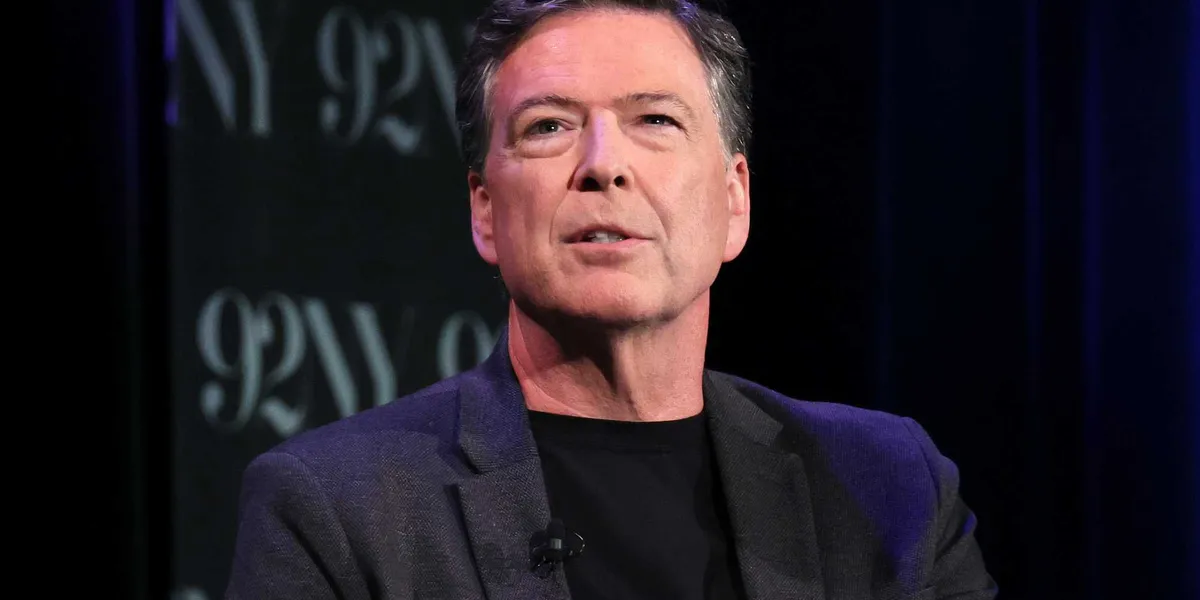
James Comey is back at the center of a political firestorm after federal charges tied to the Espionage Act sent shockwaves through Washington. The case instantly lit up the fight over accountability, law enforcement, and how far the government should go when a former top official lands in legal trouble.
The headline alone is enough to turn heads, but the bigger story is the reaction around it. Supporters of the move see a long-overdue reckoning, while critics are already framing it as proof that the system is being used to settle scores.
Comey’s name has carried baggage for years, and this latest development adds another heavy layer to that legacy. As a former FBI director, his actions have been dissected from every angle, with allies and opponents alike treating him as a symbol of everything they believe went wrong in recent political history.
The Espionage Act is not some throwaway charge. It is one of the federal government’s most serious legal tools, and when it enters the conversation, the stakes jump fast. That is why this case is drawing so much attention from people who normally do not agree on much of anything.
For many Republicans, the timing and symbolism matter just as much as the charge itself. They have spent years arguing that powerful figures in Washington often operate under a different set of rules, and a high-profile case like this feeds that belief in a very public way.
Democrats and Comey’s defenders are likely to push back hard, especially if they believe the prosecution is rooted more in politics than principle. That tension is part of what makes the situation so combustible, because every new detail is going to be read through a partisan lens before the ink is even dry.
The Department of Justice now has the burden of showing that this is about law, not theater. That is never easy in a case involving a figure as recognizable as Comey, where every move is going to be watched, clipped, argued over, and turned into instant cable-news fuel.
There is also the broader question of trust. Americans have watched confidence in federal institutions get battered for years, and another explosive case involving a former FBI chief is not exactly the kind of thing that calms the waters.
At the same time, plenty of people will say the law should not care about fame, title, or the old club in Washington. If the facts support the charges, they will argue, then the process should keep rolling without apology or hesitation.
That is what makes this story hit so hard. It is not just about one man facing federal heat, but about whether the country still believes its most powerful institutions can handle a case like this without tipping into politics, revenge, or selective justice.
