
- Modern rocket development and the rise of heavy-lift launch vehicles
- Falcon Heavy and the power of private spaceflight
- Energia and the Soviet push for massive launch capability
- Saturn V and the Moon landing era
- SLS and the Artemis return to the Moon
- Starship and the current edge of rocket performance
Rockets have gone from experimental fire-crackers to towering machines that can hurl huge payloads into orbit, and the leap in power has been staggering. What once looked impossible is now routine engineering, with governments and private companies racing to build bigger, stronger, and more capable launch vehicles. The result is a short list of rockets that changed spaceflight by sheer force, ambition, and scale.
Falcon Heavy showed that a private company could build a machine with serious muscle, not just a flashy logo and a good marketing team. Standing more than 229 feet tall, it combines three cores and 27 Merlin engines at liftoff for a total thrust of 5.13 million pounds, enough to move some truly hefty cargo into low Earth orbit. It also proved that reusable rockets could still be powerful rockets, which changed the tone of the whole industry.
Before that, the Soviet Energia made its own mark as a monster built for the Cold War’s biggest dreams. It was designed to lift the Energiya-Buran spacecraft and delivered about 7.89 million pounds of thrust through a setup of boosters and main engines that looked almost overbuilt, even by rocket standards. Energia flew only twice, but its raw numbers still place it among the most formidable machines ever to leave Earth.
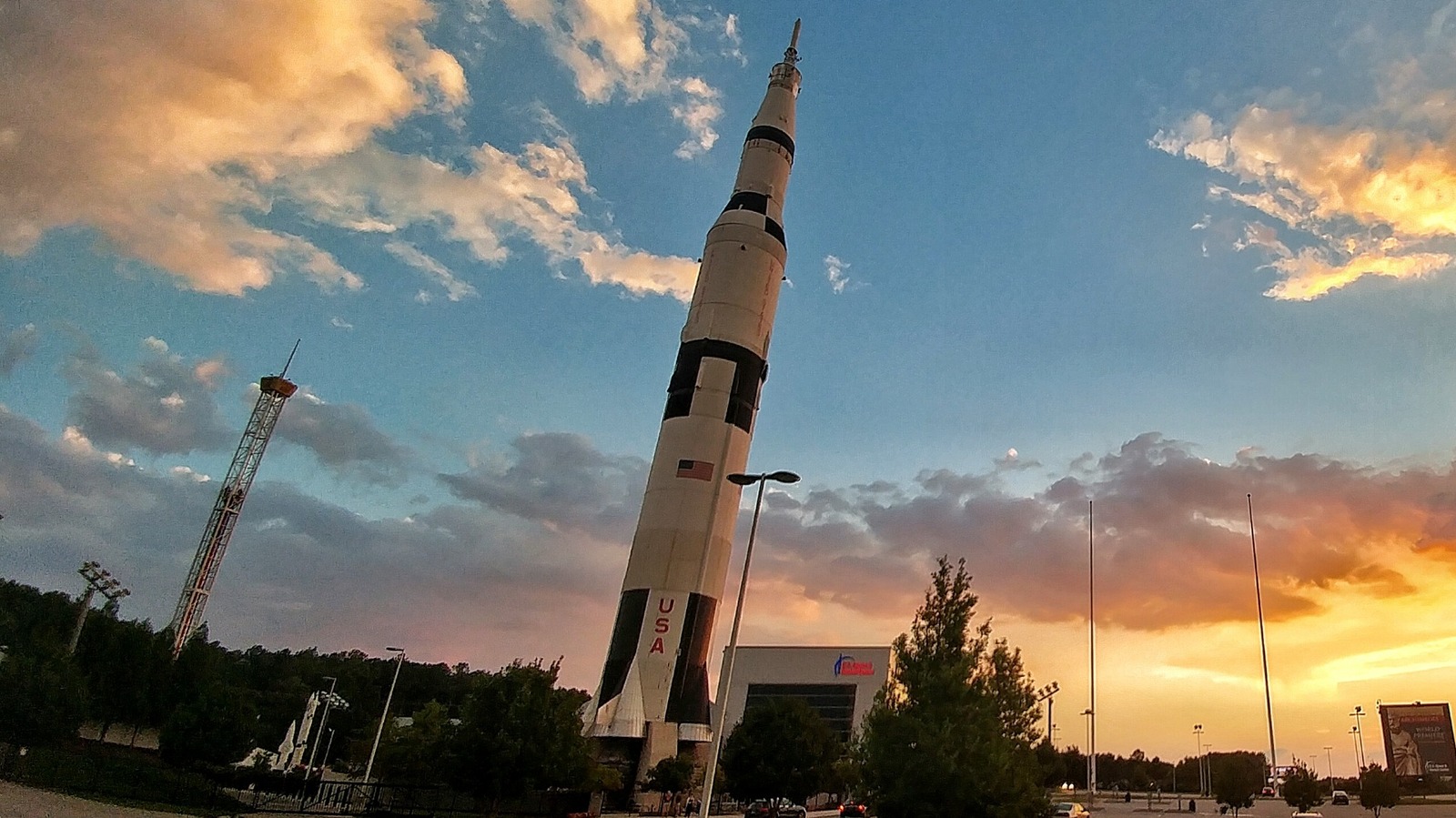
Then there is Saturn V, the rocket that still feels like a myth made of aluminum, fuel, and nerve. At 363 feet tall and fueled by five gigantic F-1 engines, it produced 7.5 million pounds of thrust and could carry 310,000 pounds of cargo, which is why it became the backbone of Apollo. It was the first rocket to take humans beyond low Earth orbit, and it did so with a kind of brutal elegance that has never really been matched.
Saturn V was also the rocket that made the Moon feel close enough to touch. Between 1967 and 1973, it launched every Apollo mission that landed astronauts on the lunar surface, and it later carried Skylab into orbit on its final flight. Few machines in history have carried that much meaning, and even fewer have done it while punching through the sky at more than 24,000 miles per hour.
NASA’s Space Launch System, or SLS, is the modern answer to that legacy, built for the Artemis era and the push back to the Moon. It is shorter than Saturn V at 322 feet, 4 inches, but its combination of four RS-25 engines and two solid rocket boosters gives it 8.27 million pounds of thrust at launch. That makes it a serious contender, even if its payload capacity still falls a bit short of the old lunar giant.
SLS matters because it is not just about raw numbers, it is about keeping deep-space exploration alive in a new age. The rocket is designed to carry crews on lunar missions and eventually help set the stage for Mars, which gives it a role far bigger than a single launch profile. In that sense, it is less about nostalgia and more about proving that the next giant leap can still come on a towering column of flame.
Starship is where the whole competition gets turned up to eleven. At 407 feet tall, with 33 Raptor engines on the first stage and a jaw-dropping 18.1 million pounds of thrust at launch, it stands at the front of the pack as the most powerful rocket ever launched. It is also fully reusable and built to carry people and cargo to the Moon, Mars, and well beyond the habits of old spaceflight.
That scale is not just for show, either. SpaceX has pushed Starship through test flights, orbital milestones, and constant redesigns in pursuit of a rocket that can move more than 100 metric tons and eventually carry large crews on interplanetary trips. Whether the future looks like lunar bases, Mars runs, or massive satellite deployments, the rocket race now belongs to machines that are bigger, louder, and far more ambitious than anything the early space age could have imagined.
