
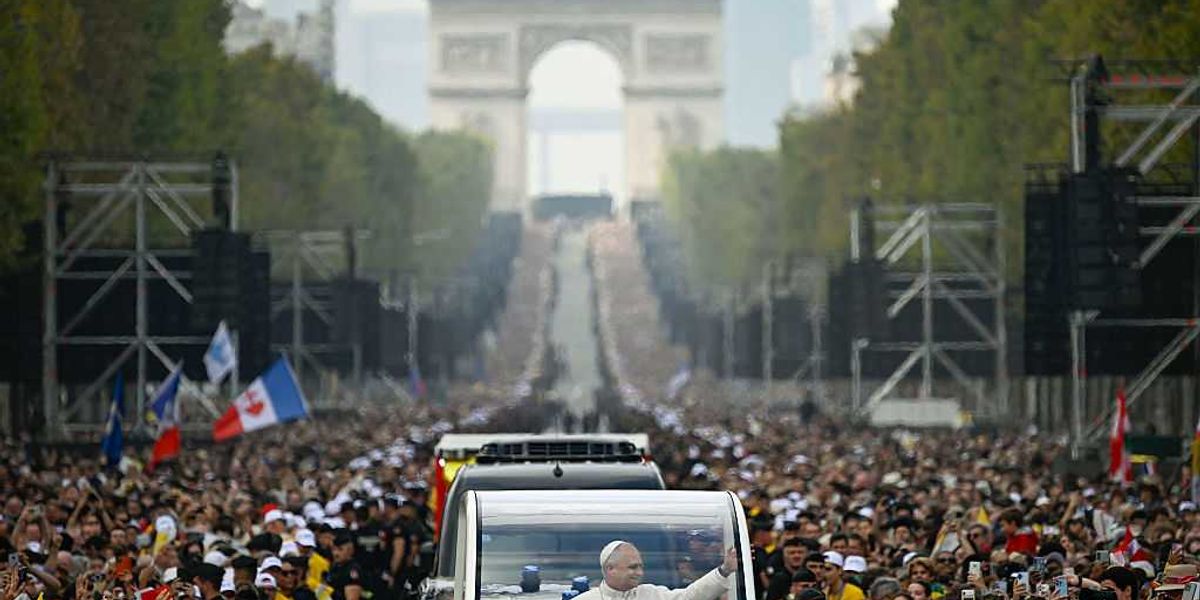
France’s Catholic revival is stirring up more than church pews. It is also exposing a deep cultural split, with secular activists and some Muslim observers reacting sharply to signs that faith is pushing back into public view.
The shift is happening in a country long known for strict secularism and a stubborn belief that religion should stay quiet and private. That old arrangement is looking a lot less settled now, especially as churches draw attention again and Catholic identity becomes harder to ignore.
For many on the left, the reaction is uneasy at best. The return of visible Catholic influence can feel like a challenge to modern French politics, which has spent years treating religion as something to manage, contain, or push out of the spotlight.
That discomfort has been especially noticeable in commentary from secular circles, where even modest signs of Catholic confidence are framed as a threat. The language can get sharp fast, as if a more public faith presence automatically signals a step backward rather than a social change worth noticing.
Muslim reactions have been more complicated, but no less revealing. Some view the Catholic revival through the lens of their own place in French society, where religious expression has often been a source of friction, scrutiny, or outright suspicion.
That helps explain why a stronger Catholic presence can trigger defensive instincts from multiple sides at once. In a country where public faith has been pared down for generations, even a quiet return can set off alarms among people who have grown used to religion being kept at arm’s length.
France’s secular model was built to keep the state neutral, but in practice it has often felt less like neutrality and more like pressure. Christians, especially Catholics, have long dealt with a cultural atmosphere that treats faith as outdated, embarrassing, or politically inconvenient.
The revival now underway is not just about church attendance or religious ceremony. It is about identity, memory, and whether France is still willing to live with a public Christian inheritance that many elites would rather file away as history.
That is why the mood around Catholic renewal has turned tense. When people who have spent years assuming religion was fading away suddenly see it recovering ground, the reaction is rarely calm curiosity, and France is proving that point in real time.
There is also a deeper irony here. While critics worry about Catholic influence, many ordinary French people are simply looking for roots, meaning, and a sense of continuity in a culture that has grown more fragmented and unsure of itself.
Pope Leo XIV’s rise has only sharpened that backdrop, giving Catholics around the world a fresh point of attention at a moment when France is wrestling with what kind of country it wants to be. The result is a public atmosphere where faith is no longer easy to dismiss, and that alone is enough to make some people recoil.
