
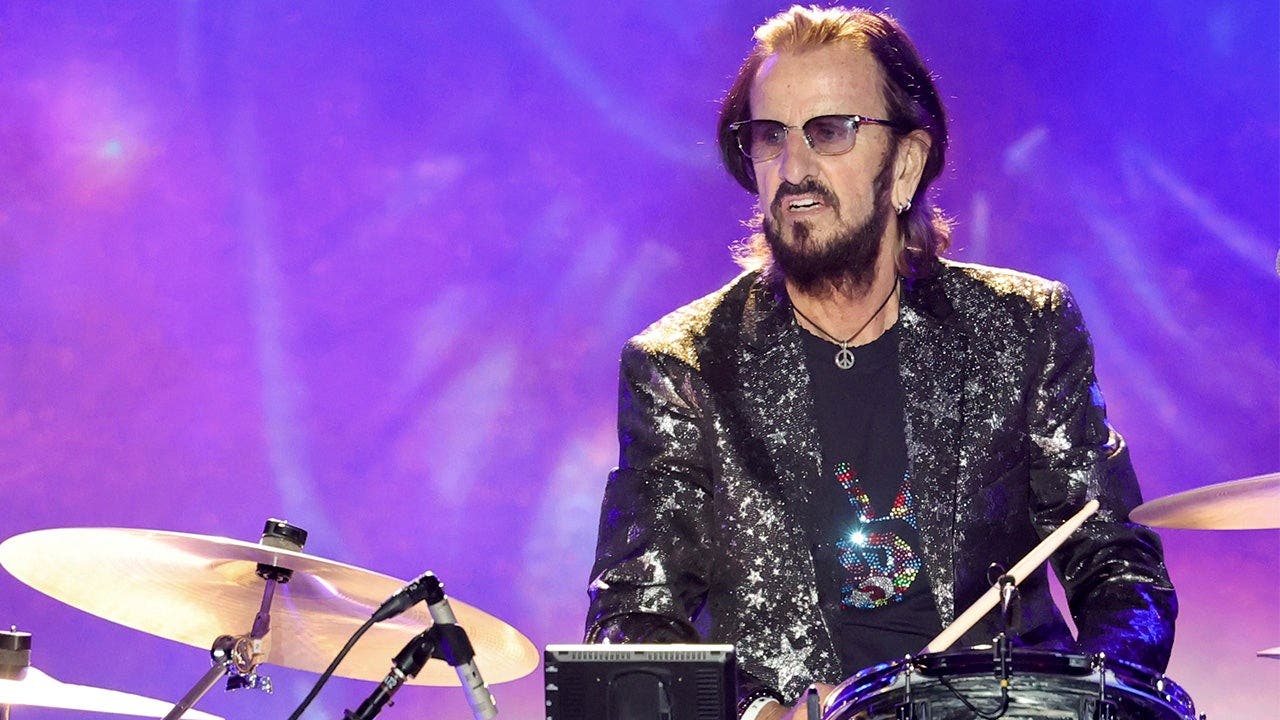
Ringo Starr’s Washington show had the kind of spark that makes a room feel younger than it is. At 86, he still moved with easy charm, swapped jokes with the crowd, and backed it all up with the kind of rhythm that made the Beatles impossible to ignore in the first place.
That simple fact raises a bigger question that keeps hanging around like a favorite song on repeat: why does the world still care so much about the Beatles, more than six decades after the breakup? The answer lives somewhere between memory, music history, and the odd comfort of seeing legends who still look like they are having a blast.
Part of the spell is nostalgia, plain and simple. For listeners who remember Beatlemania rolling across America, the music carries the charge of youth, loud crowds, and a culture that seemed to be flipping over right in front of them.
There is also the sheer force of the catalog. The Beatles did not just release hits, they kept climbing, moving from the early rush of “I Want to Hold Your Hand” to the deeper, stranger, more ambitious work that followed, including Rubber Soul, Revolver, Sgt. Pepper, the White Album and Abbey Road.
That stretch matters because it was not a band coasting on one sound. They could hit hard with “Ticket to Ride,” “Helter Skelter,” “Come Together,” and “Back in the U.S.S.R.”, then turn around and land something softer and sweeter like “Yesterday,” “Michelle,” or “Norwegian Wood.”
Then there is the Lennon-McCartney engine, which still looks almost absurd in hindsight. The partnership produced songs that felt fresh, sharp, and surprisingly wide open, which is why the group never got stuck in one lane for long.
Ringo’s place in that story is easy to underrate until he is right there onstage proving the point. His drumming was never about flash for flash’s sake, and that restraint gave the songs room to breathe while still pushing them forward with real force.
Modern rock drummers still point to that style as a model, because it serves the song instead of trying to steal the spotlight. That kind of feel is harder to fake than a lot of people think, and it is a big reason the Beatles’ records still sound alive instead of dusty.
The fascination is also fed by the endless stream of reissues, alternate takes, and restored recordings. Every new release gives fans another angle on songs they thought they already knew, and technology keeps polishing old material until it feels newly discovered again.
That cycle helps explain why the Beatles keep showing up in conversation even when pop culture has moved on to faster, louder distractions. They belong to a rare tier of artists whose work still gets treated like a living archive, not a museum piece.
There is something else, too, and it is more human than historical. Watching Ringo and Paul McCartney still perform makes the whole thing feel personal, almost like a reminder that these are not just names on classic albums but real people who kept going long after the screams of the 1960s faded.
That is probably why crowds still lean in when the old songs start up. The music carries the thrill of the past, but the performance brings it back into the room, loud enough to make the years disappear for a while.
And when Ringo smiles, talks to the audience, and launches into “With a little help from my friends,” the whole thing clicks in a way that is hard to explain and easy to feel. The Beatle legacy keeps living because it never really stopped sounding like joy.
