
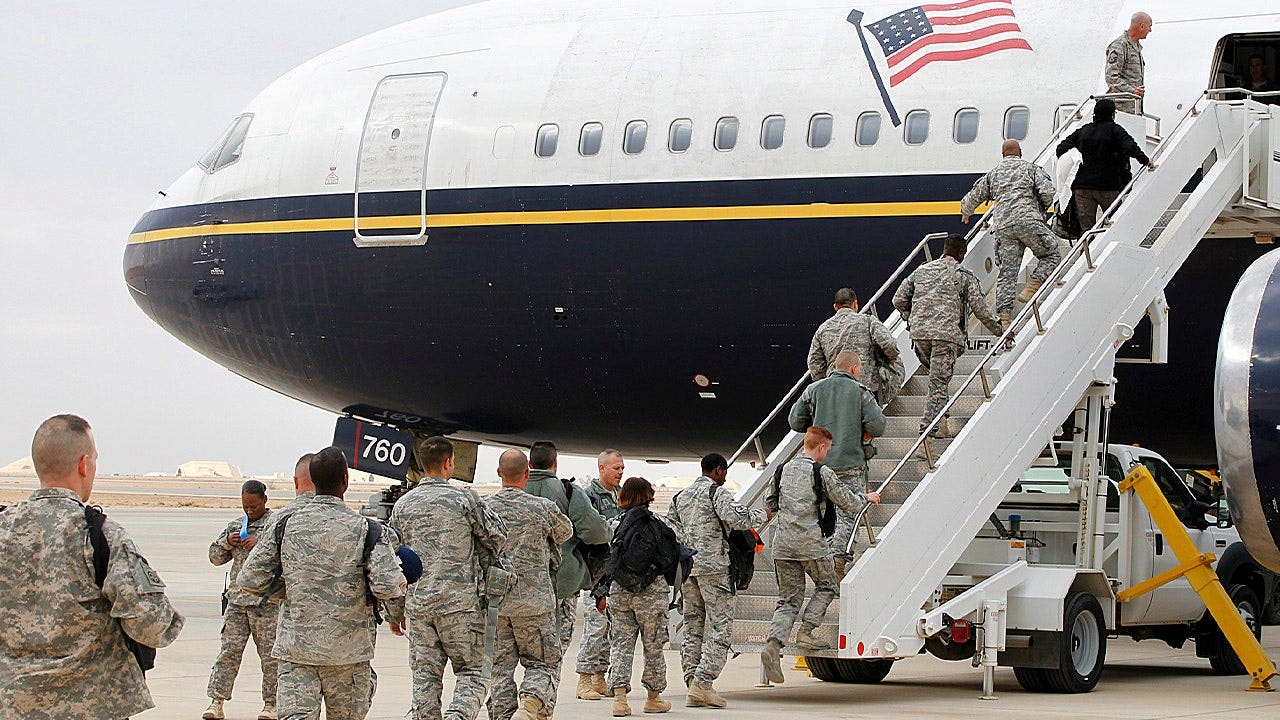
Iraq is heading into a tense new phase as the U.S.-led military mission winds down, with American troops set to leave after more than two decades of war, counterterrorism, and stop-and-start pressure on Tehran-backed militias. ISIS is far weaker than it once was, but the power vacuum story is not over, and Baghdad is still struggling to lock down armed groups that answer to nobody but themselves.
The American role in Iraq started with the 2003 invasion that brought down Saddam Hussein and later morphed into a broader fight against ISIS after the terror group ripped across Iraq and Syria. What began as a major combat effort gradually turned into a much smaller mission built around advising Iraqi forces, sharing intelligence, and helping keep extremists from regaining ground.
That smaller footprint still mattered, though, because Iraq never stopped being a contested space. Even as ISIS lost territory and strength, U.S. troops remained a visible check on Iran’s influence and a target for militias that saw American personnel as fair game.
The withdrawal now unfolding was negotiated before the recent direct clash between the United States and Iran, which changed the backdrop in a serious way. The plan was set under the Biden administration, but it is playing out in a far more volatile regional environment than the one that existed when Washington and Baghdad first agreed on the timeline.
Officially, the mission’s end reflects a judgment that Iraqi security forces are ready to shoulder more of the burden. That is a big milestone on paper, but the ground truth is messier, especially when the threat has shifted from ISIS columns to armed factions with rockets, drones, and a strong appetite for confrontation.
The last stretch of the mission has not been calm. One U.S. sergeant was killed in July at Erbil Air Base during the controlled detonation of a downed Iranian attack drone, a reminder that even a reduced mission still carried real danger right up to the finish line.
Military assessments now say ISIS in Iraq is badly weakened and mostly focused on hanging on rather than staging a comeback. U.S. officials have also said the group’s attacks in Iraq and Syria are down sharply, marking a steep fall from the years when the terror group was seizing cities and setting the pace for everyone else.
That decline has changed how the U.S. operates in the country. Instead of taking the lead in direct fighting, American forces have been training, advising, and helping with intelligence while Iraqi units carry more of the load themselves.
The Pentagon has also been reshaping the mission’s footprint, moving key infrastructure out of Iraq and shifting the coalition headquarters to Jordan. That kind of move signals a bigger retreat from day-to-day involvement, even if U.S. interests in the region remain tied to what happens inside Iraq.
For Baghdad, the bigger headache may now be the armed groups that never really accepted the state’s authority. These Iran-backed factions have resisted repeated calls to disarm, and some of them have kept enough firepower to threaten American personnel and facilities across the region.
Officials in Iraq had initially hoped the U.S. withdrawal would help strip away the militias’ favorite excuse for staying armed. Prime Minister Ali al-Zaidi has argued that once American troops are gone, there is no longer a justification for the groups to keep acting like an army within an army.
But the militias are not all moving in the same direction. Some factions have signaled willingness to give up weapons, while others have dug in hard, leaving Baghdad stuck between political pressure, security risks, and the reality that these groups still have muscle.
That makes the next phase awkward and potentially dangerous. The government’s revised timeline stretches the disarmament process out to 2027, which suggests the state knows this is not something that can be cleaned up quickly or quietly.
Even with ISIS battered, the broader threat picture has not disappeared. Iran-aligned militias have already launched hundreds of attacks on U.S. forces and diplomatic sites, and that history leaves plenty of reasons to doubt the region is suddenly safe just because one mission is ending.
So while the long American campaign in Iraq is closing out, the country is still wrestling with the same hard problem it has faced for years: how to build real state control when armed groups, outside powers, and old battlefield grudges all keep pushing in different directions.
