
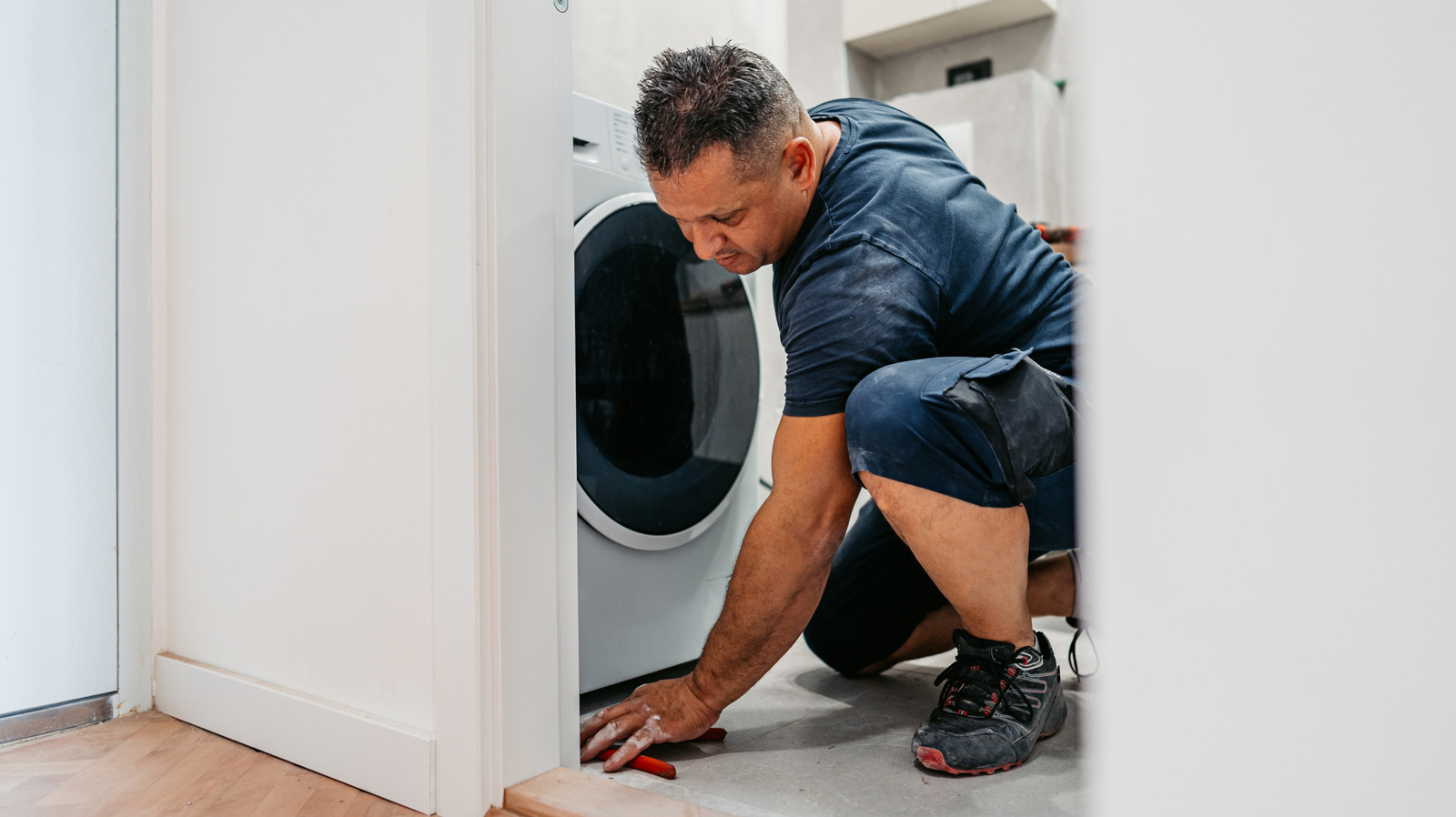
A washing machine that sits true on the floor runs smoother, shakes less, and puts a lot less stress on itself over time. When it starts to lean or rock, the whole laundry routine can get noisier, rougher, and harder on both the appliance and the room around it. A little leveling now can save a lot of trouble later.
When a washer is off balance, the spin cycle is usually where the problem shows up first. The machine can wander, rattle, and bang its way across the floor, which is never a good sign. That extra motion wears on internal parts, can affect draining and spinning, and may even leave clothes less clean than they should be.
Keeping a washer level also helps protect the space it lives in. Floors take repeated hits from vibration, and over time that can lead to scuffs, damage, or a machine that slowly drifts out of position. It is one of those small maintenance jobs that looks minor until the noise and wobble make it impossible to ignore.
The first step is clearing the washer so it can sit freely and be checked properly. Anything on top or inside should be removed, and the machine needs enough room around it to stay clear of the wall. On front-loading models, shipping bolts should be removed before any leveling check is done.
Next comes the easiest test of all, which is using a bubble level across the top of the machine. Check it from side to side and then front to back, because a washer can be uneven in more than one direction. If it rocks when pressed or doesn’t sit firmly on all of its feet, it needs adjustment.
For most washers, the fix comes down to the leveling feet. Loosening the clamp nuts and turning the feet lets the machine rise or settle until it sits flat. In many cases, turning the feet counterclockwise raises the washer, while clockwise lowers it, though the exact feel can vary a bit from model to model.
Some setups need a little more help than a simple twist of the feet. A washer sitting on a pedestal or stacked with a dryer may need someone else to steady it while a wood block or shim supports the weight during adjustment. Once the machine is sitting level, the clamp nuts should be tightened so the settings do not slip right back out of place.
It is smart to level a washer when it is first installed, but that is not the end of the story. Over time, regular use can loosen the hardware, and uneven flooring can slowly nudge the machine out of alignment again. A quick check every now and then keeps the washer from turning into a noisy, shaking nuisance.
