
The danger from 9/11 did not end when the smoke cleared. Years later, the toxic legacy still shows up in cancer diagnoses, breathing problems, and trauma that never really left the people who were there.
When the first alerts came on September 11, 2001, the instinct was simple: get the kids safe, get to the hospital, and get ready for the wave of casualties everyone feared was coming. At Bellevue Hospital, patients were moved out and the building was readied for survivors who, in the end, never arrived.
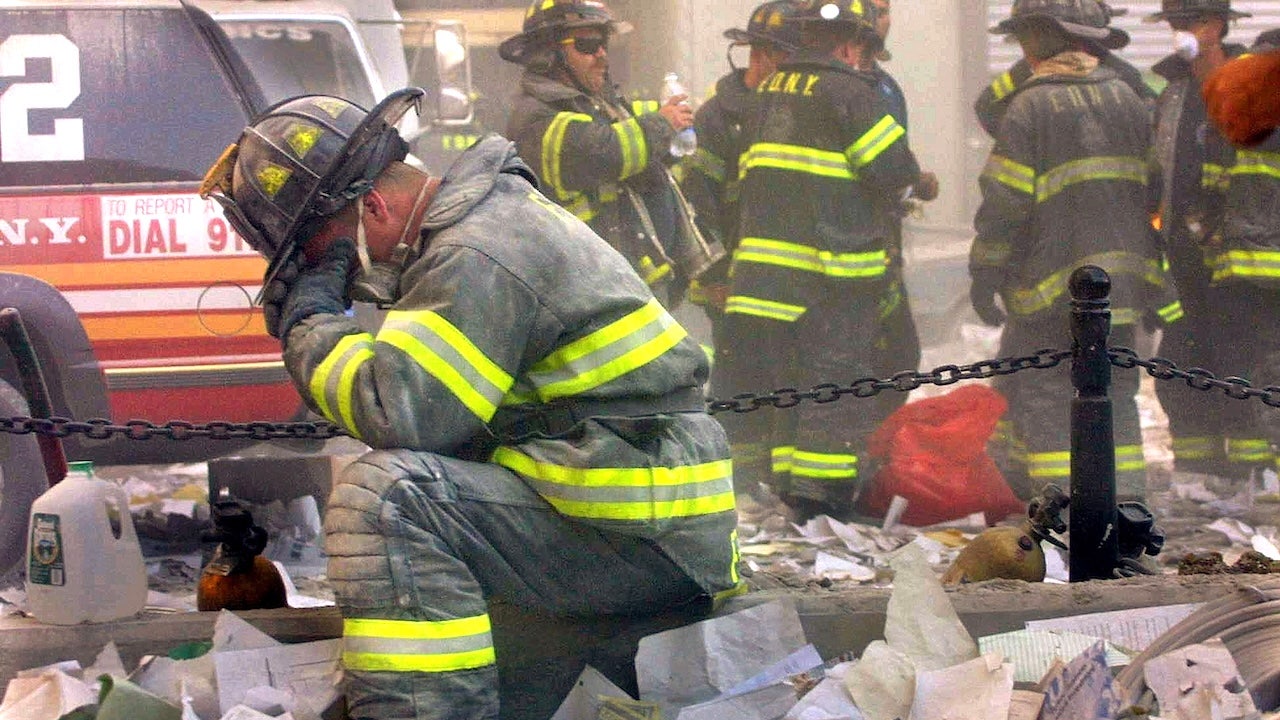
A few days later, the disaster site looked brighter than memory sometimes suggests, but the air told a different story. A mask was handed out at the edge of the rubble, and the haze hanging over Lower Manhattan made it clear that the danger was not just what could be seen on the ground.
That’s why talk of a secret somehow hiding the health risks rings hollow. The risks were understood at the time, at least in broad strokes, because dust, smoke, molten material, and chemical exposure were obvious threats from the start.
The real issue was never whether danger existed. The real issue was how far it would reach, how long it would last, and how many people would pay the price years after the attacks themselves were over.
Those consequences have been documented again and again in patients who never worked a rescue scene but still lived near it or breathed the same poisoned air. The list of conditions is grim and familiar: GERD, asthma, PTSD, and cancer, along with the quiet fear that ordinary symptoms might point to something worse.
The World Trade Center Health Program became a lifeline for many of those people. Through scans, screenings, and ongoing monitoring, it has helped connect symptoms to exposure and given doctors a way to track illnesses that would otherwise slip by until they were much harder to treat.
The cancer numbers are especially sobering. Recent figures tied to 9/11 toxic debris show 57,000 cancer cases, with cases rising sharply in just the last few years and lung cancer increasing at an alarming pace.
Skin, prostate, breast, thyroid cancers, and lymphomas keep showing up again and again. The pattern is hard to ignore, and the trend line has not flattened out.
That is why the death toll tied to 9/11 health effects has become so painful to process. More than 9,000 people have died from those related illnesses, a number that now overshadows the losses from the attacks themselves.
For first responders, that reality hits especially hard because many ran toward danger while everyone else ran away. Firefighters, EMTs, police officers, and volunteers made split-second choices rooted in duty, and many of them have spent the years since dealing with the price of that courage.
The tragedy also reached beyond the rescue crews. Survivors, downtown workers, and residents in nearby neighborhoods were all exposed to the fallout, which means the injury was shared across an entire community, not contained to one group wearing helmets and turnout gear.
Then there is the emotional scar, which never really got the same public attention as the medical one. The day changed the city and the country in ways that still show up in fear, stress, and the instinct to brace for the worst even on an ordinary morning.
New York became tougher in some ways, but also more guarded. That mix of resilience and unease is part of the city now, woven into the memory of what was lost and what still lingers in bodies that were never truly cleared from the site.
The hard truth is that nobody could have known the full scope of the fallout on day one. Doctors, public health experts, and patients could only predict, screen, and treat, then keep watching as the damage unfolded over time.
