
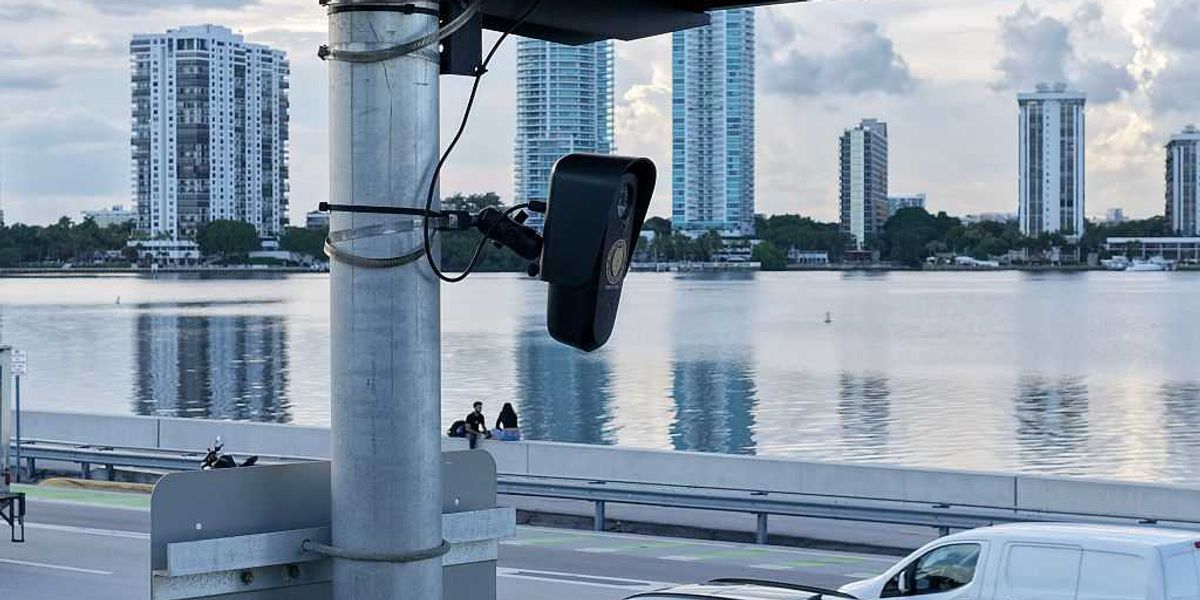
Flock cameras have sparked a sharp fight over where public safety ends and mass surveillance begins. Supporters say the systems help police spot stolen cars, track suspects, and move faster when minutes matter. Critics see something else entirely, a sprawling net that scoops up innocent people’s movements and stores them for later use.
The pitch sounds simple enough: put cameras in more places, connect the data, and let software do the heavy lifting. Plate readers can flag vehicles in real time, while AI tools sort through huge amounts of information that no human could manage alone. That kind of efficiency has real appeal in a country where law enforcement is often stretched thin.
But convenience has a dark side when the same technology that catches criminals also maps the daily routines of ordinary Americans. Every drive to work, trip to the grocery store, or visit to a friend’s house can become another data point in a database that never forgets. Once that system is in place, the pressure to expand it tends to grow fast.
That is why the debate is no longer just about cameras. It is about how much power government and private vendors should have to collect, hold, and search records on people who have done nothing wrong. The problem is not only the machine watching, but the fact that the machine can turn an entire town into searchable history.
Public safety arguments carry weight, especially in cases involving violence, car theft, or missing persons. Few people want police tied up in red tape when a dangerous suspect is on the move. Still, the promise of faster enforcement does not erase the need for limits, and it does not make every form of tracking automatically justified.
The bigger concern is mission creep. Tools sold as narrow crime-fighting aids often become broad surveillance systems once agencies realize how much data they can gather and how easy it is to keep it around. What starts with a stolen vehicle can end with an enormous trail of innocent travel patterns sitting on a server somewhere, ready for reuse.
Congress has a role here, and not a small one. Lawmakers should not shrug and let private networks quietly build a national tracking infrastructure by default. If this technology is going to be used, the rules need to be clear, the retention limits tight, and the access to data tightly controlled.
Privacy advocates are right to be uneasy about a system that treats everyone like a potential suspect. Innocent people should not have to prove they deserve to move around without being cataloged. In a free society, surveillance should be the exception, not the background hum of everyday life.
At the same time, the law-and-order case will not disappear, because real crimes are real and victims want results. The challenge is deciding whether technology serves the public or slowly teaches the public to accept being watched. That question sits at the center of every camera mounted on a pole and every license plate fed into the system.
The fight over Flock cameras keeps growing because it taps into a deeper fear about modern tech. People can accept a little help from software, but they get nervous when the line between protection and monitoring starts to blur. Once that line is crossed, it is hard to draw it back again without a serious fight.
