
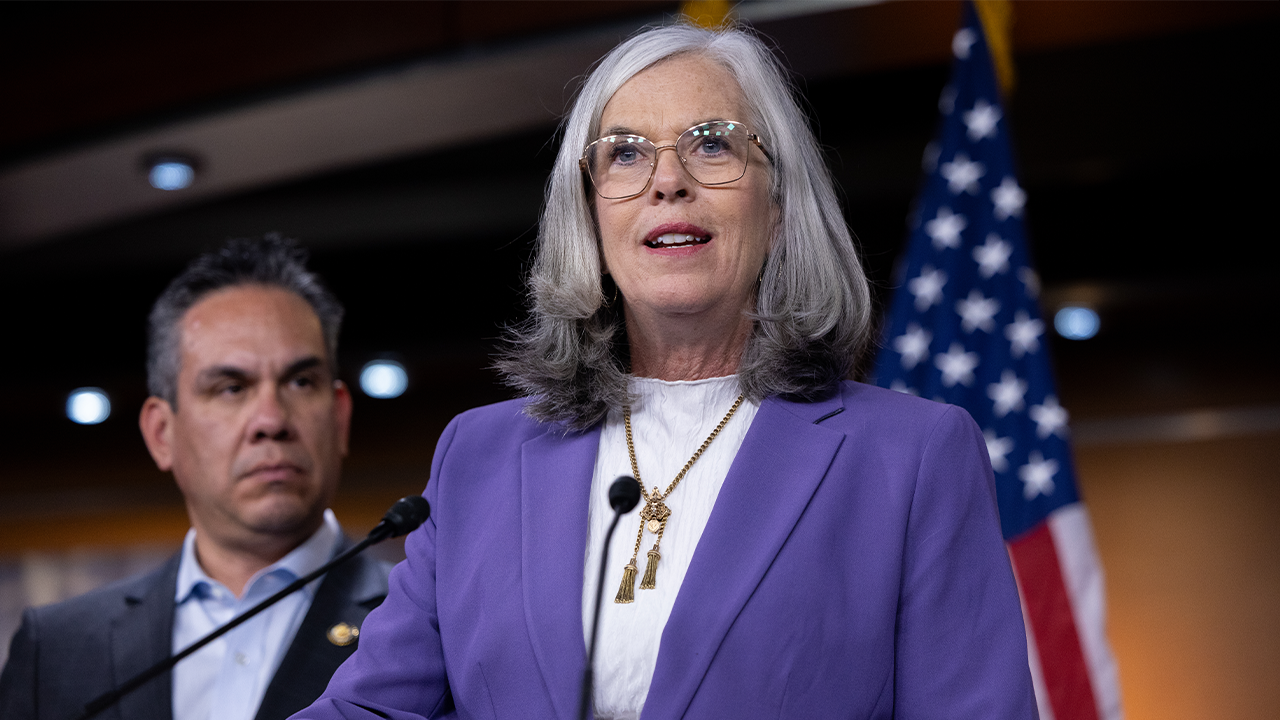
Katherine Clark sailed through a tough primary in Massachusetts, but the race still exposed a sharp split inside the Democratic Party over Israel, Gaza, and the influence of pro-Israel money. Two progressive challengers tried to turn that divide into a knockout blow, only to run into a well-funded incumbent with deep establishment backing and a familiar hold on the district.
House Democratic Whip Katherine Clark won comfortably in Massachusetts’ 5th Congressional District, beating Jonathan Paz and Tarik Samman in a contest that was never going to be quiet. The seat is solidly blue, but the campaign made clear that safe territory can still get messy when foreign policy and activist energy collide with party loyalty. Clark, who first won office in a special election in 2013, has been a fixture in the district for years and has served as whip since 2022.
That leadership role matters. Clark is the number two Democrat after Hakeem Jeffries, and she has been a reliable part of the party’s line against Republican spending plans, immigration policy, and healthcare proposals. She has also helped drive messaging against ICE funding and GOP moves involving Head Start and Medicaid, which makes her a useful national voice even when the home district gets noisy.
The challengers tried to make this more than a routine primary. Paz, a former city councilor and union organizer, and Samman, a 27-year-old Harvard Law School researcher and union organizer, both pushed hard on the Gaza war and on donations tied to pro-Israel politics. Their pitch was simple enough: if Clark has grown more critical of Israel’s conduct, why keep taking support from the same political network they say is part of the problem?
Money told a big part of the story. Clark’s campaign brought in about $4.5 million, while Paz raised $88,500 and Samman collected $43,800, according to FEC filings. That gap is not just large, it is crushing, and it gave Clark breathing room while her rivals fought uphill with a message that had energy but not enough firepower.
The Israel debate has been simmering inside the Democratic Party for a while, and Clark ended up right in the middle of it. AIPAC endorsed her and has supported her campaign before, but she has also taken public shots at the Israeli government’s handling of the war in Gaza. Last year, she used the word “genocide” at a district event before clarifying that she was not accusing Israel of genocide, and in July she voted to cut $3.3 billion in U.S. military aid.
That vote reflected a line Clark has tried to walk. She still backs Israel as a sovereign Jewish state and supports aid for some defensive systems, but she has made clear that Netanyahu’s government is a different matter. That distinction may work in Washington, where members often try to split the difference, but it also gives critics room to argue that the party is sending mixed signals on a deeply emotional issue.
Paz and Samman did not let that slide. Both argued that Clark’s growing criticism of Israel rang hollow as long as she continued to accept help from AIPAC-linked circles. Their complaints tapped into a broader left-wing frustration with Democratic leadership, where some activists want a full break with pro-Israel political money and others want leaders to keep one foot in the establishment camp.
Clark did not face the kind of chaos that can flip a seat, but the race still said plenty about where the party is headed. She ran unopposed in 2024, and her last general election opponent, Republican Caroline Colarusso, lost badly in 2022, 74% to 26%. Even so, this primary showed that the pressure on Democratic leaders is not just coming from Republicans anymore, and in places like Boston’s suburbs, the arguments over Gaza are already reshaping the political conversation.
