
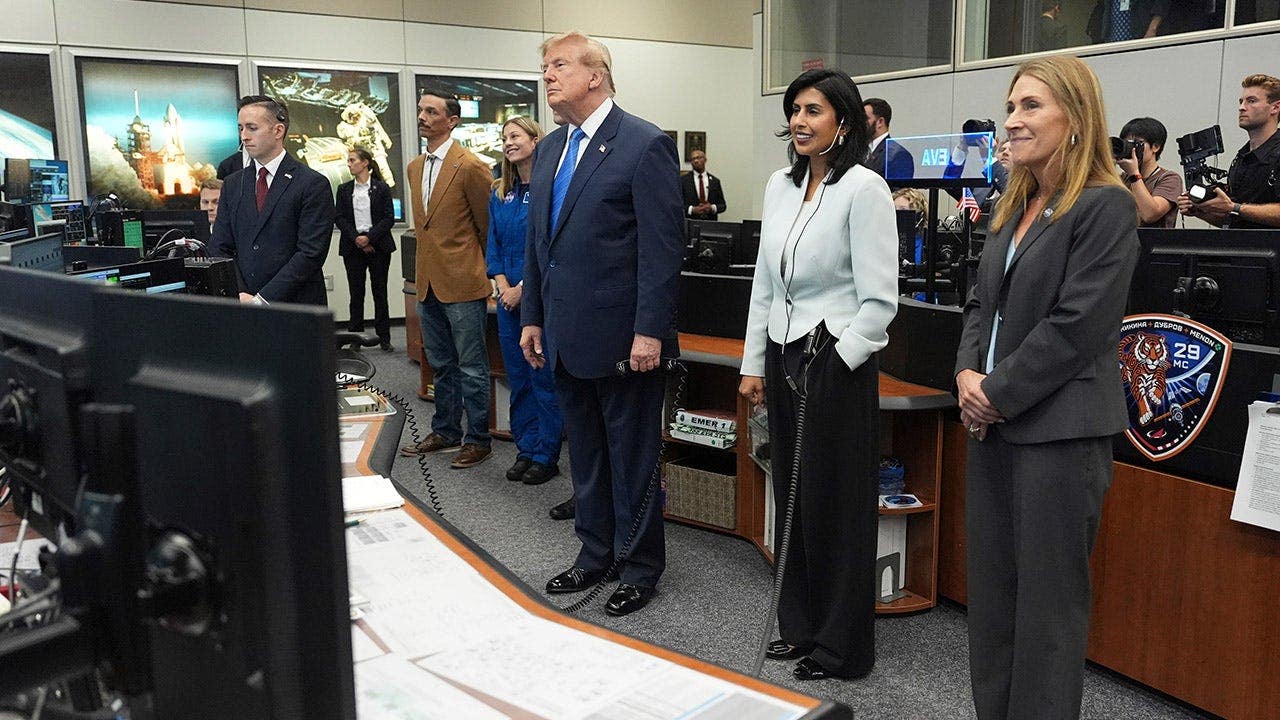
• Trump spoke with astronauts aboard the International Space Station from Houston
• Artemis II crew was honored with the Congressional Space Medal of Honor
• The call mixed praise, humor, and a nod to future White House visits
• A new U.S. Space Force Academy was announced alongside the ceremony
• The event tied space exploration to military-style recognition and national pride
President Donald Trump put the spotlight on America’s space program Friday with a visit to NASA’s Johnson Space Center in Houston, where he honored the Artemis II crew and then spoke live with astronauts orbiting aboard the International Space Station. The moment carried a mix of ceremony and easygoing banter, with the president praising the people pushing space exploration forward while keeping the tone loose and conversational.
Right at the start of the call, Trump cracked that plenty of Americans would love to head into space, but he was not among them. “I wouldn’t do it,” he said from NASA’s Johnson Space Center. “I hate to admit it. I would not want to do it. But some people love it more than anything.”
The astronauts answered with enthusiasm, saying they were “thrilled” to speak with Trump and noting they were “in the middle of several spacewalks,” with another one coming up next week. That kind of exchange gave the whole moment a real-time feel, not just a scripted photo op, and Trump leaned into it by calling the crew a group of “pioneers” for their work.
He also opened the floor to other officials at the event and told the astronauts they would be welcomed back at the White House when they return. “We’re going to see you when you get back,” he said. “In fact, if you want Oval Office time, right?”
The call came after Trump honored the Artemis II crew with the Congressional Space Medal of Honor, putting a formal stamp on a program that has become one of the country’s most closely watched space efforts. The ceremony gave the day a bigger frame, tying the astronauts’ work to national service and public recognition in a way that felt intentionally grand.
Trump also signed an executive order creating the U.S. Space Force Academy, adding another layer to the day’s message about space, defense, and long-term ambition. During remarks, he drew a straight line between the new academy and the nation’s existing military schools, saying, “It will be at that same level when you serve West Point, Air Force, Coast Guard, Navy, Annapolis,” Trump said, comparing it to the other U.S. military academies. “It’s going to be at that level.”
The Artemis II crew itself drew plenty of attention, especially as the event highlighted the next chapter in America’s push back into deep space. Their recognition, along with the astronaut call from mission control, gave the day a polished but personal feel, like the country was being reminded that spaceflight is still a high-stakes, high-prestige mission.
Photos from the event captured Trump holding up a flight jacket presented by Artemis II crew members, a small visual that still managed to carry a lot of symbolism. In one scene, the president stood with officials and NASA leadership nearby, underscoring how tightly the ceremony blended politics, science, and military-style pageantry.
The whole afternoon felt built around momentum. From the medal presentation to the space call and the academy announcement, the message was clear and loud: the White House wanted space to feel bigger, tougher, and far more central to America’s future than a background headline.
