
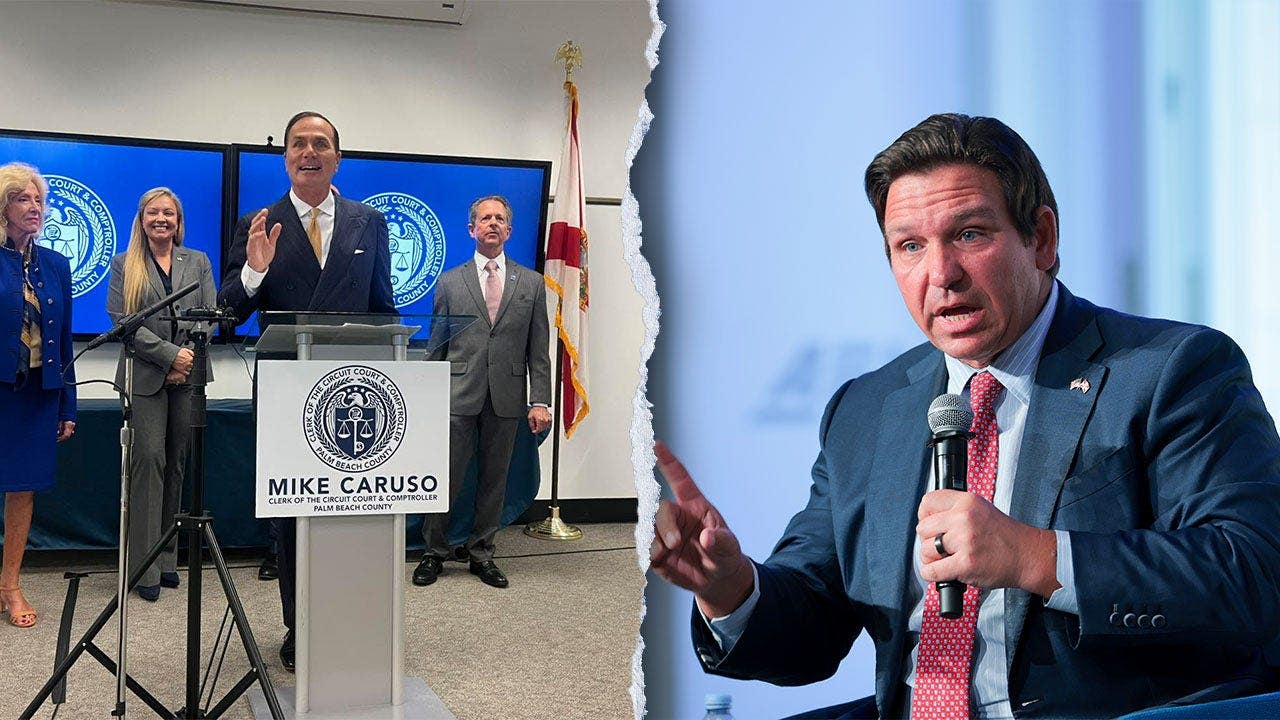
Ron DeSantis used a sharp tone this week after the arrest of a former Palm Beach County clerk he once appointed, signaling that the case could trigger Florida’s toughest punishment if the allegations are proven. The story sits at the intersection of child abuse, state power, and a death penalty law that has put Florida in the middle of a national fight over how far prosecutors can go.
The man at the center of it is Michael Caruso, 67, who was suspended from his clerk duties after his Tuesday arrest. Prosecutors accuse him of abusing a young boy more than half a dozen times since 2024, and the allegations include kidnapping, lewd or lascivious molestation, lewd or lascivious exhibition, luring or enticing a child, and child abuse causing mental injury.
DeSantis told reporters Caruso could be in for a “world of hurt” if a conviction comes down. He also said the decision to remove him from the post was easy, noting that Caruso had once been seen as a solid pick and was respected in the community before the arrest upended everything.
One allegation stands out for its scope. Investigators say Caruso separated the victim from his family during a seven-day Royal Caribbean cruise and carried out inappropriate acts during that trip, according to local reporting tied to the case.
The governor leaned hard into Florida’s child protection laws while discussing the arrest. “We’re the first state to reintroduce the death penalty for pedophiles,” DeSantis told reporters. “I’m proud that I signed that into law, and I’m proud that we have very strong penalties for people that abuse children.”
That law matters because Florida lawmakers in April 2023 approved a measure allowing prosecutors to seek the death penalty for adults convicted of capital sexual battery involving a child under 12. The state has pushed that policy as part of a broader tough-on-crime approach, and DeSantis has made no secret of backing it.
Still, the legal picture is not as simple as the governor’s comments might suggest. It remains unclear whether Caruso’s current charges actually fit the narrow category that would allow prosecutors to pursue the ultimate penalty, since the allegations as filed do not appear to line up neatly with capital sexual battery.
That is where the debate gets serious. Mark Schlakman, who has worked on death penalty issues in Florida and now serves as a senior program director at Florida State University’s Center for the Advancement of Human Rights, said the law appears to hold up under current precedent, but he stopped short of pretending the future is predictable.
“What would happen or will happen? Can’t tell you,” he said.
Florida’s death penalty landscape has been moving fast this year, and the state continues to lead the nation in executions. As of Wednesday, 13 prisoners had been executed in Florida, a pace that puts the state ahead of every other state in the country.
The most recent execution happened Tuesday, when William Francis Silvia, 61, died by lethal injection after being convicted of fatally shooting his estranged wife and wounding his mother-in-law. That backdrop gives DeSantis’ comments extra weight, because in Florida, death penalty talk is not abstract politics. It is tied to a system that is actively being used.
For Caruso, the political fallout has been immediate and brutal. A once-prominent local official now faces a criminal case that has wiped away his standing and put him at odds with the governor who put him in office in the first place.
The case is likely to keep drawing attention because it touches two raw nerves at once: child abuse and the reach of capital punishment. In Florida, both can move fast from courtroom questions to political firestorms, and this one already has that kind of heat.
