
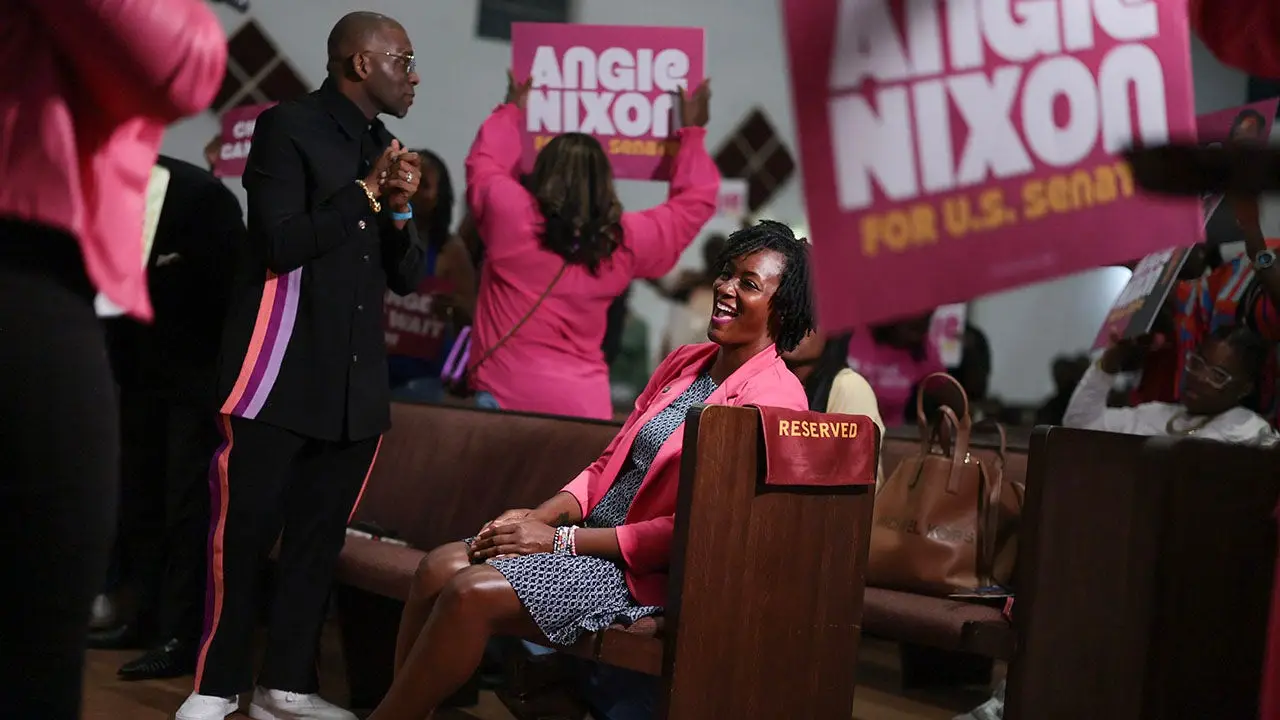
The night’s primaries handed Republicans a mixed bag, with some Trump-backed candidates cruising while others stumbled in races that will shape the fight for Congress and key state offices. Florida drew the loudest attention, where a socialist upset, a few solid GOP wins, and one high-profile loss for an embattled incumbent all collided in one noisy political snapshot.
In Florida’s Senate primary, Democratic Socialists of America member Angie Nixon pulled off the biggest surprise of the evening. She beat Alexander Vindman by nearly 12 points even though he had poured vastly more money into the race, turning a lopsided cash matchup into a clean political shock.
Vindman came in with a huge advantage on paper, but it did not matter enough to stop Nixon’s surge. She now moves on to face Republican Sen. Ashley Moody in the statewide race, giving voters a sharp ideological contrast heading into November.
The governor’s race in Florida also gave Trump something to point to. Rep. Byron Donalds won the Republican primary over Lt. Gov. Jay Collins and James Fishback, a result that kept his momentum alive and locked in a general-election matchup with former Republican congressman David Jolly, now running as a Democrat.
Trump-endorsed candidates kept rolling in other Florida contests too, including Moody in the special Senate primary and Rep. Randy Fine in his congressional primary. But the night was not a clean sweep, and the roughest headline for the GOP came from Rep. Cory Mills, who lost his primary while dealing with a stack of serious ethics-related issues.
Mills had the former president’s backing, but the weight of the controversy around him proved too much to ignore. His district still leans red, which means the seat should stay in Republican hands, but the race made clear that a Trump endorsement does not erase every problem.
Florida’s 19th Congressional District delivered another twist. Catalina Lauf entered the race with a last-minute Trump nod, yet media executive Jim Schwartzel came out on top in the five-way contest, with Lauf and businessman Jim Oberweis fighting for the remaining spots behind him.
Schwartzel’s win leaves him in strong shape for November in a district that tilts heavily Republican. The race also brought back familiar names, including former Rep. Madison Cawthorn, who finished far back after his own messy exit from Congress years earlier.
Wyoming followed a different script, where Trump-endorsed Rep. Harriet Hageman rolled to an easy win in the U.S. Senate primary. She beat cattle rancher Sam Mead by a wide margin, showing once again how quickly Republican voters there rally behind a familiar conservative name.
The gubernatorial primary in Wyoming, though, was a sharper reminder that endorsements still have limits. Republican voters chose state Sen. Eric Barlow over Megan Degenfelder, even after Trump had lined up behind her, giving the race a slightly different feel than the Senate contest.
Wyoming’s secretary of state race was competitive too, with Chuck Gray taking the primary in a crowded field. The state remains deeply Republican from top to bottom, and that reality hung over every contest as candidates fought for the best possible place on the November ballot.
Alaska added another layer to the night’s story. Incumbent Republican Sen. Dan Sullivan advanced in the state’s nonpartisan top-four primary, where he will head into a general election that also includes former Democratic Rep. Mary Peltola and two others.
That system always keeps Alaska unpredictable, and this year is no exception. Sullivan is still in the hunt, but the field is wide open enough to keep Republicans alert, especially with control of the Senate hanging by a thread.
In Florida’s House races, Democrats also had their own internal battles, including a fight over the newly drawn 20th District. Rep. Debbie Wasserman Schultz pushed past a challenge from socialist activist Elijah Manley, who made a lot of noise on the left but still fell short when the votes were counted.
Manley had pressed the race on identity and ideology, arguing that Democrats needed fresher voices and slamming Wasserman Schultz’s place in the district. Still, the veteran congresswoman held the edge in a district that strongly favors Democrats, keeping the seat in familiar hands.
Rep. Jared Moskowitz also beat back a left-wing challenge in Florida’s 25th District, defeating Oliver Larkin in a solid win for the party’s center lane. Larkin leaned hard into socialist politics and wanted to push the Democratic agenda even further left, but voters chose a more cautious path instead.
Moskowitz framed the result as a rejection of the extremes, and that message fits the broader evening pretty well. Trump’s influence stayed strong in several places, but the night also showed that endorsements, money, and ideology can still collide in ways that leave some candidates scrambling and others suddenly looking unstoppable.
