
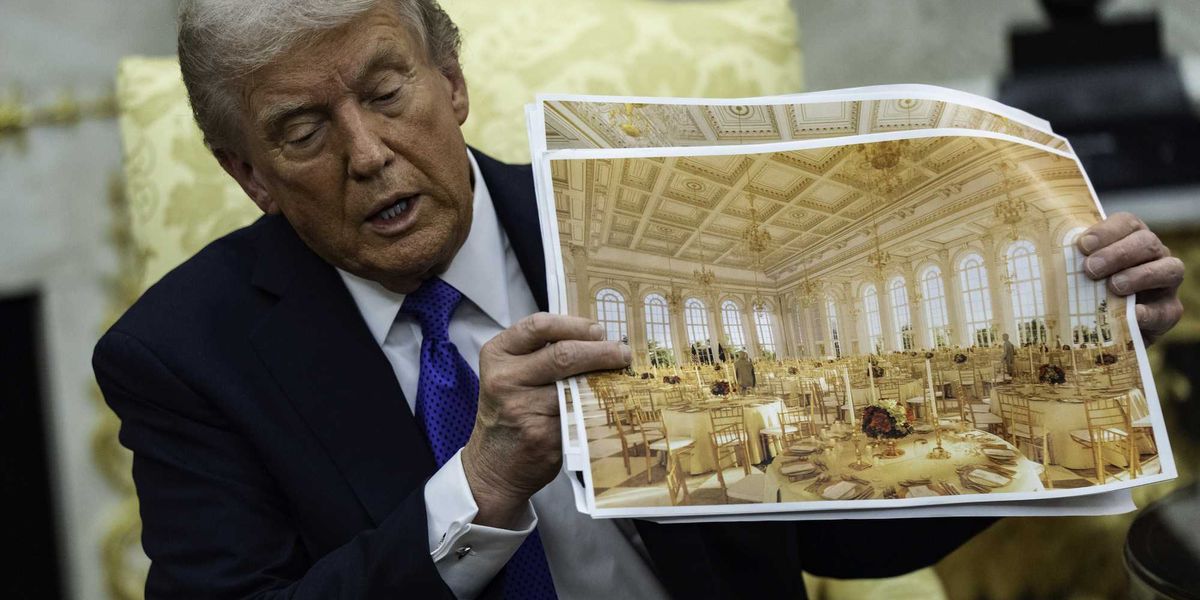
A federal court move has thrown a wrench into the White House ballroom plan, and the fight is turning into something bigger than a construction dispute. The clash now touches executive power, judicial limits, and whether a president can push forward on a high-profile project when the courts say hold up.
The blocked ballroom effort has set off a fresh round of legal and political heat, with critics calling it overreach and supporters framing it as a fight over authority. At the center of it all is a simple question with a lot of baggage: who gets the final say when the White House wants to build, and the courts step in to stop it?
The construction push was supposed to add another layer of grandeur to the White House grounds, but the plan quickly ran into legal resistance. The ruling landed as a sharp reminder that even the most powerful office in the country does not operate outside the law, at least not when judges decide to draw a line.
For supporters of the administration, the decision looks like the kind of interference that has become all too familiar. They see a project tied to the president’s vision being slowed or blocked by judges who are eager to put their thumb on the scale, even when the issue has more to do with management and authority than with any grand constitutional crisis.
For opponents, the ruling is exactly the point of the system. If a project tied to the White House is rushed, contested, or pushed without enough legal footing, the courts are there to check it, no matter how symbolic or politically charged the plan may be.
That tension is what gives the story its edge. A ballroom is not just a room with chandeliers and polished floors. In Washington, it becomes a statement, a power symbol, and a test of how much room a president really has to reshape the institutions around him.
The broader fight also lands squarely in the long-running battle over the balance of power. Every time a federal court steps into a high-stakes executive branch dispute, the same old arguments flare up again about activism, restraint, and whether the judiciary is acting as a referee or a rival.
That is where the Supreme Court angle starts to matter. If the issue keeps climbing, the justices could end up deciding not just the fate of one construction project, but also how far a president can go when the White House wants action and the lower courts say no.
There is also the political side, and it is impossible to miss. A blocked White House project gives the administration a chance to paint the courts as obstacles, while giving opponents a chance to argue that legal limits are being enforced exactly when they should be.
In practical terms, the delay or stop order matters because these kinds of disputes rarely stay small. Once a court ruling lands, the response often becomes a larger fight over precedent, authority, and whether a future administration will be boxed in by the same rules or freed by a new ruling later on.
That is why the ballroom fight is drawing attention beyond the immediate headlines. It is not just about construction, and it is not just about one ruling. It is about how much force a presidential administration can bring to bear before the legal system decides the line has been crossed.
As the arguments sharpen, the White House ballroom plan has become a neat little snapshot of modern Washington: ambition on one side, legal restraint on the other, and a political class ready to turn every ruling into a wider battle over power. The next move could come from the courts, from the administration, or from both at once, and nobody in Washington seems eager to blink first.
