
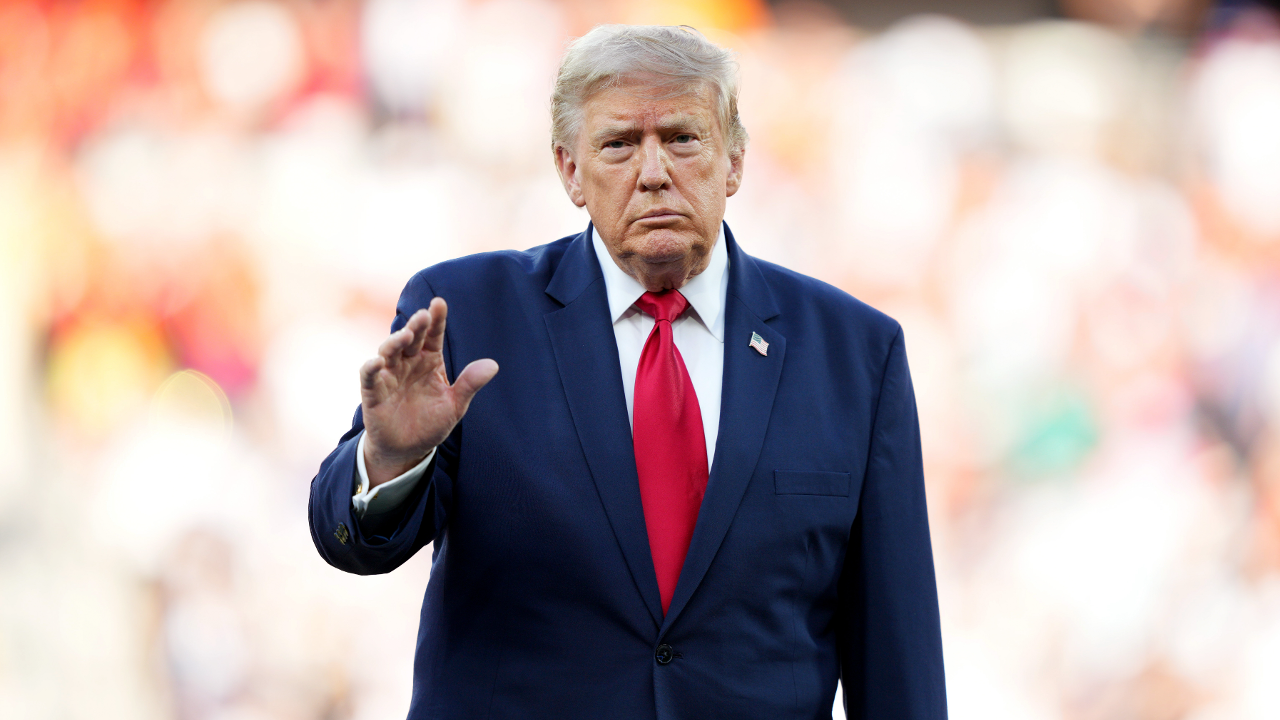
Trump is pushing a simple idea with big consequences: if America wants a stronger military, it has to stop depending on shaky foreign supply lines. That means tightening control over critical minerals, semiconductors, and the industrial base that keeps weapons, drones, and defense systems moving.
The logic is hard to miss. If China or other adversaries can choke off the parts and materials the Pentagon needs, they get a say in America’s readiness without firing a shot. Securing those chains is not just smart economics, it is basic national defense.
One of the clearest examples is the move to keep defense contractors from buying critical minerals tied to China. That kind of step sends a blunt message that national security comes before cheap sourcing and lazy global dependence. It also fits a bigger effort to bring more manufacturing back home, where it can be watched, trusted, and scaled when needed.
That matters for workers too. More onshoring means more factory activity, more skilled jobs, and fewer bottlenecks when the country needs equipment fast. A defense supply chain built on reliable American production is a lot safer than one stretched across hostile or unstable regimes.
There is also a growing recognition that allies can help, but only if the final work is rooted in the United States. Partnering with close friends like G7 nations can add speed and expertise, yet the key point stays the same: production has to happen on U.S. soil. That keeps the leverage where it belongs.
The drone boat deal between U.S. company ReconCraft and Ukrainian company Uforce shows how that can work in practice. The arrangement brings battlefield know-how together with American manufacturing in Portland, Oregon, while helping the Pentagon build up autonomous weapons capacity. It is the kind of practical cooperation that actually strengthens deterrence instead of just sounding good on paper.
Ukraine’s experience has real value here. Years of fighting a brutal war have forced its drone operators and engineers to innovate quickly, and that know-how can be useful far beyond Eastern Europe. When that experience is paired with American industrial strength, the result can be faster adaptation for future conflicts.
That is especially important in places like the Middle East, where advanced drone and counter-drone systems are becoming central to modern warfare. The war with Iran has made it even clearer that the U.S. needs force multipliers, not slow bureaucratic lag. Speed, flexibility, and supply chain security now sit at the center of military readiness.
Semiconductors are the next big choke point. Drones and plenty of other defense systems depend on chips and precursor materials, which makes semiconductor policy a national security issue, not just a tech issue. If the supply chain is compromised, everything built on top of it becomes vulnerable too.
That is why Sen. Marsha Blackburn’s Chip EQUIP Act drew attention. The goal is straightforward: stop companies receiving CHIPS Act funding from buying specialized technology from firms controlled by China and other hostile countries. It is a direct answer to the quiet danger of letting adversaries sit inside America’s industrial plumbing.
Blackburn’s warning about manufacturing tools from Communist China, Russia, North Korea, and Iran hits the point squarely. A country cannot claim supply chain independence while relying on equipment built by its enemies. That is how vulnerability gets baked into the system before anyone notices.
There is a Tennessee angle too, since the state is home to important pieces of the semiconductor materials chain. That gives the debate real-world weight, not just policy jargon. The issue reaches from factories to labs to the battlefield, and it is being felt in places where American defense actually depends on what gets made and where.
The larger shift is easy to see. Washington is starting to treat industrial capacity like a weapons system of its own, and that is long overdue. A military can only be as strong as the supply chain behind it, and that chain has to be built to resist pressure from America’s enemies.
