
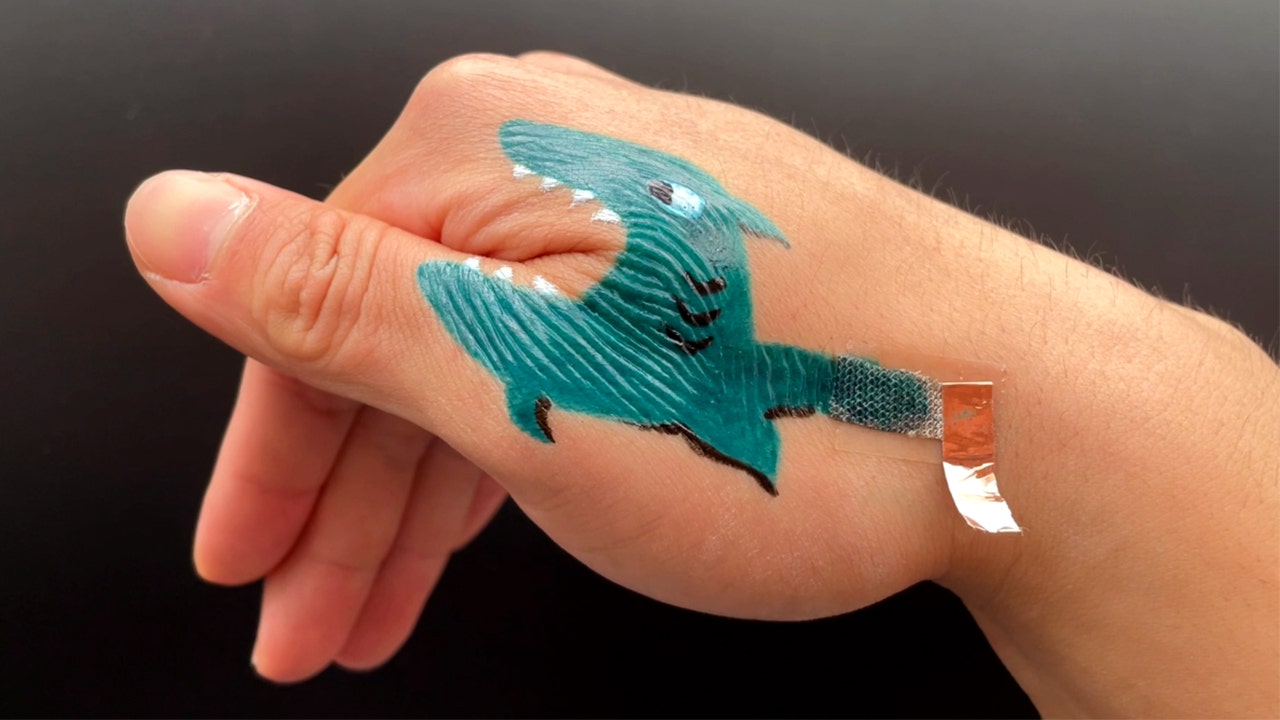
Penn State researchers are pushing wearable health tech into some pretty wild territory with a paint-on electronic tattoo that can read the body’s electrical signals, flex with movement, and even help drive a robotic hand in early tests. The idea is simple but striking: instead of sticking on a rigid patch, you paint on a sensor that dries fast, blends into skin like body art, and keeps working through everyday life.
The ink starts as a water-based mix of polymers and acidic additives, and once it is brushed onto skin, it hardens in under 10 minutes. A hair dryer can speed that up even more. After it dries, the material becomes a working electrode that sits close to the skin’s natural texture, which helps it catch cleaner signals than a lot of traditional wearable sensors.
That close fit matters because regular electrodes can be annoying, bulky, or just plain inconsistent. Metal-based versions can lift during movement, while some softer hydrogel sensors may dry out or lose their grip over time. A painted sensor can settle into the ridges of the skin before it locks in place, which gives it a better shot at staying accurate when the wearer is walking, exercising, or just living normally.
The design is also meant to look a lot less clinical. Researchers can tint the ink with food dye, so the finished tattoo can resemble a colorful pattern instead of a medical patch. That gives people more freedom to wear something that feels personal rather than medical, which could make a real difference for kids, teens, or anyone who does not love the idea of wearing obvious health gear all day.
To connect the skin-level tattoo to the rest of the system, the team used a porous silver textile that links the painted electrode to an electronic module. Part of the wet ink soaks into that textile and hardens there too, creating a secure bridge. The module sits under clothing and sends the data to a computer over Bluetooth, which keeps the setup relatively lightweight and portable.
The material itself seems surprisingly durable for something so thin. According to the research, the porous textile let the electrode stretch beyond 150% of its original size without failing. It also leaves room for hair and moisture to pass through, which helps avoid the sort of contact problems that often mess with wearable sensors.
In testing, one co-author wore the painted electrodes during normal daily activities for 12 hours, and the system kept tracking ECG readings the whole time. ECG measures the heart’s electrical activity, which can help doctors look for irregular rhythms and other warning signs. Another test had a participant use the tattoo during exercise, and the sensor stayed attached while still collecting solid data.
The team also found that the tattoo could capture EMG signals from muscle contractions when painted onto a forearm. Those signals were sent to a robotic prosthetic, letting the user control a robotic hand without physically touching it. The paper even describes EEG detection through hair, plus no image artifact during MRI testing, which suggests the material may play nicely with medical imaging instead of clashing with it.
That is where the heart attack question comes in, and it is the part that grabs attention for good reason. Penn State says the tech could one day help spot heart attacks early by picking up detailed ECG changes, but that is still a future possibility, not a proven diagnosis tool. The researchers have not tested the tattoo on patients having heart attacks, so it cannot replace emergency care or standard medical testing.
Still, the bigger appeal may be how wearable health monitoring could feel if it stopped looking and feeling so much like medical gear. A custom tattoo that washes off after use but keeps the more expensive module intact could lower the hassle of repeated monitoring. The team is now looking at future versions that might track biomarkers like glucose or cortisol, and they are even exploring possible uses in plants, where painted electrodes could help study chemical exposure and environmental stress.
