
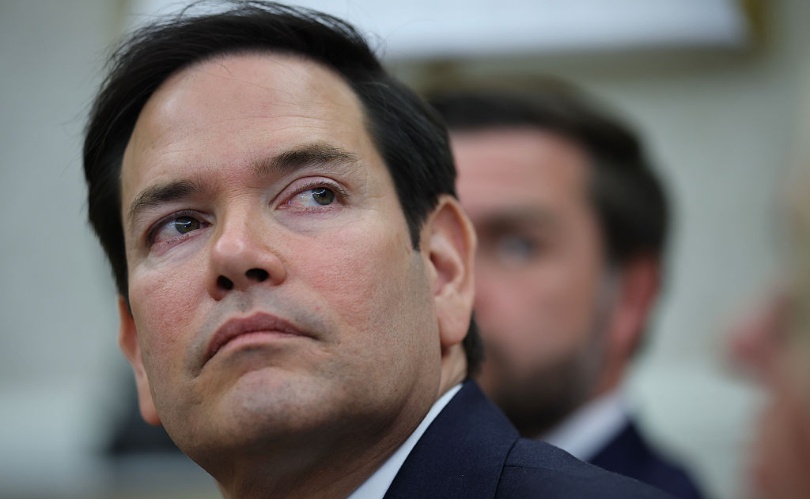
Marco Rubio is taking aim at what he sees as a dangerous strain of far-left political violence, warning that it is not random chaos but part of a bigger worldview that rejects civilization, faith, and human greatness. Speaking to a group of Western leaders in Washington, he pressed the case that the United States and its allies need to treat this threat seriously, not shrug it off as another passing flashpoint.
At a ministerial meeting focused on the resurgence of political terrorism, Rubio said leftist extremism has a brutal pattern behind it. He described it as “a distinctive and unique evil,” and argued that its real target is not just property or institutions, but the very idea of ordered, meaningful society.
https://x.com/StateDept/status/2077753532409647185
Rubio said the violence is fueled by resentment, not noble ideals. In his view, the language of equality and justice is often just a mask for destruction, a way to dress up rage while tearing down what other people have built. He framed it as a revolt against excellence, beauty, and strength, with terror used as the tool to force everyone else to live under that ugliness.
He was just as blunt about communist thinking. Rubio rejected the idea that communism is appealing in theory but flawed in practice, saying the truth is worse than that because the vision itself is hollow and crushing. The future it promises, he argued, is “small, flat, gray,” stripped of courage, creativity, ambition, heroes, and the kind of higher purpose that gives people a reason to strive.
That line of attack carried into the deepest part of his remarks when he said, “The world communism envisions is a world without God.” For Rubio, that is not just a theological jab, but a warning about what happens when an ideology declares war on meaning, moral order, and the things people hold sacred. He presented it as a worldview that does not simply fail, but actively wants to level everything that rises above mediocrity.
He also connected modern sabotage and attacks on infrastructure to this same mindset. Pipelines, railroads, power grids, and laboratories were all mentioned as examples of the physical symbols that revolutionary violence likes to strike, because they represent invention, power, and progress. The point, according to Rubio, is not just to disrupt daily life, but to spit on the achievements of civilization itself.
Canadian psychologist and author Jordan B. Peterson chimed in after Rubio’s remarks, drawing a sharp moral line of his own. He said Marxism should be seen as one modern expression of an older evil rooted in envy and hatred, the same spirit that drove Cain to kill Abel. It was a grim comparison, but one that fit neatly with Rubio’s broader message about envy turning into destruction.
Peterson went on to say that the biblical story in Genesis shows humanity locked in a deep and recurring conflict. Those who refuse sacrifice, he argued, often grow bitter when they fail, and instead of changing course they turn to revenge against the people who are trying to do what is good. That lens put the whole debate in moral terms, not just political ones.
Meanwhile, the State Department moved in a more concrete direction. It announced new visa restrictions aimed at keeping far-left terrorists and those who support them out of the country, saying foreign nationals who finance, incite, or aid such groups are not welcome in the United States. That step matched the tone of Rubio’s warning, turning the rhetoric into a policy response with real teeth.
