
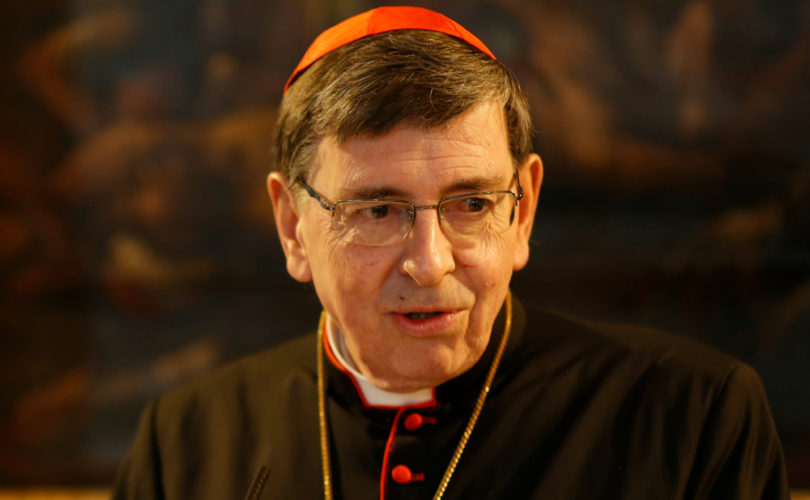
Cardinal Kurt Koch is keeping the door open, at least in theory, for talks with the Society of St. Pius X even after its latest unauthorized episcopal consecrations triggered a fresh round of controversy. His message was blunt but not closed off: discipline matters, but so does the chance of reconciliation, and the Vatican still sees room for a path back if the right conditions emerge.
Koch, who leads the Dicastery for Promoting Christian Unity, said in a July 2 podcast interview that the SSPX’s consecrations without a pontifical mandate do not permanently block future dialogue with the Holy See. He framed excommunication as a corrective measure, not a final shut door, saying it is meant to push repentance and restore communion rather than kill off every possibility of conversation.
He also made clear that he hopes the conversations can start again someday. In his view, the goal is straightforward even if the road is messy: the Society should eventually find its way back into full Catholic unity, and dialogue remains the only realistic route if that is going to happen.
The cardinal put the fight into a larger Church history frame, pointing out that tensions like this have appeared after several ecumenical councils. He said some groups in the past argued that the Church was drifting from Tradition by embracing changes they viewed as dangerous, and he suggested the same basic issue is still alive now.
For Koch, the real question is how to stay faithful to Tradition while still dealing with the problems of a changing world. He also said the Second Vatican Council is still close enough in time that cooler heads may eventually help the Church understand it better, especially by looking honestly at how it has been received and interpreted since it ended.
That honesty, he said, should include some self-critique. Koch argued that the Church ought to “beat our breast” and sort out which post-conciliar developments need correction, while insisting that many of the SSPX’s complaints are aimed less at the council’s actual texts and more at the interpretations and practices that followed them.
He drew a line between Vatican II itself and the way it has often been applied in the years since. In Koch’s view, that distinction matters if the Church wants to answer the Society’s objections in a serious way rather than waving them away with slogans.
At the same time, he did not let the SSPX off the hook. Koch criticized its decision to consecrate bishops without papal approval, saying that kind of move amounts to claiming authority that belongs to the Pope, and he compared that instinct to the way some progressive groups also act as if Church authority does not apply to them.
“Once again it is clear that traditionalists and progressives can suffer from the same illness, even though they are admitted to very different wards of the same hospital,” he said. The line landed like a warning shot, aimed at both ends of the Church’s internal battles and not just at the SSPX alone.
Koch also pushed back on the Society’s reading of Tradition. In his view, the SSPX wrongly treats Vatican II as a rupture with authentic Catholic continuity, when the issue is better understood as a clash over interpretation, authority, and how faithfully the Church has carried itself through modern pressure points.
He went further by challenging the Society’s use of the phrase Extra Ecclesiam nulla salus, or “Outside the Church there is no salvation.” Koch said he struggles with any reading that seems to consign every non-Catholic to hell, adding that Sacred Scripture teaches that God wants to save all people and that final judgment belongs to God, not to human theological guesswork.
The latest flashpoint came one day after the SSPX consecrated four priests as bishops in Écône, Switzerland. Koch called that act “schismatic,” and Vatican decrees issued on July 3 said it carried automatic excommunication, which only raised the stakes around the group’s next move and the Church’s response.
