
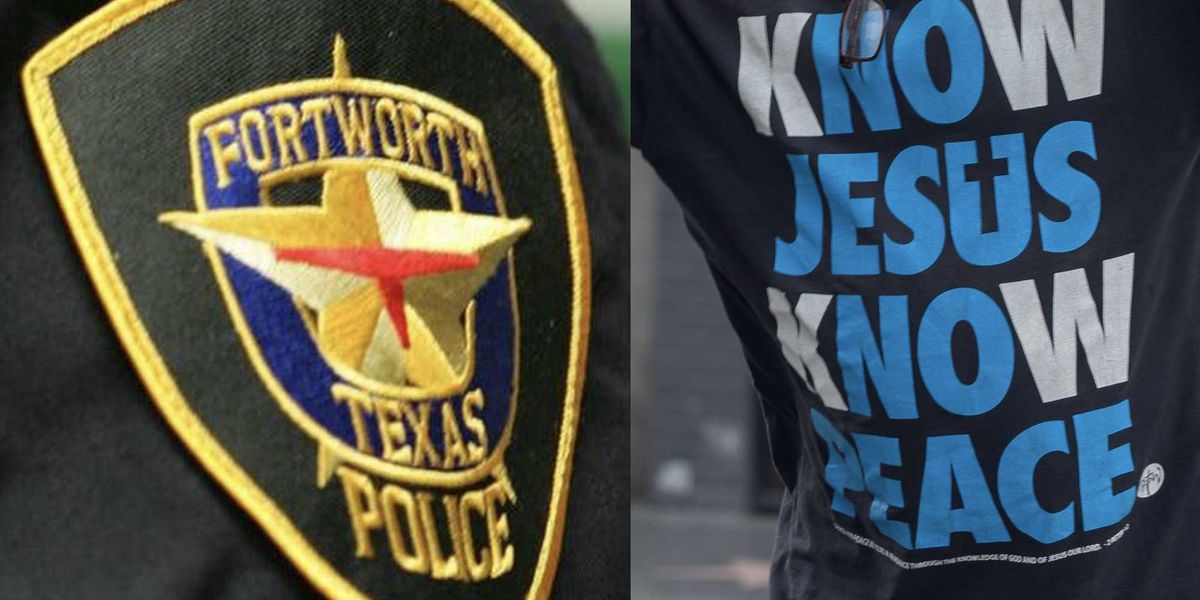
The clip of Fort Worth police confronting a Christian street preacher outside a Pride event sparked outrage, drew federal civil rights attention, and raised sharp questions about where public order ends and free speech begins. Local officers say the dispute was about an amplified bullhorn and noise complaints, while supporters argue the response chilled religious expression. The Justice Department’s civil rights team has signaled it’s reviewing what happened.
A viral encounter shows David Grisham and a teammate preaching near a Pride gathering when a female officer confronted them and warned of arrest if they didn’t stop. The officer’s words were blunt: “If someone is offended by your talking, then we have a problem,” and she added, “If they are offended by your speech … I will write you a ticket, and we’ll go from there.” That exchange, captured on video, is at the heart of the constitutional clash.
Listeners and viewers quickly framed the episode as a free speech and religious liberty issue, arguing police appeared to single out the evangelists for their message rather than any genuine public safety risk. Video of the interaction was by the popular Libs of TikTok account, and reactions poured in condemning what many saw as an overreach. The debate intensified once a second clip surfaced that showed other officers Grisham during the incident.
Authorities ultimately issued Grisham a citation for “unreasonable noise,” a charge typically aimed at construction sites or barking dogs but applicable more broadly under local codes. His legal team has pushed back, insisting the citation process was botched and that officers never performed the required decibel check. “This ordinance was not followed because no officer performed a decibel check,” the attorney said, arguing the city misapplied its own rules in the field.
The legal argument also contests how the city’s decibel limit was set, with counsel claiming the local standard sits beneath the state threshold and therefore creates confusion for both citizens and law enforcement. In the attorney’s words, “Mr. Grisham was exercising his right to express his views on matters of significant public concern,” and he blasted the department: ‘The Fort Worth Police Department responded, not by protecting his constitutional rights, but by threatening him with arrest and ultimately issuing a citation.’ That accusation now forms a core piece of the federal inquiry.
https://x.com/libsoftiktok/status/2074971464487284897
Fort Worth police spokesman Officer Buddy Calzada issued a statement saying the trouble began when the group “was using a bullhorn to amplify their voice.” Calzada said officers responded after complaints from nearby businesses, told the preachers to stop using the loudspeaker, and then seized the device as evidence following the citation. Those details give police a procedural side to the story, even as public criticism focuses on tone and intent.
Calzada insisted the department did not bar anyone from speaking, stating, “At no time did officers prevent any individuals from expressing their views.” He added that “Officers told the individuals they could continue exercising their rights without using an amplification device. However, the individuals willingly ceased protesting after the bullhorn was seized as part of the enforcement action.” Still, he conceded the viral clip didn’t capture the whole exchange and admitted some remarks by an officer “were not accurate.”
The involvement of the Justice Department came after the video gained traction online, prompting Assistant Attorney General for Civil Rights Harmeet Dhillon on social media that federal civil rights lawyers would take a look. “Troubling,” she wrote. “Our [civil rights] team is on it.” That step elevates a local dispute into a broader constitutional review, and it signals federal willingness to weigh in when First Amendment and religious liberty claims intersect with municipal enforcement.
From a perspective that prioritizes strong protections for speech and faith, this scene reads as a cautionary example of how quickly routine enforcement can feel like selective suppression when officers threaten tickets based on subjective offense. The questions raised are straightforward: did police follow their own rules, was the ordinance applied fairly, and are citizens being treated the same when their message is unpopular? As investigators sort through bodycam footage, witness statements, and legal filings, those questions will determine whether this was enforcement done properly or rights stamped down.
The case is moving beyond social feeds into formal review, and both sides now face scrutiny over actions and intent. The outcome will matter for how municipalities handle amplified speech at public events and for any future clash between strongly held religious views and gatherings that provoke strong reactions.
