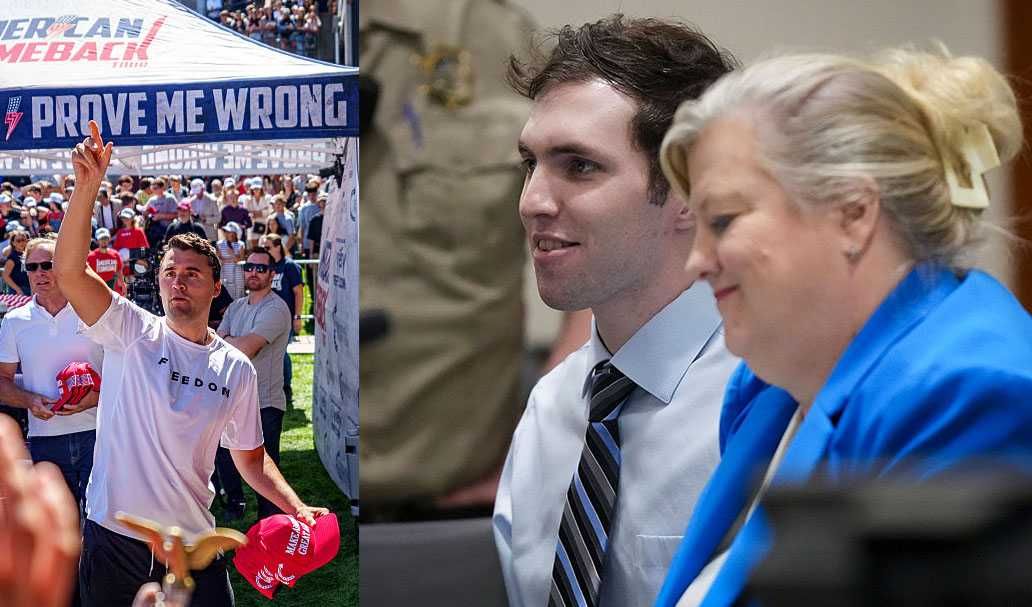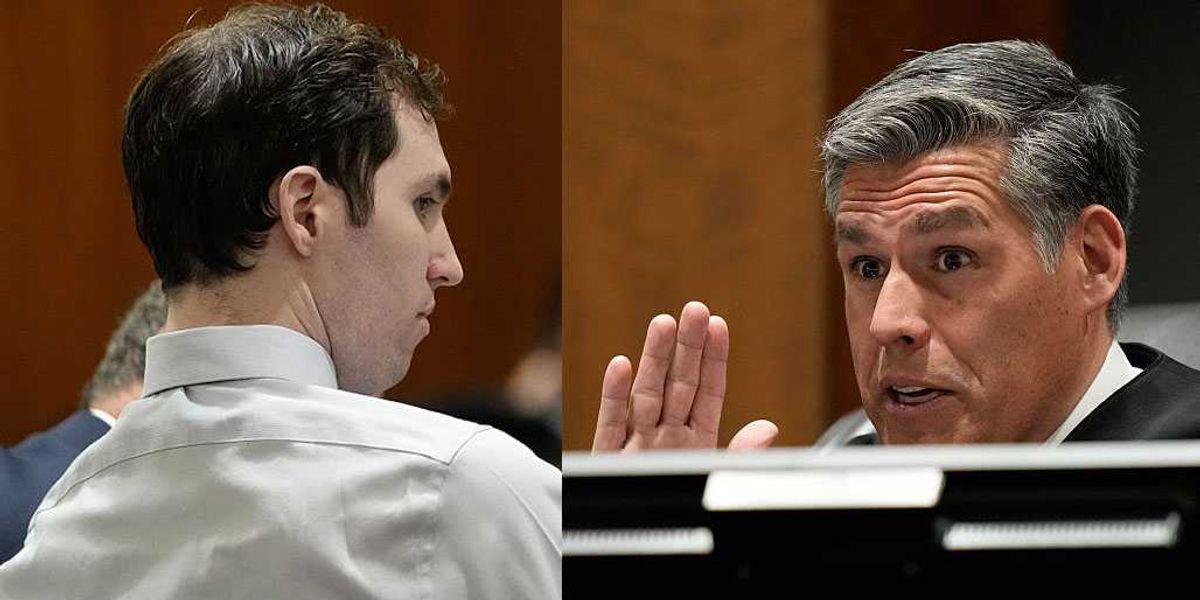
The preliminary hearing over the alleged killing of Turning Point USA founder Charlie Kirk wrapped up this week with a judge reviewing a large body of evidence that prosecutors say ties Tyler Robinson to the shooting. Over five days the court watched surveillance clips, heard a roommate’s deposition and saw forensic testimony about DNA and engraved ammunition. Robinson did not testify, faces multiple felony counts, and the judge will decide whether the case moves to trial at a later date.
The five-day session focused on whether enough evidence exists to send Robinson to trial, and much of that evidence came from camera footage and witness statements. Prosecutors presented surveillance that allegedly tracks a suspect moving around campus, changing appearance, getting onto a rooftop and leaving immediately after shots were fired. The tone in the courtroom was tense, and defense objections over what could be shown took up a lot of time.
The clips shown in court depict someone on campus who, according to prosecutors, altered his look, developed a stiff leg and climbed to a rooftop area overlooking the scene. That person then apparently dropped from the roof and left the scene holding “some kind of object,” which prosecutors say is consistent with a shooter retrieving gear. If the footage is what the state claims, it paints a picture of preparation and an escape route that investigators followed closely.
Central to the prosecution’s story was the testimony from Lance Twiggs, who appears on video deposition and repeatedly identified the person in the footage as Robinson, saying it “definitely” looked like him. Twiggs also testified that Robinson left their apartment unusually early the morning of the shooting, returned in distress and “started crying a bit” the next morning as he told Twiggs that “he wishes he hadn’t done it”. That sequence of behavior was presented as striking and suspicious to the judge.
Another thread the state emphasized involved engraved ammunition found with the suspected weapon. Twiggs testified he lent Robinson a tool used to engrave bullets, and prosecutors highlighted inscriptions including “Hey fascist! Catch” and “If you read this, you are gay, LMAO”. The prosecution also introduced alleged text messages in which Robinson supposedly referenced one of the engravings, including the line “If I see ‘uwu notices bulge’ on fox new [sic] I might have a stroke”. Messages presented in court were used to show motive and intent, and to link Robinson to the weapon and its markings.
https://x.com/NickAtNews/status/2075314348919005258?s=20
Forensics and investigative testimony strengthened the state’s narrative: a Utah Department of Public Safety sergeant testified that two sets of male DNA on a towel wrapped around the suspected murder weapon matched Twiggs and were very likely Robinson’s. A former state investigator described a sighting of a vehicle registered to Robinson near Campus Drive the day after the shooting. An ATF forensic biologist later testified that swabs from the weapon and ammunition indicate the DNA was primarily contributed by Robinson.
Friday’s session was dominated for a time by a separate issue when a media cameraman violated a court order and displayed an exhibit that had not been cleared for circulation, an alleged note linked to the defendant that was shown in court. That containment failure interrupted proceedings and became a focal point as lawyers argued over what the public had already seen and what must be kept under seal. The document in question was presented in court and includes this passage:
If you are reading this per my text, then I am so sorry. I left the house this morning on a mission, and set an auto text. I am likely dead, or facing a lengthy prison sentence. I had the opportunity to take out Charlie Kirk, and I took it. I don’t know if I will/have succeeded, but I had hoped to make it home to you.
After the evidentiary exchange, the defense pressed on procedural matters and the judge handled disputes about what evidence could move forward. Robinson chose not to testify during the preliminary hearing and has not entered a plea. He faces serious charges including aggravated murder, a capital first-degree felony, discharge of a firearm causing serious bodily injury, committing a violent offense in the presence of a child, counts of obstruction and alleged witness tampering aimed at persuading his boyfriend to delete messages and stay silent.
The judge will weigh everything presented during the five days before deciding whether Robinson should stand trial, and the hearing is set to resume on Sept. 1 for final arguments about probable cause. For those watching, the case raises raw questions about political violence, motive and how surveillance and DNA evidence intersect in high-profile criminal matters. The court now has the responsibility to sort through the evidence and determine if it justifies moving to trial.