
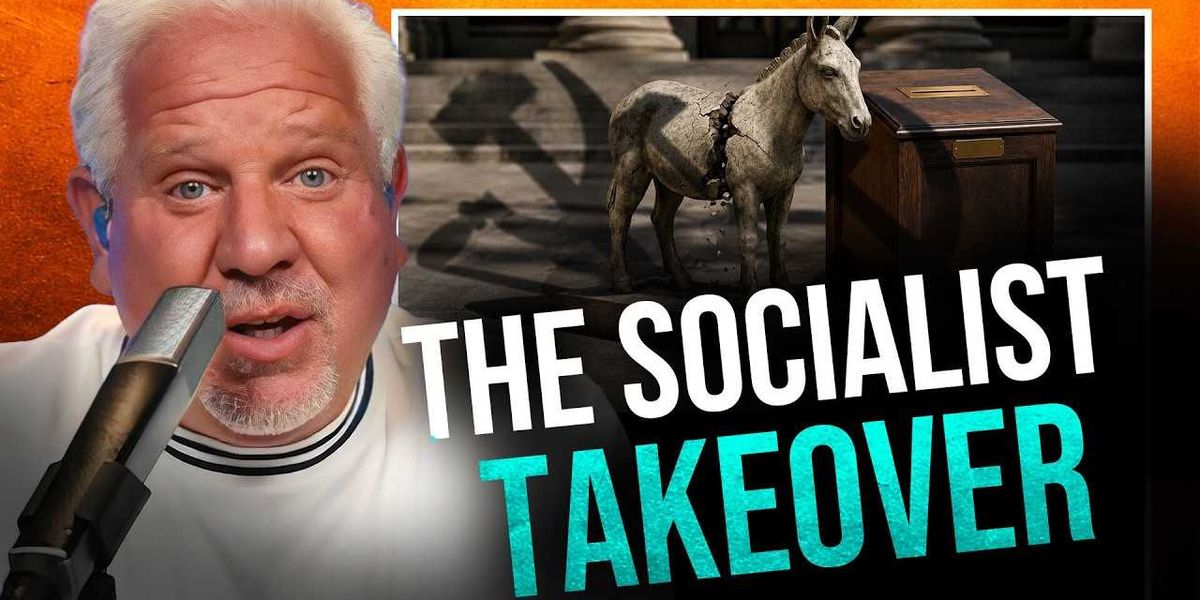
City politics are shifting and the fight over economic direction just got louder, with a new crop of elected socialists claiming victories and conservative voices pushing back. New York Mayor Zohran Mamdani delivers blunt lines about taxes and ideology while Glenn Beck and others warn that the movement draws its energy from campuses and cultural institutions rather than traditional working-class bases. The debate raises questions about where power and influence really sit and what voters should expect next.
Zohran Mamdani is presented as a frontline example of this change, openly framing his agenda around taxing wealthier residents and reshaping city priorities. “We raise taxes on the wealthiest New Yorkers instead of taking more from those with the least. Throughout this process, I have been reminded of the words of the Austrian economist Friedrich Hayek: ‘If socialists understood economics, they wouldn’t be socialists,’” he said in a recent speech. That line lands as both a challenge and a provocation to traditional economic argument.
He pushed the message further, insisting his movement can correct prior failures by leaning into its core beliefs and policies. “If these past months have shown us anything, it is that socialists not only understand economics just as well as the capitalists who came before, but that we can solve their years of mismanagement through an embrace of our principles,” he added. To many mainstream voters, however, promises to expand the city’s role translate into higher costs and more centralized control.
Critics from the conservative side see a pattern and sound alarm bells about where this energy originates and what it means for the country’s future. Blaze Media co-founder Glenn Beck can’t believe how far their movement has come, pointing out that while “every single socialist experiment fails,” democratic socialists like Melat Kiros — who just won the primary in Colorado — continue to gain ground. That contradiction fuels a frantic conversation about whether recent wins are isolated or part of a broader shift.
Beck presses into the rhetoric he sees from new socialist leaders and the way it’s framed for supporters. “She says, ‘We’re taking our system back, and we’re taking our country back,’” he says. “What do you mean you’re taking your country back?” That line cuts to a core disagreement: whether changing the system is reclamation or an entirely different project.
He points to the deeper implications of rejecting capitalism and asks practical questions about future governance and electoral consequences. “When you’re talking about getting rid of capitalism, you’re not taking it back,” he continues. “So, the question is, is this just the edges of the party, or … is this a death knell for the next election?” Those are stark choices to put before voters who worry about job growth, innovation, and individual freedom.
Beck also highlights what he sees as a mismatch between historical socialist claims and today’s personnel and institutions. “And here’s something else that nobody seems to notice,” Glenn says. “Every successful socialist movement in history claimed to represent the workers. … Where are the workers today? Where are they?” That observation reframes the struggle as one over legitimacy: who truly speaks for the working class and who speaks for credentialed elites.
From his vantage, the modern movement’s backers are less often factory hands and more often people shaped by training, media, and cultural institutions. “Today’s movement represents the graduates. Look where all the energy comes from. The elite universities, the prestigious media, the nonprofits, the government bureaucracy, the professional advocates, the activists, the commanding height of culture,” he continues. For conservatives, this concentration of influence feels like policy being written by a narrow slice of society rather than a broad cross-section.
He closes with a memorable contrast meant to sting those who romanticize labor-driven revolutions. “Karl Marx predicted the revolution would come from the factory floor. Instead, it seems to be coming from the faculty lounge,” he adds. That picture is meant to persuade skeptics that power has moved away from everyday workers and toward institutions that rarely face the consequences of sweeping public policies.
