
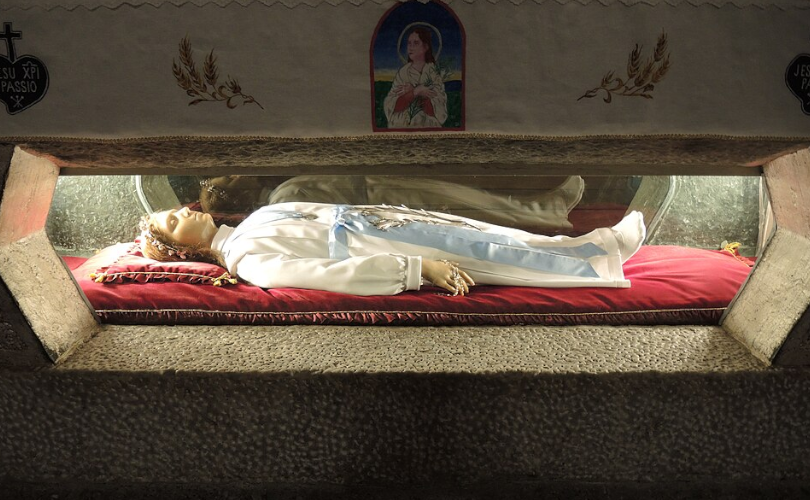
Theologians in Germany are urging the Church to rethink how it presents St. Maria Goretti, arguing that the “martyr of purity” image can retraumatize abuse survivors and clashes with modern trauma science; this piece explores their claims, the pastoral tensions at play, and the wider implications for faith communities and victim care.
The debate centers on a simple but powerful claim: framing Maria Goretti primarily as a symbol of chastity risks sidelining survivors’ real pain. The theologians want the Church to update its language and pastoral practice so that it reflects contemporary understanding of trauma. That shift would change how parishes talk about virtue and victimhood.
Tradition long cast Maria Goretti as a model of purity who chose death rather than compromise. For many believers that narrative has been inspiring, a testimony to faith and moral resolve. Yet the theologians argue the story can be heard differently by people who carry wounds from sexual violence.
Modern psychology and trauma research offer a different lens on responses to abuse, which are often shaped by fear, coercion, and survival instinct rather than pure moral choice. When the Church prizes a one-dimensional ideal of chastity, survivors may feel judged for reactions beyond their control. The theologians say pastoral care should prioritize compassion and healing over moral exemplars.
Calling for change is not the same as erasing saints or denying spiritual insight. Instead, the proposal is to broaden the conversation so saints can be seen as complex human figures with stories that teach more than moral absolutism. That approach would allow clergy and communities to name suffering without implying blame.
Some worry that adjusting the language around Maria Goretti will weaken moral teaching or confuse the faithful. Those concerns reflect a genuine fear that tradition might be discarded in the name of modern trends. The theologians counter that refining how the Church speaks about victims strengthens moral credibility by showing real-world sensitivity.
Practical pastoral steps are central to the discussion: adopt trauma-informed liturgies, offer clearer support networks, and ensure homilies acknowledge power and violence. Parish programs could include trained counselors and explicit statements that blame belongs with abusers, not survivors. These are concrete ways to translate theology into care.
Beyond immediate pastoral response, the debate touches on how communities form moral imagination. If saints are taught only as idealized types, believers may struggle to relate their own flawed experiences to the life of faith. Presenting saints as people who suffered, who made complicated choices, can make faith more accessible and healing.
Institutional change will be slow and contested, especially in places where devotional practices are deeply rooted. Theologians and bishops will need to balance respect for devotion with responsibility to protect the vulnerable. Open dialogue, grounded in both scripture and science, is the path the proponents advocate.
The question ultimately is about priorities: is the Church more committed to preserving a tidy moral narrative or to addressing the needs of those who have been hurt? Theologians pushing for revision believe faith communities can hold both truth and mercy without sacrificing either. That claim invites a sober, compassionate conversation.
Whatever happens next, the conversation matters for how faith communities welcome the wounded back into worship and life. Rethinking a popular portrayal does not erase devotion, but asks that devotion be lived in a way that heals rather than wounds. Theological language can change to match pastoral care that puts survivors first.
In the end, the debate is a test of pastoral imagination and moral seriousness. If the Church is willing to listen to trauma research and to survivors, it can keep saints as sources of inspiration while ensuring victims are treated with dignity and care. That balance is what many theologians now urge.
