
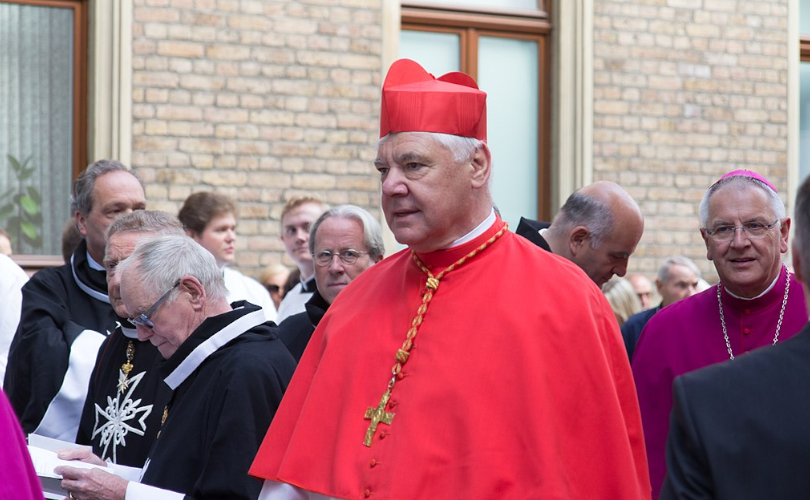
Cardinal Müller declared that the sacraments administered by the Society of Saint Pius X are valid, and he challenged a contrary position attributed to Cardinal Fernández; at the same time he counseled Catholics to seek priests “in full communion with the Pope.” This piece explains what Müller stated, why validity and permissibility are different things in Catholic sacramental theology, and what his guidance means for ordinary faithful navigating pastoral choices.
The heart of the matter is a distinction many people miss: a sacrament can be valid without being licit. Cardinal Müller emphasized validity, meaning that the sacramental rites performed by SSPX clergy can effect what the Church intends when form, matter, and intent are present. That technical point matters for theology and for people concerned about the real presence, baptism, and other essentials of sacramental life.
Even while affirming validity, Müller urged caution. He advised Catholics to avoid SSPX sacraments in favor of priests who are “in full communion with the Pope.” That pastoral nudge reflects more than a canonical quibble; it speaks to the central Catholic concern for visible unity and for receiving sacraments in contexts fully integrated into diocesan and parish life.
For lay Catholics trying to decide where to go on Sunday, the distinction has practical effects. Validity addresses whether a sacrament produces its intended spiritual effect, while communion and canonical standing affect the regularity and pastoral accountability around that sacrament. Müller’s counsel therefore blends theological clarity with a call to ecclesial unity, asking the faithful to weigh both dimensions.
Observers should note the broader implications for pastoral care. When clergy operate outside regular canonical structures, questions arise about marriage prerequisites, annulment processes, and long-term spiritual guidance connected to a parish community. Müller’s recommendation to prefer priests in full communion points toward a preference for stable sacramental scaffolding that supports a person’s entire spiritual life.
The public nature of this exchange also matters. Saying that “Cardinal Fernández is wrong,” as Müller did in effect, signals an internal debate among Church leaders about how to handle irregular situations while safeguarding doctrine. Those debates are not merely academic; they shape Vatican policy, diocesan practice, and the decisions individual Catholics make about where they worship and receive the sacraments.
Catholics wrestling with these issues should consider several practical steps: ask local diocesan offices for guidance, seek priests who are canonically stable, and discuss personal sacramental concerns with a trusted pastor. Müller’s dual message—acknowledging sacramental validity while urging communion with the Pope—encourages careful discernment rather than abrupt judgment or casual disregard for ecclesial order.
The conversation around SSPX sacramental validity and canonical status is likely to continue, and Müller’s intervention keeps theological accuracy in the mix while pressing for pastoral unity. For individuals, the takeaway is simple enough: understand the difference between what a sacrament is theologically and where it is best received pastorally, and let that understanding guide choices about worship, confession, and lifelong spiritual formation.
