
The Great American State Fair in Washington, D.C., was forced to pause after several people reportedly fainted amid Independence Day crowds, briefly reopened and then shut down again, prompting strong reactions from visitors and renewed warnings about heat-related illness from public health officials.
The disruptions began Friday when multiple medical incidents required on-site attention as thousands gathered for the nation’s 250th anniversary events. Organizers reopened the fair later that evening but then postponed activities again the following day when conditions remained extreme. The stop-start schedule left families and veterans scrambling to adjust plans. Attendees described a mix of gratitude, frustration and determination to make the trip matter.
“We are so blessed to live in the best country in the world,” Whitney Thomas, a mother who traveled with her family for the Great American State Fair, said after enjoying the fair on Thursday evening. She said her kids, ages 9 and 10, had a memorable night and that the family planned to wait out the heat in nearby museums until gates reopened. Small adjustments like museum visits and public transit became the default plan for many staying in the city. The mood among families stayed upbeat despite the interruptions.
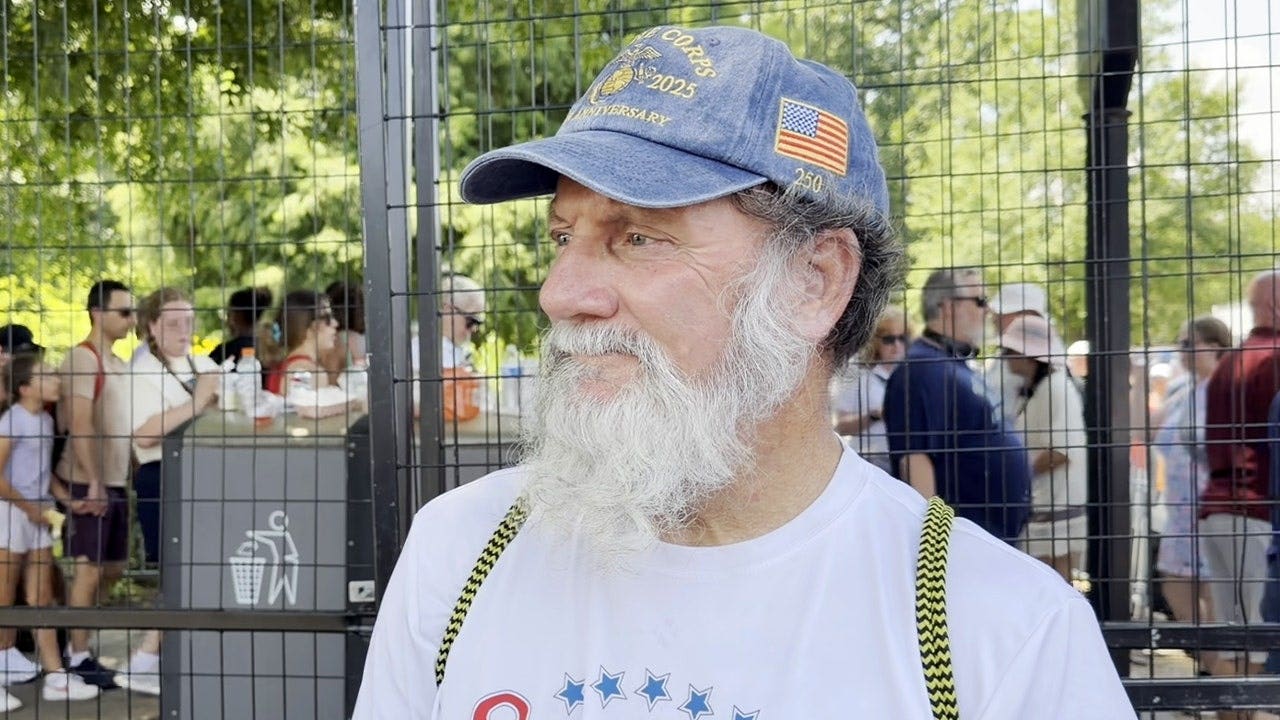
Not everyone agreed with the decision to pause the festivities, and some veterans voiced sharp criticism. “You cannot tell me that America was won by shutting things down when it gets hot,” Brad Shultis, a retired Marine, said after being turned away shortly after arriving. He added, “It gets hot, and we shut it down because it’s hot? Who cares? If it’s too hot, stay home.” His argument reflected a strand of thinking that public events should push through discomfort rather than pause for safety.
Others took a different view and praised organizers for prioritizing health, noting that a sudden mass medical event could have been catastrophic. Wendy Lamb, who drove eight hours with family to represent her state’s booth, said it looked like organizers were trying to prevent visitors from suffering in extreme conditions. John, part of the same group, said the family planned to hop between museums and use the Metro to stay cool until the gates reopened. For many, the delay was an annoyance but not a deal breaker for the larger experience of visiting the capital.
Some visitors described powerful emotional moments that made the trip feel worth the trouble. “We’ve had a really, really fun time so far,” John said, while Pat Lamb recalled getting teary visiting the Capitol. “I mean, we are so fortunate we are free, and yet we have people out there that hate our country. … it’s very emotional,” she said, fanning her face to stop tears as she spoke about pride in seeing the Rotunda. Those scenes underscored why families would travel long distances even when the weather is unforgiving.
The decision to close or delay parts of the fair followed standard severe weather and heat protocols meant to prevent mass casualty situations. Public health guidance warns that extreme heat can overwhelm the body’s cooling mechanisms and cause conditions to deteriorate rapidly. Heat exhaustion can show up as heavy sweating, dizziness, nausea and fainting, while the most dangerous cases of heat stroke can push core temperatures to 103 degrees Fahrenheit or higher in minutes.
Officials urged anyone showing serious warning signs like confusion, slurred speech or loss of consciousness to seek immediate medical care, since delayed treatment can lead to organ damage or death. In high-heat settings, basic precautions such as finding shade, drinking plenty of fluids and locating air-conditioned cooling centers can reduce risk. Event planners and visitors alike face the challenge of balancing celebration with sensible steps to keep crowds safe when temperatures spike.
