
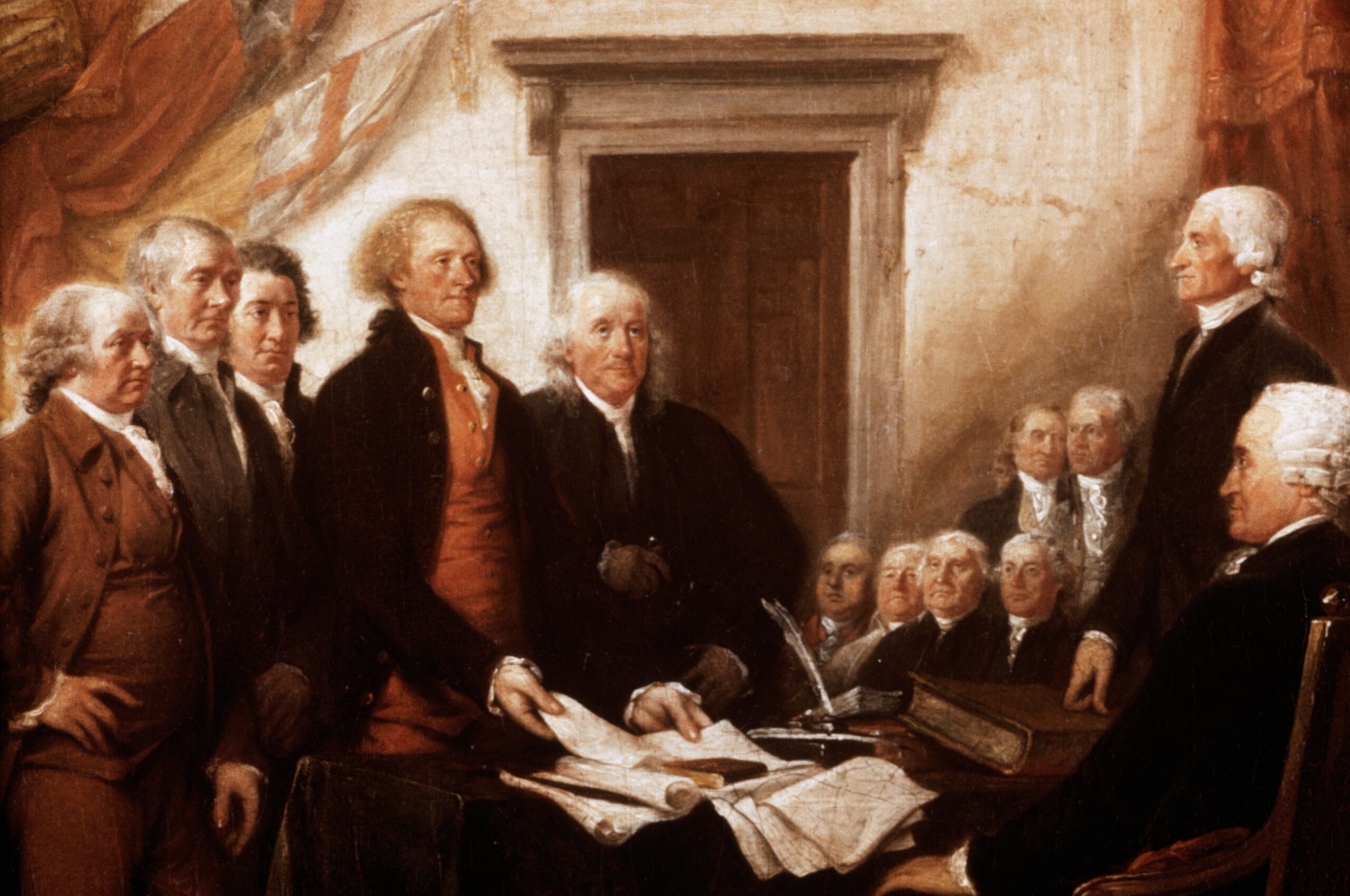
On a hot summer in 1776, a small group of Americans made a decision that reshaped the world. This piece tracks their gamble, the moral idea they put on paper, the sacrifices it demanded, and the long, American-led arc from tyranny to expanding liberty that still calls for defenders today.
Two hundred and fifty years ago, 56 men gathered in the Pennsylvania State House in Philadelphia and did the unthinkable: they openly rebelled against the dominant empire of their era. They were a cross section of colonial life—planters, merchants, lawyers and thinkers—people willing to trade safety for the chance of a free commonwealth. Their act was treason in law, courage in conviction.
Politics then was not about slogans; it was about systems. Most of the world lived under hereditary monarchs and imperial rule where equal rights were unknown or only faintly imagined. The American experiment was a radical refusal of that order, driven by Enlightenment ideas and Christian moral teaching that treated human dignity as nonnegotiable.
The Second Continental Congress looked to one of their own to turn these ideas into a compact the world could read and reckon with. Thomas Jefferson took on the task and retreated to a rented house to write. From June 11 to June 28, at the age of 33, he gave the nation a line that still rings across generations.
We hold these truths to be self-evident, that all men are created equal, that they are endowed by their Creator with certain unalienable Rights, that among these are Life, Liberty and the pursuit of Happiness.
Say those words out loud and try to picture living beneath a distant crown, powerless to change your place in the world. Picture a poor tenant whose life is fixed by birth or a slave denied any hope of legal dignity. Those words were a direct challenge to systems that assumed humans could be property or political afterthoughts.
The Declaration was not merely paperwork for a rebellion; it was a moral manifesto. It declared that governments derive their power from the consent of the governed and that rights come from a Creator, not a court or a king. That combination of moral claim and political prescription is what made the American cause contagious.
When the delegates signed the document and sent it off to King George and to the world, they committed the colonies to a war that few thought could end well. The cost was real: capture, torture, deaths in battle, ruined homes and starving families were part of the ledger. These were human costs paid by people who believed their posterity deserved something better.
They might have wondered, in dark winters and after lost battles, whether it was worth it. The answer came in time and through effort. Their victory set America on a path that encouraged representative government, free markets, and innovation—forces that have driven unprecedented prosperity and lifted billions worldwide.
The truth is blunt: the spread of liberty is not automatic. Powerful regimes and ideologies still seek domination over free people, and the fight for dignity and opportunity never really ends. That’s a central point the founders understood: rights must be guarded by citizens willing to stand for them.
Abraham Lincoln once noted that great men “thirst and burn for distinction” and will have it, “whether at the expense of emancipating slaves, or enslaving free men.” The globe remains a battlefield where liberty competes with forces that prefer control to freedom, and we should not be naive about how attractive power can be to would-be tyrants.
This Independence Day, marking America’s 250th, the right thing is to celebrate the courage shown by those who risked everything and to take up the practical duty they bequeathed. To honor them is to defend the principles they set down, to promote human dignity, and to push back against those who would roll back freedom. That is what loyal citizens should resolve to do, out of love for neighbors and for the blessings the founders invoked.
