
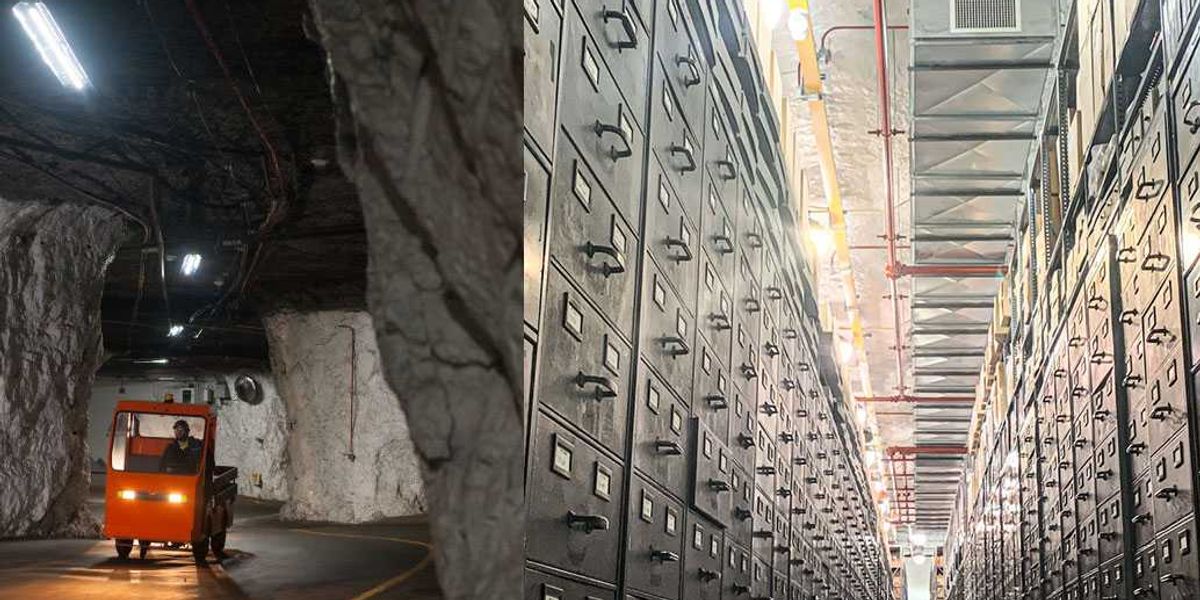
The Office of Personnel Management and the Department of Government Efficiency quietly ended one of Washington’s most ridiculous routines by moving federal retirement paperwork out of a literal mine and into the digital age, cutting wait times and finally making a process that never belonged in the 1970s run like it should. This shift slashes needless shuffling, gives federal workers clearer timelines, and shows how common-sense fixes can deliver real service improvements without fanfare. It’s a practical win for folks who want government to do less slow and more smart.
For decades, federal retirement claims were processed in a cavernous facility far from public view, with humans tracing paperwork through a maze of storage and mail. The old method created a giant paper trail and plenty of delays that cost retirees precious time and peace of mind. Moving that work online cuts out the long plumbing of bureaucracy and brings clarity to a process that used to feel like an endurance test.
The Boyers, Pennsylvania, site handled roughly 10,000 applications per month and was literally underground, 230 feet beneath the surface, where employees maintained cabinets full of decades of records and reams of forms. That setup came with obvious problems: slow routing, fragile files, and a system that needed to be rescued from inertia. Saying goodbye to shipping pallets of paperwork means fewer choke points and fewer chances for mistakes to pile up.
Shifting to an online platform does more than stop the paper shuffle; it speeds decisions and boosts transparency for federal employees preparing to retire. The new online retirement application has already processed well over a hundred thousand claims, which proves the system can scale. This isn’t about fancy tech for its own sake; it’s about delivering faster, clearer outcomes to people who earned their benefits.
Officials ran the project with a focus on practical gains: faster resolution, fewer mistakes, and better customer service for employees who deserve straightforward answers. The work required a lot of behind-the-scenes effort to digitize existing records and make sure the new process was secure and reliable. That grind is exactly what reform looks like when it actually happens—steady, targeted, and results-driven.
Leaders involved underscored how outdated systems had created a needless drag on government performance. One blunt description captured the old reality perfectly: ‘By hand, on paper, in a system that feels like a time capsule from the 1970s.’ A lot of people saw that and knew the system needed to be modernized, not prettified. The decision to move online reflects a clear preference for efficiency over process for its own sake.
https://x.com/DOGE/status/1889437908094042277?s=20
The rollout also brought a few public names into the mix, with praise for the technical work that made the switch possible. Kupor Musk “for his vision on this project,” Gebbia “for his technical leadership,” and the OPM members who made it happen, quipping, “So long, Michael J Scott,” in reference to the fictional paper salesman in “The Office.” Those shout-outs capture the mix of private-sector speed and public accountability that this job needed.
There’s still work to do: the agency is digitizing hundreds of millions of historical records so future claims can be handled without digging through boxes. But the main change is done—most retirement cases no longer depend on mail, pallets, and underground storage. That matters because when government makes the right moves, it saves time and stress for hardworking public servants while proving reform can be straightforward and effective.
