The U.K. still wears its Christian roots in law and ritual, but those roots no longer define daily life for most people — and that shift matters politically. This piece looks at the constitutional place of Christianity, the falling numbers in church attendance and identification, who has occupied senior offices lately, and why right‑of‑center parties are making religion a campaign talking point. Expect clear stats, recent examples from top offices, and the exact words of politicians who want to reclaim a Christian public culture.
The United Kingdom remains constitutionally tied to Christianity: the monarch is the supreme governor of the Church of England and the established church retains formal roles inside Parliament. That constitutional fact coexists with a society that has shifted dramatically away from regular worship and Christian self‑identification. The public story is not simply historical memory; it changes how citizens imagine national identity and common purpose.
Surveys show the gap. Recent polling and social surveys found that under half of adults in Britain now identify as Christian and that weekly attendance at Christian services sits in the single digits. When fewer citizens connect to a faith tradition, the shared moral and cultural frame that once guided public life frays and politicians notice the consequences for community, discipline, and social trust.
The home secretary is one of the great offices of state, yet the list of recent occupants reads like a cross section of Britain’s religious mix rather than a Christian roll call. The current home secretary is a self‑declared practicing Muslim, and her predecessors have included people who identify as atheist, humanist, Buddhist, Jewish, and secular. That diversity reflects modern Britain, but it also raises questions about symbolic stewardship of an office traditionally seen as protector of social order.
Her six immediate predecessors were either non‑Christians or individuals who do not appear to have publicly identified as Christian:
- Yvette Cooper, who in 2015 chose to affirm allegiance to the Crown rather than swear an oath on a holy book;
- James Cleverly, who identified himself in Parliament as “an atheist” and “a humanist”;
- Suella Braverman, a practicing Buddhist who served twice in close succession;
- Grant Shapps, who is Jewish and briefly held the post during a tumultuous spell;
- Priti Patel, a from an Indian family who migrated to the U.K. via Uganda; and
- Sajid Javid, who reportedly referred to himself as a “Muslim Home Secretary” while also saying he does not practice any religion.
Not every senior minister has been silent about faith. Theresa May was publicly a practicing Anglican during her years in office, and a handful of chancellors and foreign secretaries since 2016 have openly described themselves as Christian. But the overall pattern at the top has shifted away from a reliably Christian public face, especially in home affairs and other core ministries.
That shift has political consequences. Parties on the right have started talking openly about reviving or protecting Britain’s Christian heritage as part of a wider cultural platform. Reform UK figures and other small right‑of‑center groups argue the loss of Christian identity is not merely symbolic but affects public morality, civic institutions, and the way communities hold themselves together.
Reform’s Home Affairs spokesperson has argued that renewing Britain’s Christian faith is essential to tackling what he calls a cultural “crisis of meaning,” especially among young men. He insisted Christianity is “core to the history and the DNA of the country” and blamed rapid demographic change for weakening those ties. Those are blunt claims and they speak directly to voters who sense social drift and want a firmer cultural anchor.
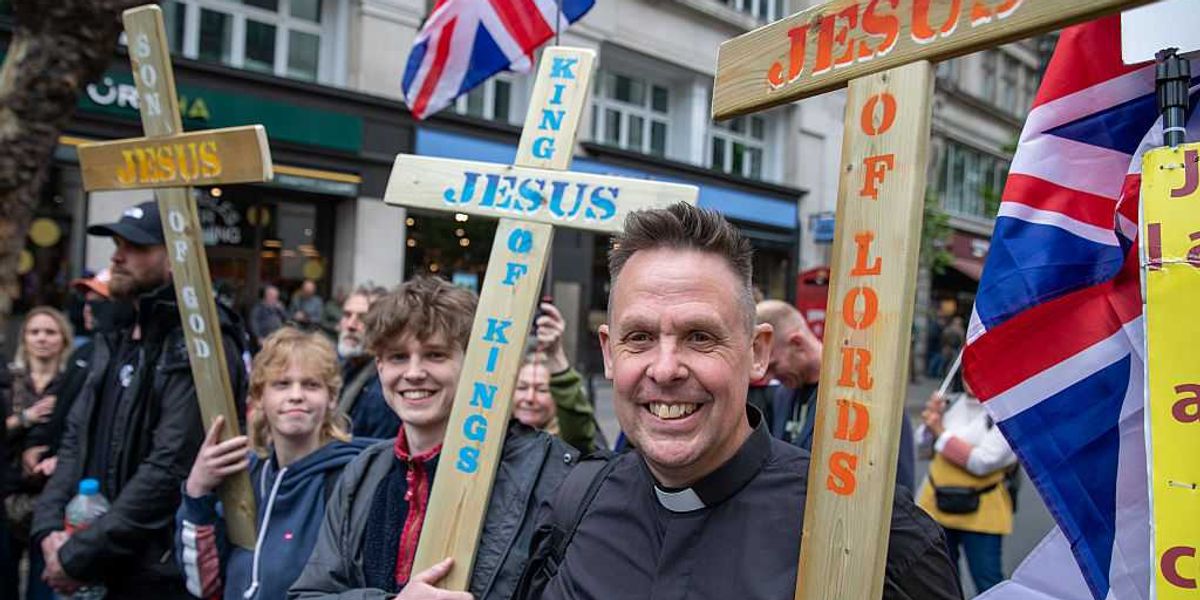
Danny Kruger, a member of Parliament aligned with those views, said he would “love us to be a more confidently Christian country that acknowledges its Christian heritage. A society aligned more closely with the teachings of Jesus would be a happier one.” That language makes explicit the moral case conservatives are trying to reclaim: faith as a public good, not merely private preference.
Restore Britain’s leader has been equally emphatic. Rupert Lowe earlier this year, “Britain is a Christian country, and under a Restore Britain Government — it will remain a Christian country.” He has linked the cultural shift to immigration levels and called for policy changes to slow those inflows, and he has, accordingly, for halting mass immigration and reversing what he terms the “islamification of Britain.”
Conservative figures have also stepped into the debate. “Britain was built on a foundation of Christian values that have guided our institutions, our laws, and our sense of right and wrong. If we’re serious about the future of this country, we shouldn’t shy away from that heritage, we should be confident enough to embrace, promote, and defend it,” one prominent party leader declared, framing the discussion as a matter of civic self‑confidence rather than sectarian privilege.
https://x.com/pritipatel/status/990623800181043200
At the parliamentary level, research tracking MPs’ public religious affiliations suggests that a majority still identify as Christian, but a substantial minority are nones or belong to other faiths. Those raw numbers mean the question is less about banning other beliefs and more about whether Christian history and customs should retain privileged cultural status. For many conservatives, the answer is yes, and that disagreement will shape policy debates on education, public ceremonies, and immigration for years to come.
‘If we’re serious about the future of this country, we shouldn’t shy away from that heritage.’
The contest over how openly to celebrate or protect Britain’s Christian inheritance is now political as much as cultural, and it will be a clear marker between parties that prioritize continuity and those comfortable with a plural, secular present. Expect the conversation to keep accelerating as politicians try to turn cultural unease into policy advantage and voters sort out what they want their country to be.