
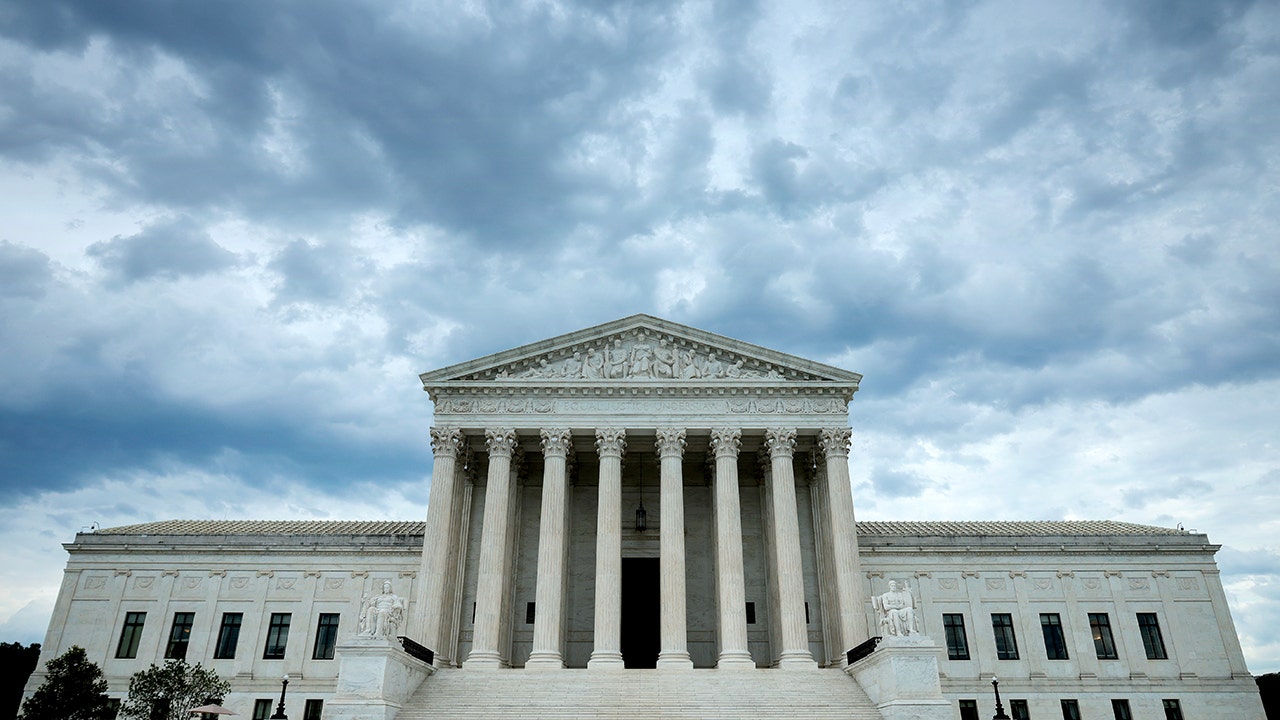
The Supreme Court’s recent pair of decisions handed the administration meaningful wins on asylum and temporary protected status, while reigniting a fight over plain language and judicial restraint that splits the justices. I walk through the reasoning, the sharp dissents, the policy implications for border control, and why this will matter for how future administrations manage immigration rules. Expect a blunt take on the stakes for law, politics, and the rule of law in immigration enforcement. This is about who decides where “in” begins, and whether courts will let the executive set the terms.
“In ordinary speech, no one would say that a person ‘arrives in’ a place … before the person enters that place.” That line captured the absurdity many felt watching the semantic battle over whether someone standing on the far side of the border can be treated as already inside the United States for asylum purposes. The majority opinion led by Justice Samuel Alito cut through that oddity and ruled that migrants stopped on the southern side are not legally present in the U.S. simply by being processed nearby.
The practical effect is straightforward. If people outside the country were treated as already inside, they would be able to enter and remain while their asylum claims work their way through the system. That outcome would erode border control and create incentives for people to show up and claim status without being physically inside the United States. The ruling restores a limit on that pathway and puts the focus back on physical entry as a legal threshold.
The decision also highlights a policy tug-of-war. The Biden administration rescinded the kind of “metering” that previous administrations used to manage crossings, a change that critics say made it easier for people to attempt entry without proper vetting. Policies that regulate how many and when migrants can seek processing at ports of entry affect how many claims flood the system and how border enforcement operates day to day.
SUPREME COURT AGREES TO REVIEW TRUMP ADMIN EFFORT TO LIMIT IMMIGRANT ASYLUM PROCESSING CLAIMS AT BORDER captures the larger fight: who has the authority to set those standards and whether statutes should be read narrowly or with elastic context. The three liberal justices pushed back fiercely, with Justice Sonia Sotomayor declaring that the majority’s “illogical interpretation is driven almost entirely by a fixation on a single word: ‘in.’ Words, however, must be read in context and with attention to how they fit into the statute as a whole.” Their approach treats “in” as flexible instead of literal.
That “contextual” method worries conservatives who favor clear textual limits on government action and judicial restraint. The clash spilled into the courtroom drama of opinion day. Alito read his opinion, then Sotomayor delivered a long, scorching dissent, and Alito answered from the bench, saying that if he had been better prepared he would have stressed how “the policy in question was adopted by two very different administrations.” The exchange underscored how heated and consequential this parsing of language has become.
At the same time, the court decided Mullin v. Doe, upholding the administration’s power to terminate temporary protected status for more than 356,000 Syrians and Haitians. That ruling gives the executive branch more room to reverse prior TPS decisions, and it narrows the ability of courts to second-guess those policy shifts. Taken together with the asylum decision, the rulings tilt authority back toward the administration in managing who stays and who goes.
Some of the dissenting rhetoric invoked historical tragedies, likening modern border denials to the voyage of the M. S. St. Louis. The comparison demands care. The St. Louis passengers were fleeing certain persecution, while the vast majority of border asylum claims today fail for lack of credible evidence or legal basis. Advocacy groups sometimes hand out materials across the border encouraging people to claim asylum, and acceptance rates for many border claims sit below five percent.
The core problem for conservatives is twofold: how to block so-called constructive entries when courts read “in” as expanding beyond physical presence, and why judges should be reshaping hard policy that traditionally leans on executive discretion. For years courts have deferred to the executive on border control, yet during the Biden years millions of people arrived without the kind of vetting that should come with controlled entry. That reality fed the political backlash that elected a president promising to use discretion differently.
This fight over words is really a fight over power. If judges adopt a freewheeling “context” approach, they invite judicial re-writing of statutes rather than leaving policy choices to elected branches. For conservatives who want firm borders and clear rules, the recent opinions are a step toward restoring statutory text and executive authority. The practical hurdles—backlogs, overwhelmed courts, and millions of unresolved cases—remain, but the rulings shifted an important piece of the chessboard back in favor of tighter control.
