
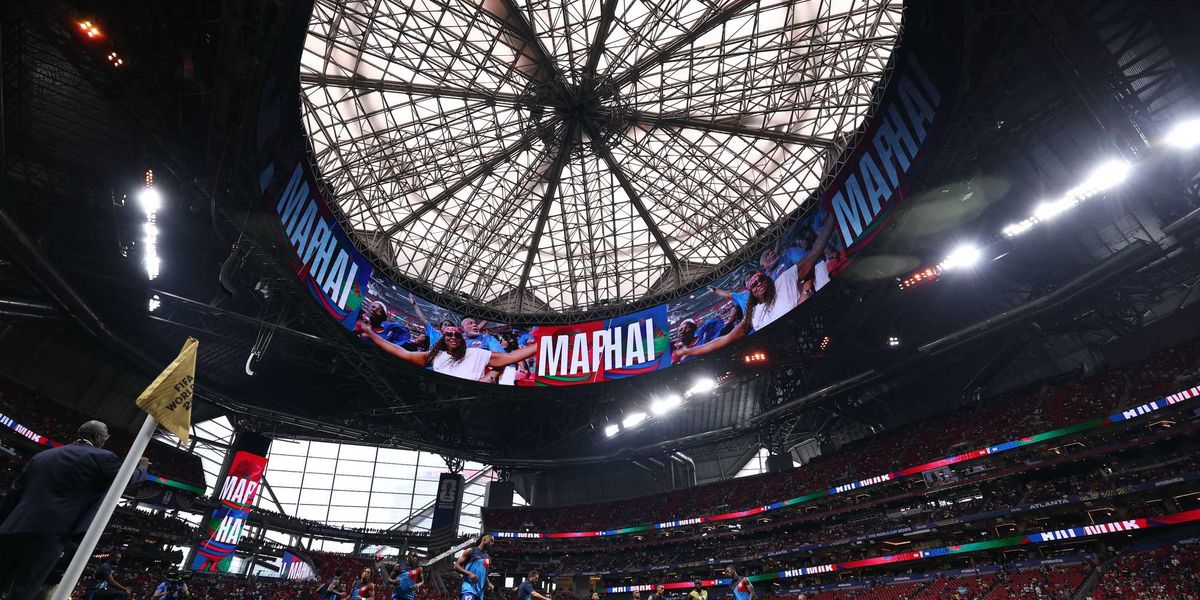
At the Mercedes-Benz Stadium during a World Cup match, fans noticed a targeted hospitality push aimed at Muslim attendees, sparking debate about whether offering prayer spaces, halal food and printed “Muslim Hospitality” pamphlets counts as helpful accommodation or crosses into religious promotion. This piece lays out what happened, the reaction from a prominent former Muslim turned Christian apologist, and how organizers framed the support for certain visitors.
Soccer supporters arriving for the Morocco versus Haiti match spotted a staffed effort handing out printed materials labeled as Muslim Hospitality. The pamphlets pointed out where people could pray and which concessions offered halal food, and stadium staff were guiding attendees toward specially arranged prayer areas. The visible presence of these materials and teams drew attention and made some spectators wonder why printed guides were issued for one faith and not others.
Former Muslim and current Christian apologist Brother Rachid the image and questioned whether the campaign constituted an endorsement and promotion of the Islamic faith. He described the distribution method and the signage at entry as more than simple assistance. “Right after scanning your ticket at the entrance to Mercedes-Benz Stadium, there were groups of people handing out ‘Muslim Hospitality’ pamphlets. They showed where to pray and which food was halal,” he wrote.
Rachid added that just inside the stadium there was a large sign repeating the same information and that the effort felt targeted. “Then, just a few steps inside, there was a large sign with the same information. It didn’t feel like simple visitor assistance. It felt like the promotion of a religion,” he added. He also noted his personal perspective as someone who had left Islam and now works in Christian apologetics, which shaped how he interpreted the outreach.
Some social media users defended the accommodations, arguing that visible support for practicing Muslims was a reasonable response to the needs of certain visitors. “Yeah maybe it’s because Muslim[s] are the only devout followers of their religion in comparison to Jews, Hindus and lol, Christians?” one user wrote, reflecting how opinions split online. Other fans and commentators stressed that providing dietary and prayer options is standard practice at many large events to ensure safety and comfort for diverse crowds.
https://x.com/BrotherRasheed/status/2070130346935402957
The stadium was scheduled to host another World Cup match featuring the Congo Democratic Republic and Uzbekistan, a country with a Muslim-majority population, and organizers indicated similar hospitality measures would be available. Official event communications noted that specially staffed prayer areas for men and women, halal food options, and printed hospitality guides would be in place for fans who requested them. Stadium representatives compared these services to accommodations for people with dietary preferences like vegan options or for those with sensory sensitivity needs.
Critics argued that handing printed pamphlets to every fan singled out one faith in a way that felt promotional rather than purely logistical. Supporters of the program replied that printed distribution ensured all attendees, including those who may not check online guides, received timely information about available services. The tension in responses highlights the challenge of balancing visible inclusivity with perceptions of neutrality at large public venues.
Match coverage noted the result on the field as Morocco beat Haiti 4-2, a scoreline that kept attention on the pitch even as the hospitality debate circulated off it. Observers also pointed out that some Islamic scholars view certain sports as religiously questionable, adding layers to why opinions about stadium outreach varied among fans and religious commentators. The conversation blended sports fandom with cultural and religious questions in a way that extended beyond a single game.
Event organizers and partners framed the effort as part of a broader push to accommodate diverse fan needs across a massive, international tournament. They emphasized that the printed guides and staffed prayer areas were offered to help visitors practice their faith comfortably and to make food choices easier during long match days. For many international events, providing multilingual signage, dietary options, and quiet spaces is a common logistical choice meant to reduce confusion and improve the fan experience.
The visible debate over whether these actions amount to hospitality or promotion shows how simple operational decisions can quickly become cultural flashpoints. As major stadiums host global events, the balance between making people comfortable and maintaining public neutrality will likely remain a recurring conversation. Fans, religious leaders, and venue operators will keep testing where that line should be drawn.
