
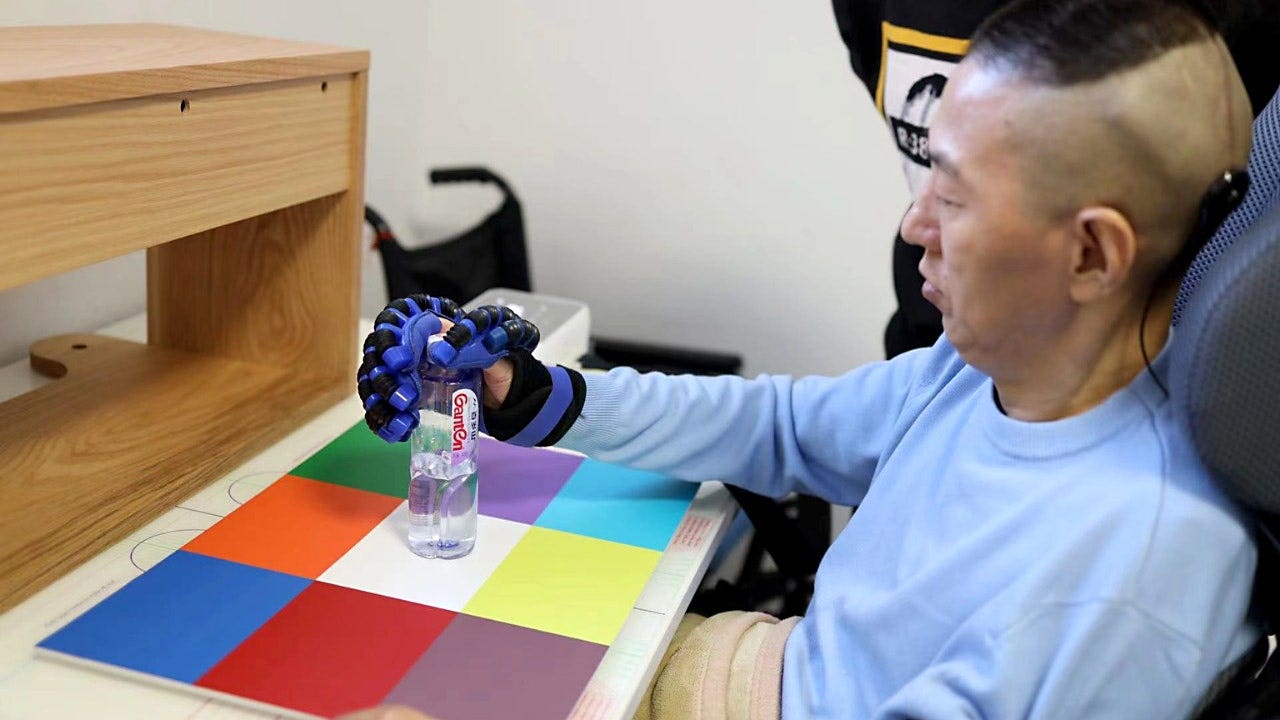
China has cleared a medically focused brain-computer interface called NEO for certain patients with paralysis, moving the technology out of pure research and into clinical use; the device sits on the dura mater rather than penetrating brain tissue, promising less invasiveness, but raising urgent questions about safety, data control and long-term support.
NEO is a small implant placed beneath the skull that reads signals from the brain’s motor-control region without plunging electrodes deep into brain tissue. That placement aims to lower surgical risk compared with designs that insert threads into the cortex, making it an attractive option for patients with spinal cord injuries who need assistive control over devices.
For someone who has lost movement, even modest regained control can transform daily life and restore independence that once seemed impossible. These systems translate intent into action, letting a patient operate a robotic glove, move a cursor or communicate through assistive interfaces with thought-driven commands.
Medical risks remain real. Any surgery near the brain can lead to bleeding, infection, swelling or unintended injury to nearby areas that govern speech and movement. Choosing a less invasive footprint helps, but it does not eliminate the need for careful surgical protocols and medical oversight.
China’s regulatory green light does not mean open access for anyone who wants a chip; NEO is approved as a medical device for a narrow clinical group and is meant to serve patients with severe paralysis. Still, approval signals a national push to integrate brain-computer interface technology into health systems and to build an industry around it over the coming years.
Companies in the space have different approaches. Some implants go deeper into brain tissue, while others sit on protective membranes. These engineering choices affect both risk profiles and the quality of signals the device can gather, which in turn shapes what patients can do with the interface.
The upside is tangible: millions of people worldwide live with neurological conditions that impair movement and communication, and BCIs offer one of the clearest paths to restoring function for some of them. That potential explains the intense interest from researchers, startups and national programs trying to accelerate progress.
But technology that taps brain activity also creates a new class of personal data, and that brings hard policy questions. Who owns neural data, how long is it stored and can it be shared or sold to train algorithms? Patients deserve clear answers before consenting to an implant that collects signals from their nervous system.
Security matters more than ever. A compromised device could do more than leak private information; it could interfere with a wheelchair, a robotic limb or a communication aid, threatening a person’s independence and safety. Encryption, medical-grade testing, strict access controls and long-term update commitments need to be part of the product from day one.
Long-term support is also a medical and ethical issue. Implants can remain in place for years, and companies should be obligated to maintain software, patches and hardware servicing for the expected lifetime of a device. Patients should not be left with obsolete implants because a manufacturer moved on to the next product.
We already hand over a lot of data through phones, watches and smart home gear, but neural data is different because it originates inside the body and ties directly to intention and behavior. That raises the stakes and makes vague promises like “trust us” inadequate as a protection strategy.
Regulatory frameworks, patient consent standards and industry norms need to catch up quickly. If firms and governments want to scale brain-computer interfaces beyond tightly controlled clinical trials, those systems must come with clear rules on ownership, sharing, security and the right to long-term care.
For now, NEO and similar medical implants are aimed at people with serious needs, not mass consumer upgrades. Still, their emergence should prompt a wider conversation about how we guard the most intimate forms of data and what limits we place on companies and institutions that handle signals from inside a human head.
Sign up for my FREE CyberGuy Report
