
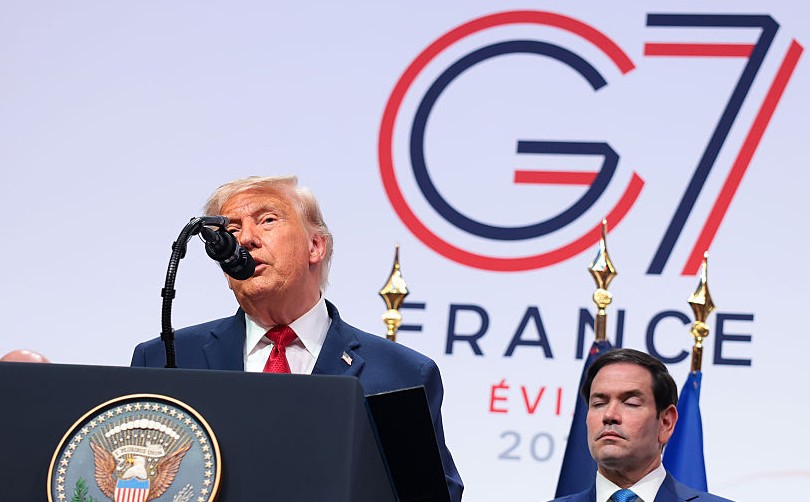
President Donald Trump publicly rebuked Israeli Prime Minister Benjamin Netanyahu over operations in Lebanon while unveiling a U.S.-Iran framework meant to halt the fighting and return control to Lebanon’s government. The announcement framed the move as an American effort to stop regional escalation, protect civilians, and push for Lebanese sovereignty. Trump positioned the framework as a path to stability without abandoning America’s security interests. The tone mixed firm diplomacy with a clear demand for restraint from allies and adversaries alike.
Trump’s criticism of Netanyahu was sharp and unambiguous, aimed at curbing what he called an irresponsible campaign that risks dragging the region into wider conflict. From a Republican perspective, accountability matters even among friends; blind loyalty to any partner should not trump American strategic judgment. The point was not to side against Israel but to prevent actions that weaken long-term security for everybody. In that light, the president framed his remarks as a call to smarter, more effective conduct, not reflexive escalation.
The U.S.-Iran framework drew most of the attention because it touches the core drivers of instability in the Levant. The administration described it as an agreement meant to end immediate hostilities and to create conditions for Lebanese institutions to reassert authority. Republicans tend to favor outcomes that stop bloodshed while preserving deterrence, and this framework was pitched as doing both. The goal is to create breathing room for diplomacy and for Lebanon to rebuild its capacity to govern without outside proxies calling the shots.
Setting terms with Tehran is politically sensitive, but the framework was presented as a practical stopgap to halt violence and force a reset. Republicans can support concrete measures that reduce American involvement in grinding conflicts while maintaining pressure on Iran’s malign behavior. This approach aims to force regional actors to choose stability over continued proxy warfare. If the framework holds, it could shrink the space in which extremist and external forces operate inside Lebanon.
Trump made it plain that restoring Lebanese sovereignty means more than a handoff; it requires action to strengthen local governance and security forces. The message to Lebanon was clear: reclaim your institutions, and end the exploitation of your territory by outside militias. For Republicans, the right kind of American leadership combines stern demands with practical support that encourages self-reliance. That mix is meant to discourage repetition of the same cycles that have produced instability for decades.
Criticizing an ally publicly is not something presidents do lightly, and Republicans will argue that it signals a willingness to put American interests first. The rebuke of Netanyahu was framed as necessary to prevent missteps that could embroil the United States or undermine regional balance. At the same time, the administration emphasized that deterrence and readiness remain in place to protect American and allied interests. The posture blends diplomacy on the table with credible force in the background.
Whether the U.S.-Iran framework will survive the inevitable political firestorms depends on follow-through from all parties involved. Implementation needs verification, clear timelines, and consequences for backsliding, and Republicans will insist on rigorous oversight. The early emphasis was on ending fighting and returning governance to Beirut, which, if achieved, would at least halt the worst immediate harms. The real test will be whether Lebanon can translate pause into reform and whether Tehran respects the limits the framework imposes.
This moment underscores a delicate balancing act: pushing for peace without rewarding bad actors, holding allies accountable while standing ready to defend shared values. Trump put that calculation front and center by criticizing Israeli tactics and by unveiling a framework that binds adversaries and regional players to a common objective. The administration cast the move as a pragmatic effort to reduce violence and restore sovereignty, with an eye on preserving American strategic interests in the region.
