
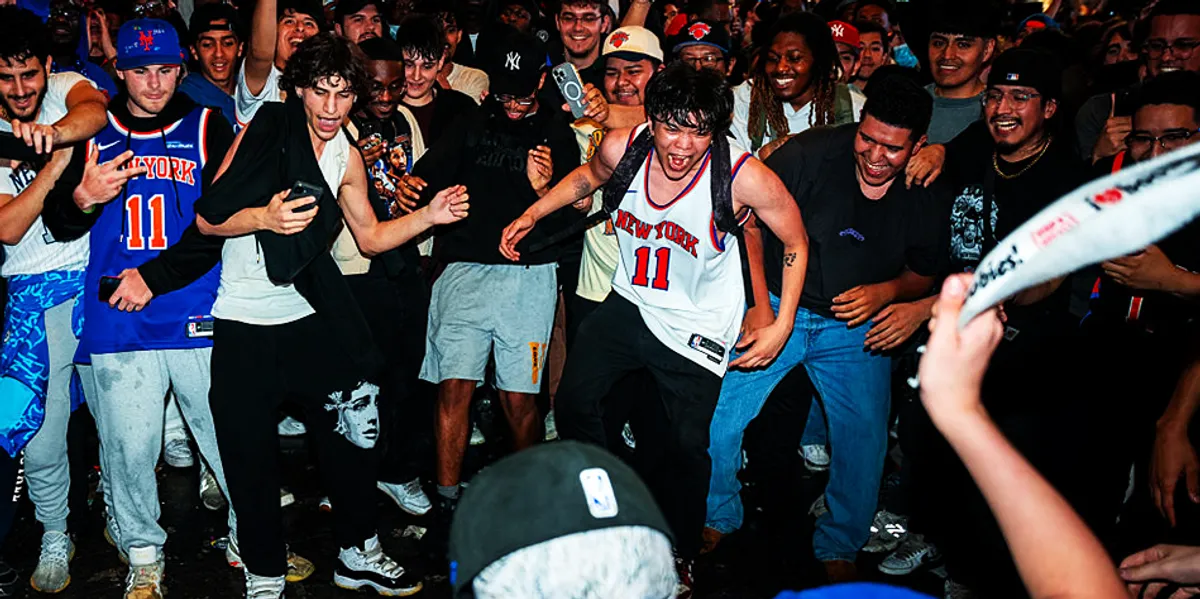
Outside Madison Square Garden, a loud group of Knicks fans blamed President Donald Trump for the team’s Game 3 loss, citing bad vibes, extra security and what they called a curse; team owner James Dolan pushed back, saying the added measures were a city decision and not the Secret Service; the Knicks then mounted a dramatic Game 4 comeback, and fans reacted with the same mix of relief and lingering complaint.
Ahead of Game 4, a cluster of spectators vented frustration about one clear target: President Donald Trump. They pointed to the president’s presence at Game 3 as the origin of everything from sluggish play to heavier security, and a few even described the mood in mystical terms.
One fan told a reporter plainly, “We’re saging the Madison!” and explained she was trying to clear out the bad energy she believed came with Trump’s arrival. She wore Knicks colors and lots of necklaces and said the arena felt off after he attended, repeating “We had really bad energy in this space on Monday.” The scene looked less like a sports protest and more like a ritual aimed at changing luck.
Other supporters outside the arena used language that leaned into superstition, saying Trump brought “bad voodoo” and “weird energy” and blaming him for “out-of-the-blue fights that weren’t happening before.” Those are strong accusations for a president’s attendance at a game, and the tone was equal parts angry and theatrical. To many onlookers, it read as a symbolic blaming rather than a practical explanation.
A fan named Avery held a sign that read, “F**k Trump. Let’s go Knicks.” Avery also said Trump is “a curse to every team” he picks, citing examples like the Knicks and the NFL’s Kansas City Chiefs and a Mets visit. That kind of blanket blaming turned a basketball rivalry into a referendum on a sitting president, which only widened the split between fans who wanted an explanation and those who wanted a game.
James Dolan stepped into that gap on live radio to push back against the idea this was a presidential security problem. “The Secret Service didn’t demand this stuff,” he said, pointing the finger instead at local authorities. “It was NYPD, and it was really the commissioner’s office,” he added, and insisted, “This was the commissioner’s plan all along,” arguing that the president’s appearance was used as a reason to impose the plan.
Dolan also addressed the canceled watch party and the arena screens, saying, “Our hope was that the mayor and the commissioner would change their minds, and then we’d put the screens up. They clearly haven’t changed their minds. … It’s almost 5 o’clock, so the screens are not going up.” Those lines are about control and responsibility, and they shift the debate from a presidential curse to municipal decision-making.
New York City Mayor Zohran Mamdani (D) answered soon after and , explaining the permit situation and noting that “MSG requested a permit for a watch party for 500-999 fans. We approved that permit for 999 fans. Mr. Dolan has now decided to cancel the watch party.” That exchange made clear the fight was between the venue and city officials, not the president or his security detail.
When the Knicks roared back in Game 4 and grabbed a record-setting comeback, the narrative briefly flipped from who to blame to how they fought back. The president was not in attendance for Game 4, but the criticism and rituals spun up before the game didn’t evaporate overnight. Fans left Madison Square Garden with more stories about energy and politics than about Xs and Os, and the arena managed to deliver drama on the court even as people argued about who, if anyone, was responsible for the chaos.
