
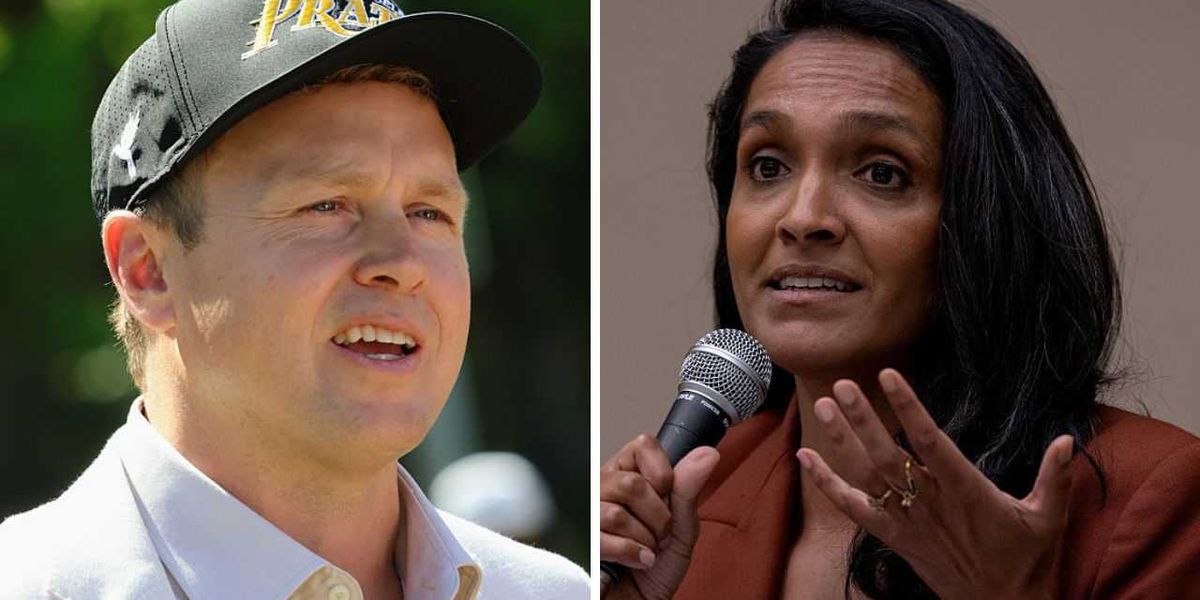
Los Angeles’ mayoral race took an unexpected turn as vote tallies shifted dramatically in the days after Election Day, turning what looked like a clear path to the November runoff into a tight, unsettled contest. Spencer Pratt, the former reality star turned candidate, led by tens of thousands at first, but L.A. City Councilwoman Nithya Raman surged during the extended counting window and briefly overtook him. With roughly 83% of ballots reported nearly a week later and statewide counting still underway, who will face incumbent Karen Bass in November remains unclear. The swing underscored the messy reality of big-city elections and the frustration of voters watching results change day by day.
On election night Pratt looked like the surprise story, enjoying a comfortable advantage that suggested he might squeeze into the runoff against Bass. That lead, which at one point was reported as over 40,000 votes, slowly eroded across subsequent tallies. By Friday that gap had narrowed to about 33,000, and then late updates produced a much larger shift in Raman’s favor, showing rapid gains as more ballots were processed.
Local reporters tracked the movement closely, noting the scale of the change. “On election night, Pratt led Raman by about 40,000 votes — roughly a 10-point advantage,” KTTV reporter Matthew Seedorff . The numerical swing was striking and left supporters and critics scrambling to explain where the votes came from and what they signaled about turnout and ballot processing.
Raman’s totals jumped in a span of days from roughly 111,000 to about 197,000, a climb that shoved Pratt out of the second slot by a margin a little over 3,000 votes according to the Associated Press. That kind of movement matters in a system where mail ballots, provisional ballots, and late-arriving counts can tip a close race. Nearly one week after Election Day California had still reported only 83% of ballots counted, and the unknown remainder kept the final picture in flux.
Pratt reacted publicly to the swing with a pointed, memorable line that captured his skepticism about the turnaround. “43,000, huh? Where have I seen that number before…?” Pratt replied in a on social media, sharing a screenshot about the city’s homeless population and suggesting the swing was worth more scrutiny. Whether framed as irony or a critique of reporting and process, the comment lit up conversation among his supporters and opponents alike.
The pre-election polling had showed a tightly clustered three-way race, so the late surge was not entirely out of nowhere. A final survey conducted in the weeks before the primary found the three leading candidates separated by only a few points, with Bass holding a razor-thin edge over Raman and a small lead over Pratt. Those margins left plenty of room for post-election counting to change the order of finish, and that is exactly what happened as outstanding ballots were tallied.
https://x.com/MattSeedorff/status/2063774148523147669
Campaign themes help explain why different blocs moved toward different candidates. Pratt’s backers repeatedly emphasized concerns about waste, political corruption, and public safety, issues that resonate with voters frustrated by crime and city governance. Supporters of Bass and Raman tended to put housing, migrant services, and bringing people indoors at the top of their list, creating a clear policy contrast in priorities that informed how different neighborhoods voted and how late ballots leaned.
Technically the mayoral contest is nonpartisan, but party affiliation still shapes voter behavior in Los Angeles. Pratt, a registered , ran an unconventional campaign that nonetheless found traction in a city where the electorate skews heavily toward Democrats and registered Republicans make up a small share of the population. That dynamic made his near-advance notable and added intensity to the debate over what the late counts meant for the broader political landscape.
As Los Angeles continues to process ballots the uncertainty affects more than just the candidates. It raises questions about how results are communicated, how campaigns prepare for fluctuating outcomes, and how voters perceive legitimacy when lead changes happen after election night. With mail-in ballots for the general election scheduled to be distributed in early October, the clock is already turning toward another decisive round, but for now the runoff field remains unsettled and the city waits for final tallies to lock in the contenders.
