
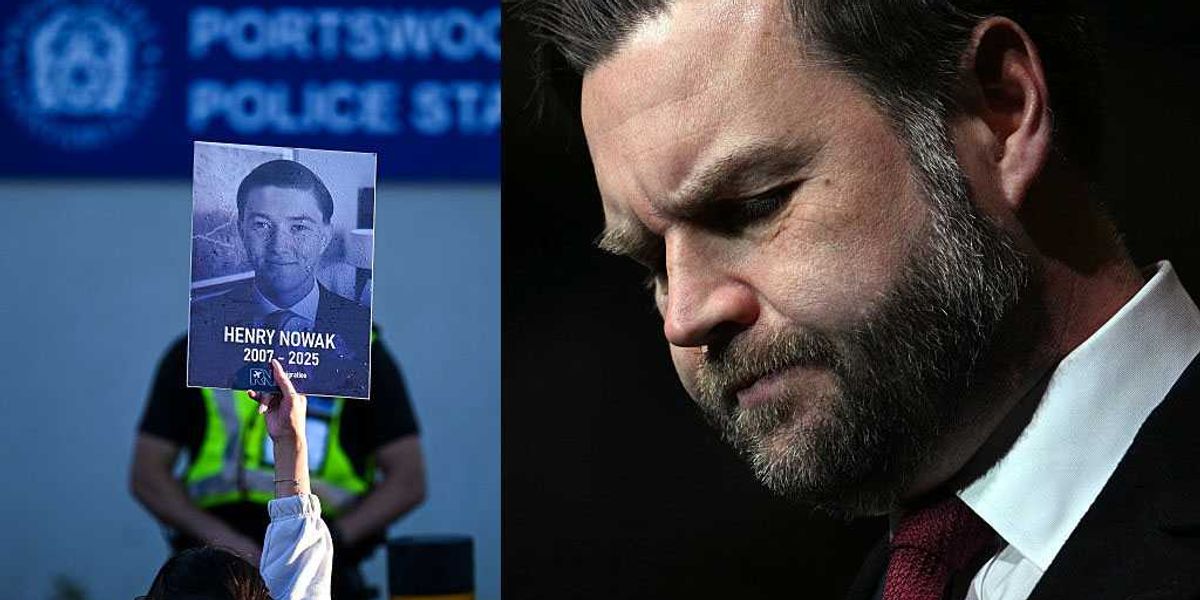
The death of 18-year-old Henry Nowak and the reaction it sparked expose a clash over policing, race-based guidance, and national identity — with U.S. officials, including Vice President JD Vance, pushing back hard. This piece recounts the killing, the bodycam and protests, British police policy under fire, and the blunt American responses that followed.
On Dec. 3, 2025, Henry Nowak was stabbed in an unprovoked attack by Vickrum Digwa. Digwa told officers he acted in self-defense and claimed Nowak had used a racial slur, a story that later proved false.
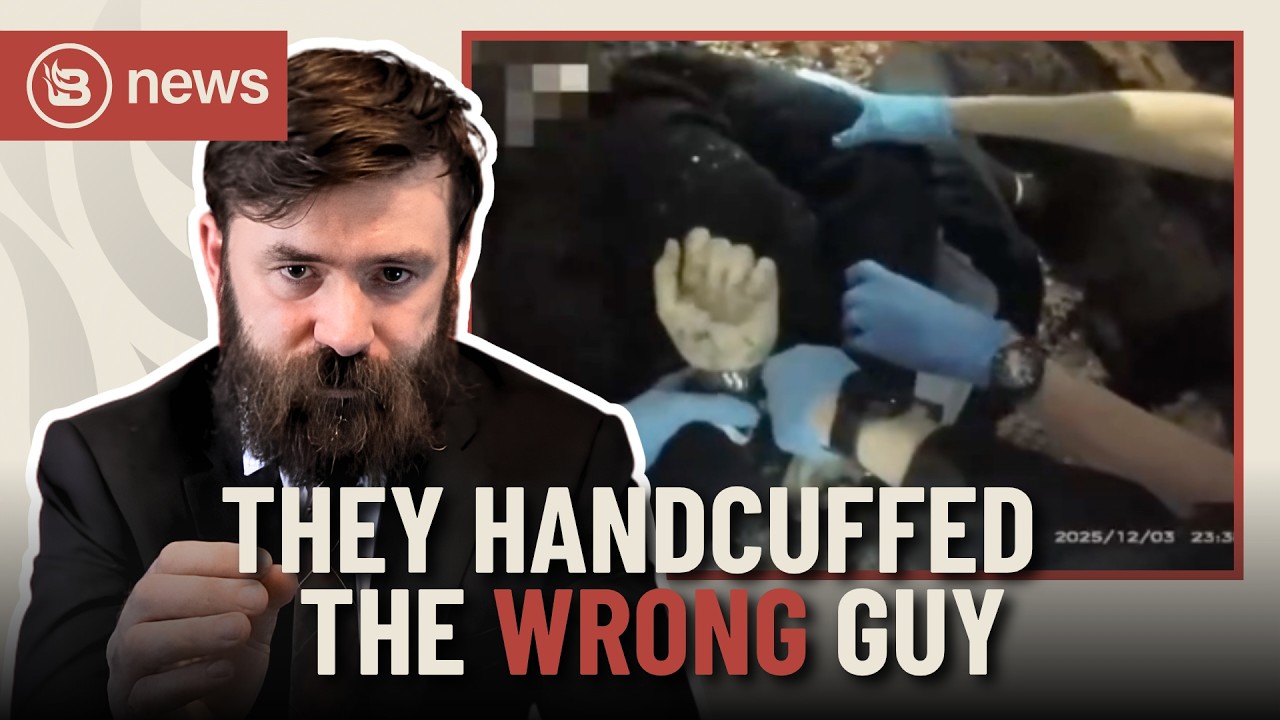
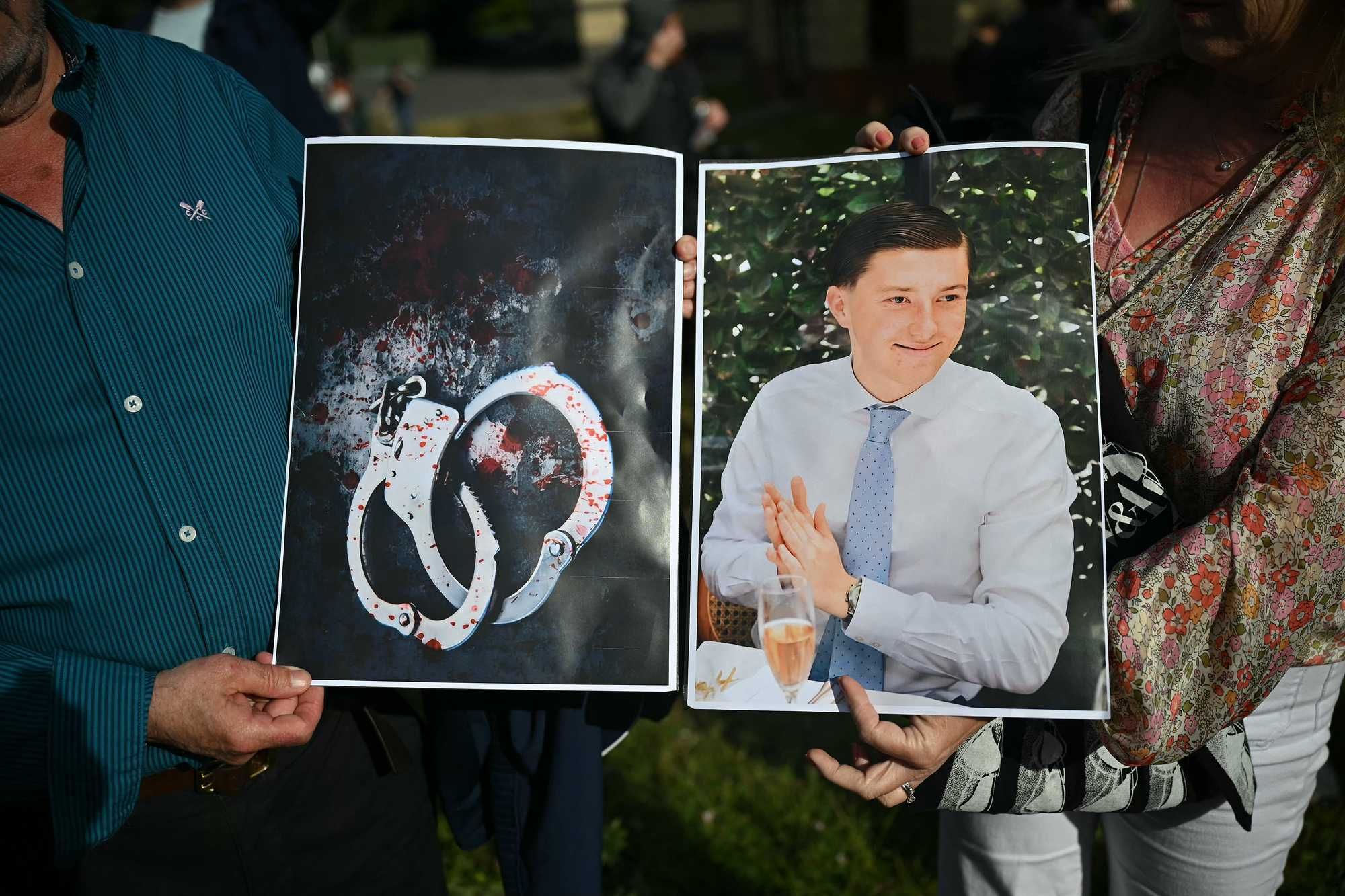
Officers from the Hampshire and Isle of Wight Constabulary accepted that account at the scene, handcuffed the dying teen and ignored his pleas as he bled out, a sequence captured on bodycam and released to the public. The footage shocked many and set off a wave of anger aimed squarely at police behavior and judgement.
Digwa has since been convicted of murder and sentenced to a lengthy prison term. The legal outcome did not erase the broader outrage over how authorities treated Nowak in his final moments.
When the bodycam clips went public, crowds gathered across southern England demanding accountability and the firing or prosecution of officers involved. One officer resigned amid the fury, and protests continued as citizens pressed for systemic change.
Those protests forced national leaders and policing bodies to confront guidance that critics say prioritizes identity-based approaches over equal treatment. The National Police Chiefs’ Council began reviewing its anti-racism guidance, which explicitly endorses differential responses by race:
Our commitment to racial equity means producing equality of policing outcomes for people from different ethnic groups by responding to individuals and communities according to their specific needs, circumstances, and experiences, with understanding that these will be racialised and with the aim of reducing harm. It does not mean treating everyone “the same” or being “colour blind” (racial equality).
The State Department weighed in from Washington with a terse rebuke, “Ideological conditioning and two-tiered policing are glaring symptoms of civilizational decline. They must be rejected across the West.” “The United States sends our condolences to the family of Henry Nowak and the people of the United Kingdom at this troubling time,” the statement added.
American voices amplified the criticism. Sen. Eric Schmitt (R-Mo.) said “Henry Nowak deserved better,” while BlazeTV host Auron MacIntyre wrote that “it would be nice to see the State Department treat the UK as a totalitarian terrorist state oppressing its population because that’s obviously true.” Those blunt takes fed the transatlantic debate over responsibility and standards.
Not everyone in Britain welcomed U.S. involvement. Liberal Democrat leader Ed Davey fired back, “The Trump administration is attacking our democracy. Not in secret, but openly on social media. [U.K. Prime Minister Keir] Starmer needs to show some backbone and call this out today. We can’t turn a blind eye to this blatant interference any longer.” The reaction made the dispute as much diplomatic as moral.
U.S. Under Secretary of State Sarah Rogers responded to those objections by pointing to differences in responses to past deaths like George Floyd, and she urged protesters to remain peaceful. “Protesters mourning Nowak have not ignited infrastructure, murdered anyone, or otherwise cut an antisocial swathe of destruction through the UK,” wrote Rogers. “To the extent any of them care what America thinks, we urge them to remain peaceful — and we expect they will. Just like Henry Nowak and just like Americans, ordinary Brits have been slandered as racist. Thus violent. They’re not.”
Vice President JD Vance then made a pointed intervention, arguing that Nowak’s death exposed deeper failures of leadership and policy in Europe. In a public statement he wrote, “Henry Nowak died the same way a civilization dies: abandoned, handcuffed by authorities who neither trusted nor cared for him, and accused of hate crimes he did not commit,” wrote the American vice president. “His murder is as tragic as it is enraging. He should still be alive today, and he would be if the last few generations of European elites had stood their ground against the politics of self-hatred and the mass invasion of migrants, many of whom despise the West and the people who love it.”
Vance pushed the point further about public sentiment and policy, warning that this tragedy is not an isolated loss. “Henry was far from the first to so needlessly lose his life, and I fear he won’t be the last. Each time a life like his is lost, the proper response — the only response — is righteous anger.”
He closed by tying the response to a broader love of Western civilization and the need to defend it, arguing that preserving borders and social cohesion are acts of care for future generations. “It is because we love the West that we want to preserve it. We love our civilization. We love our country. We love our children. And nobody — nobody — should ever die the way that Henry Nowak died. May God comfort those who loved him, and may God rest his soul.”
https://x.com/StateDept/status/2062616906406760627?s=20

1 Comment
No different from the ‘liberal democrat’ plan for America. We are not immune here either…