
In this piece I take you inside the world of fighter-jet aerobatics, explaining what makes those jaw-dropping maneuvers possible and why they feel so extreme. You will read about the physics, the aircraft systems that enable daring moves, the pilot skills required, and the risks crews manage during high-performance flying. I keep it short on jargon and focused on the experience and engineering that let pilots push the envelope.
Watching a fighter jet carve the sky feels like a mix of ballet and controlled chaos. The plane responds to tiny inputs, and those inputs are translated into massive changes in speed, altitude, and attitude. High-g turns, snap rolls, and vertical climbs all look effortless from the ground, but each one is a careful exchange between energy and control. That exchange is what separates a skilled demonstration from a dangerous mistake.
At the heart of dramatic aerobatics is energy management, plain and simple. Pilots trade speed for altitude and vice versa to create a maneuver and get out of it safely, and they constantly monitor airspeed, angle of attack, and g loads. Modern fighters use powerful engines and careful aerodynamics to enable tight loops and rapid climbs, but without the right timing the jet will simply stall or bleed off too much energy. Mastering these trades is what makes a pilot look like they can do the impossible.
Fly-by-wire systems changed everything, giving pilots the ability to command radical attitudes while the computer maintains stability. The system limits can prevent a wing from stalling or a control surface from exceeding safe travel, so a pilot can explore the edge of the flight envelope with more confidence. Yet even with digital aids, the pilot remains the crucial decision maker, choosing when to push and when to pull back. Technology helps, but it does not replace skill.
Pilot physiology is another big piece of the puzzle because the human body can be the limiting factor. Sustained high-g pulls compress blood flow and blur vision, so pilots train with centrifuges and anti-g suits to handle the strain. Quick recovery from disorientation is essential when maneuvers stack up one after another during an airshow or combat sortie. Those training hours are why elite aviators can keep control when everything in their senses says otherwise.
Some of the most dramatic moves come from post-stall and supermaneuverability techniques, where aircraft operate beyond normal aerodynamic limits. These tricks rely on thrust vectoring, vortex control, and advanced flight control laws to maintain command even when the wings are not generating conventional lift. When executed properly, the result is a seemingly slow, sideways drift or a sudden pitch that defies expectation. That visual drama is what draws crowds and tests the limits of aircraft design.
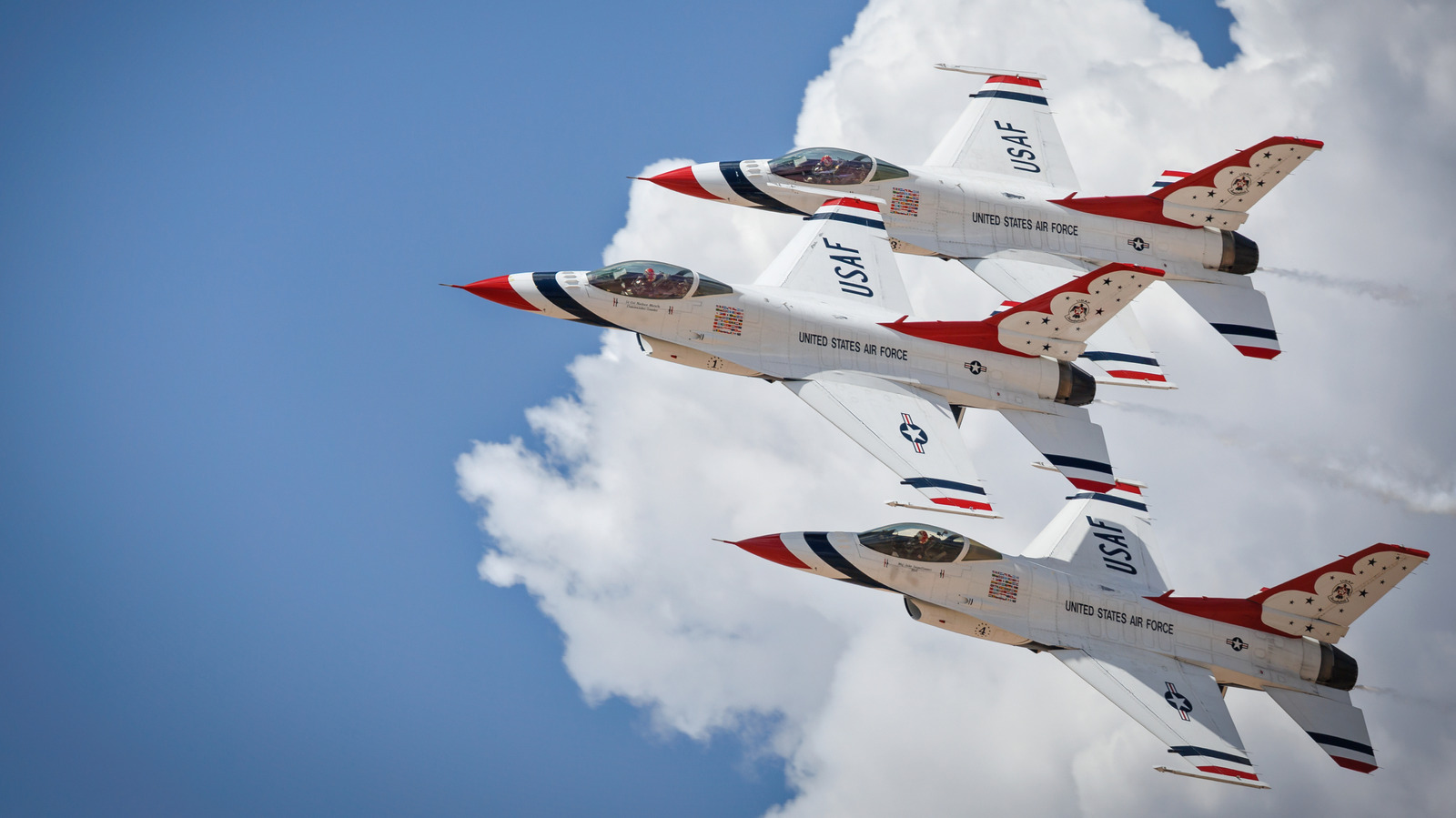
Formation flying adds a different kind of difficulty because precision matters down to a few feet. Pilots fly in tight groups at high speed, timing every roll and break so the whole formation looks like one living thing. Mistakes in spacing or timing can cascade faster than a single-jet error, so trust and practice are everything. The choreography of teams that perform synchronized maneuvers is a testament to disciplined repetition and sharp communication.
Safety protocols and planning underpin every display and training sortie, and rehearsals are relentless. Pilots run through emergency procedures until responses are reflexive, and ground crews verify systems before every flight. Airshow routines are constrained by strict safety envelopes that dictate minimum altitudes and separation distances. Those limits may curb theatrics, but they save lives and keep the show on the runway.
Even with all that preparation, risk is built into aerobatics and accepted because it pushes innovation. Engineers learn from demo flights and combat testing, and those lessons translate into better control laws, stronger airframes, and more capable engines. Pilots take pride in refining skills that keep both themselves and the aircraft on the safe side of extreme. The result is a blend of human daring and engineering that turns raw power into precise motion.
