
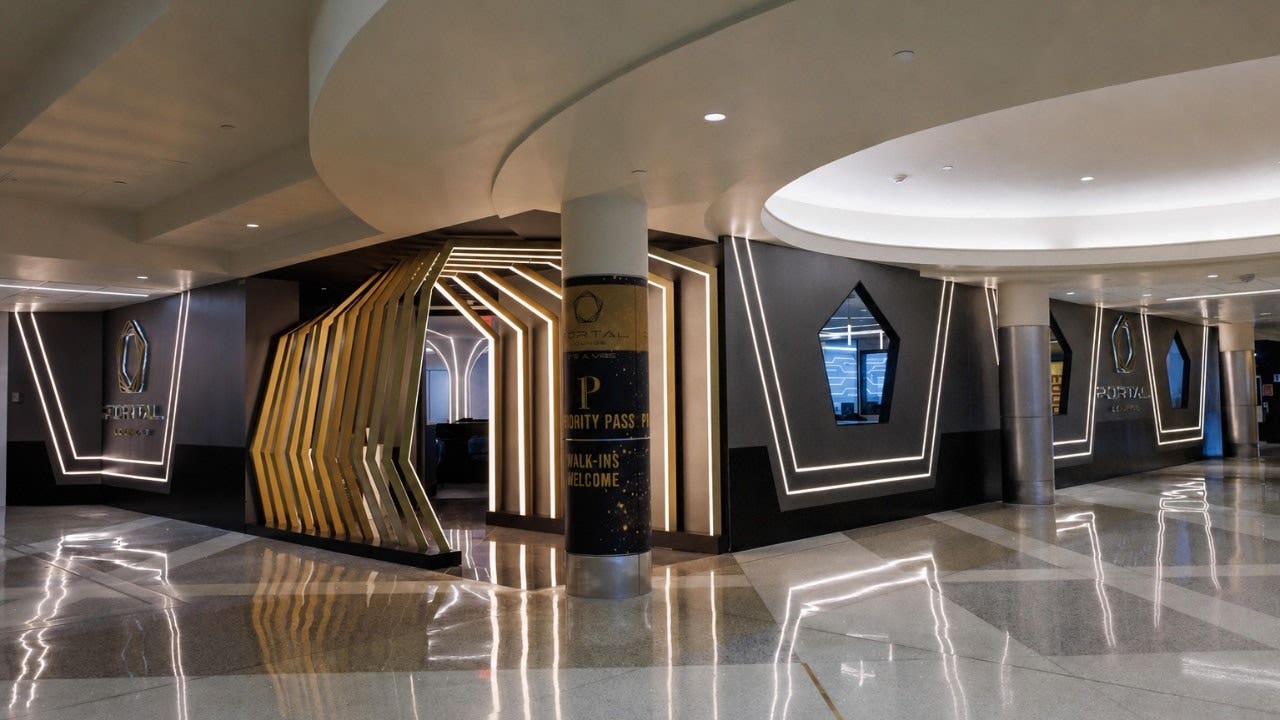
Portal Lounge at Minneapolis-St. Paul International Airport turns waiting into an experience by mixing gaming, curated food and music, immersive design and a showy robotic bartender so travelers with time to spare can actually enjoy airport downtime instead of enduring it.
You know that moment after clearing security when the plane is nowhere near boarding and the terminal feels like a slow-motion trap. Portal Lounge aims to rescue that dead time with a social, tech-forward space built by the founders of Gameway. It’s a different take on the airport lounge, one that leans into energy and interaction rather than hush and exclusivity.
The idea sprang from Gameway’s airport gaming footprint and grew into a full hospitality concept. The space blends gaming stations, curated music, art-deco touches and social seating across roughly 3,800 square feet. Designers wanted something people would remember, photograph and talk about long after their boarding call.
Gaming is a centerpiece: 17 dedicated stations with consoles and custom PCs and nearly 30 titles to pick from. That setup isn’t just for teens—adults in their 30s now make up a big slice of the gaming audience and often value upgraded travel experiences. For travelers stuck on a long layover, a quick match or co-op session can beat another hour watching the gate screen.
“Gameway really showed us how much travelers respond to environments that feel interactive and intentional,” Emma told CyberGuy. “When people are traveling, especially during delays or long layovers, they’re looking for ways to decompress and reset instead of just sitting in another generic waiting area.” This mindset steered Portal Lounge toward comfort plus activity instead of sterile calm.
Food and drink here aim to feel local rather than generic. Menus lean chef-driven with small plates and drinks that nod to Minnesota—one cocktail called the “Lag Free” mixes Honeycrisp apple, maple and citrus, while “Prince’s Lemonade” offers a zero-proof tribute to the state’s music icon. Those touches are meant to anchor the lounge in place and mood, not just fill bellies.
The robot bartender is the headline act: an Italian-designed machine that makes cocktails and mocktails as part drink service, part spectacle. It works alongside human bartenders rather than replacing them, serving as a live, shareable centerpiece travelers will likely film and post. The visual draw of a robot shaking or pouring is exactly the kind of moment that turns airport waiting into content.
“For us, the technology is there to enhance the experience, not overpower it,” Jordan told CyberGuy. “We wanted Portal Lounge to feel modern, social, and experiential in a way that traditional airport lounges really haven’t evolved into yet.” Tech is woven through the visit—from check-in to mood lighting, music and gaming—without stealing the human element.
Access is set up to be flexible: the lounge operates as an independent common-use space and accepts Priority Pass and participating credit programs, with walk-in entry expected at around $70 when available. That price will feel reasonable or steep depending on how much time you have and how much you value a calmer, more entertaining preflight stretch.
There’s a practical side too. The lounge targets travelers who have at least 60 to 90 minutes before boarding and would rather decompress, play, eat or socialize than guard a spot by the gate. But it’s not for sprinting travelers—don’t let a game turn into a missed flight. Set an alarm and keep an eye on boarding times so the good time doesn’t end with a mad dash.
Portal Lounge suggests a direction for airports that want to turn downtime into part of the trip. It won’t replace quiet nooks or the simple cup of coffee some passengers crave, but for those who want their preflight minutes to feel useful and fun, it’s a clear alternative. The mix of gaming, local flavors, social design and a robot bartender is a bold bet on changing how people spend time at the airport.
