
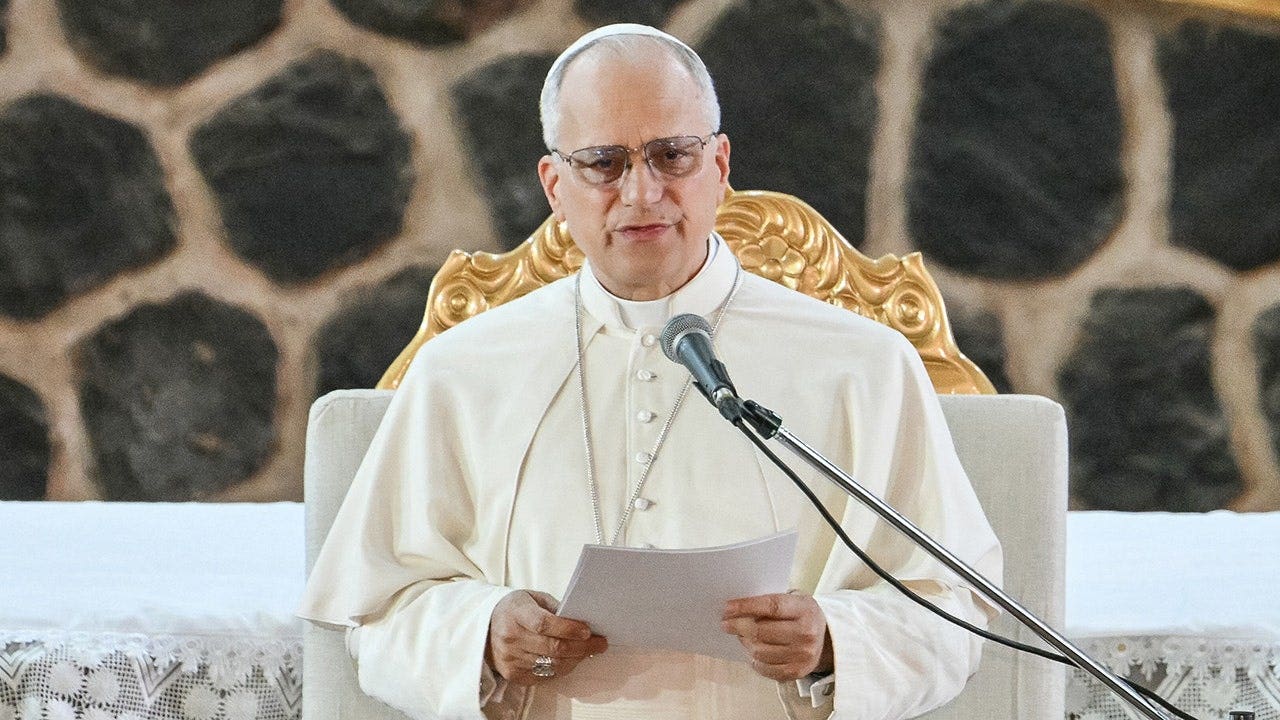
I work at the intersection of Hollywood and the Church, and this piece looks at why Pope Leo XIV’s encyclical Magnifica Humanitas matters for storytellers, how AI complicates authorship and dignity, and why cultural work still hinges on human empathy and moral imagination.
I’ve spent my career trying to bridge two neighborhoods that often talk past one another: faith leaders and artists. At Carmel Communications we try to treat culture seriously and remind creative teams that audiences still hunger for meaning. That simple aim has shaped how I think about technology, marketing, and the heart of every story.
POPE LEO WARNS AI RISKS BECOMING TOOL OF ‘DOMINATION, EXCLUSION AND DEATH’ IN NEW ENCYCLICAL
Watching AI move from experiment to everyday tool has felt like watching an industry learn a new language overnight. It already touches how scripts are written, how films get found and how audiences decide what matters. The big risk is less about machines and more about what we start to value when machines do the heavy lifting.
I don’t read Magnifica Humanitas as a tech manifesto. I read it as a reminder that the core question is the human person and what human dignity means in a wired world. The document insists that we not let efficiency replace worth. That insistence lands hard in an entertainment industry addicted to metrics and speed.
HOLLYWOOD TURNS TO AI TOOLS TO REWIRE MOVIE MAGIC
Stories shape how societies answer the big questions. Over the years I’ve worked on projects that reach for transcendence, and I’ve watched audiences respond not to slick polish, but to honesty. People want narratives that hold suffering without cynicism and point toward hope without manipulation.
I started around film sets because my dad drove a honeywagon for the Teamsters. Those early memories taught me two things: filmmaking is a group act and artists are vulnerable people. That vulnerability is where stories touch strangers and where media can either dignify or reduce human experience.
After years advising filmmakers, studios, ministries and church leaders, I’m convinced culture does more than reflect values. It forms them. How we tell stories informs whether society prizes efficiency over compassion or productivity over purpose.
What resonated most in Magnifica Humanitas was the repeated call for “the civilization of love”. That phrase isn’t an abstract slogan. It’s a blueprint for refusing to let tools become the axis around which we organize life. Love demands solidarity, truth, mercy and the idea that people matter beyond output.
Technology changes storytelling, and it always has. Sound changed cinema, television rewired attention, and streaming recast distribution. AI is different because it reaches into authorship, voice and presence. It can mimic form convincingly, but it struggles to replicate moral imagination and the subtle alchemy of lived experience.
The entertainment world already rewards optimization and visibility, yet audiences are showing fatigue with experiences that feel engineered. Ironically, the more algorithms promise seamless delight, the more people seem to seek raw, vulnerable work. That pull toward sincerity is a market signal and a cultural heartbeat.
At Carmel we live inside that tension. Campaigns driven solely by data rarely create the durable emotional bonds that matter. The pieces that last are the ones that touch something irreducibly human: compassion, repentance, wonder, or an honest portrayal of struggle and redemption.
One line from Magnifica Humanitas that keeps returning to me says civilizations are measured not by the power of their tools, but by their ability to care for one another. That idea undercuts a lot of modern habits and asks creatives to be guardians of dignity, not just producers of attention.
Artificial intelligence will keep advancing and it will reshape jobs, media and commerce. The urgent question the encyclical raises is whether we will stay grounded in truth, dignity and responsibility while those tools evolve. If we forget the moral work of storytelling, technology will fill the vacuum with speed and noise.
The call is moral and spiritual as much as technical. It asks artists, executives and faith communities to protect spaces for beauty, contemplation, relationship and sacrifice. Those places are where people learn to live with one another and where art does its deepest work.
Ultimately the challenge is not to fear machines but to refuse a culture that values people according to efficiency or utility. If we lose sight of human dignity while we build new tools, no innovation will satisfy the deeper hunger that drives audiences toward story in the first place.
