
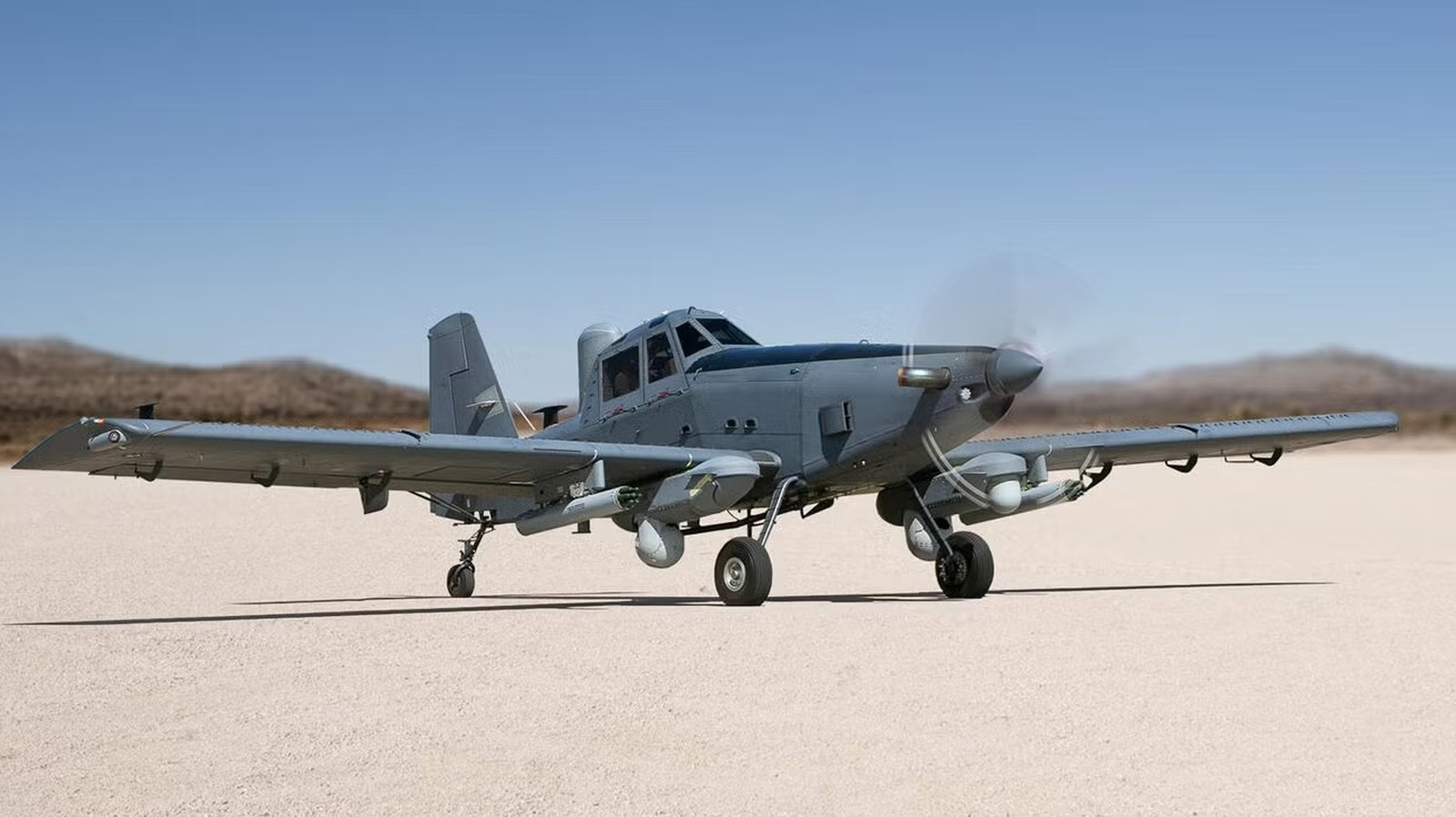
The Air Force surprising everyone by adding prop-driven Skyraider II aircraft to its lineup marks a shift in thinking about combat aviation, and this piece walks through why a slow, piston-driven warplane might matter again, how it fits with modern tactics and tech, what it changes for pilots and maintenance crews, and where it could take future missions.
It is jarring at first to hear the Air Force added propeller aircraft to its modern fleet, but the move is practical, not nostalgic. Prop planes deliver long loiter times and lower operating costs compared with high-end jets, and that matters when missions demand persistence over raw speed. The Skyraider II was chosen because planners want options that are affordable and effective in certain battle spaces.
Think of the Skyraider II as a specialist rather than a headliner. Jets still rule in contested airspace, but slower aircraft excel at close air support, overwatch, and patrol duties where staying on station beats sprinting past a target. That endurance opens new mission sets and reduces wear on more complex platforms that are expensive to fly and maintain.
Modern systems have closed the gap between old-school airframes and new-school sensors. The Skyraider II comes equipped with up-to-date avionics, datalinks, and sensor suites that let it share targeting information with fighters, drones, and ground units. In practice that means a prop plane can spot, hold, and help prosecute targets while feeding situational awareness to faster wings of aircraft.
Cost matters in an era of stretched budgets and high operational tempo. A prop-driven aircraft is cheaper to operate per flight hour and less costly to repair after routine damage. Those economics let commanders use the Skyraider II where they would otherwise commit a multimillion-dollar jet or a swarm of drones, saving high-end assets for the most dangerous environments.
Maintenance and logistics shift with this kind of addition, and that is both a challenge and an opportunity. Prop aircraft are simpler mechanically, which shortens maintenance cycles and reduces dependence on scarce parts for complex turbines. At the same time, crews need new training to integrate its systems with modern networks and to manage mission planning that leverages endurance rather than speed.
Pilots also have to adapt. Flying a mission that prizes loiter time requires a different mindset than a high-speed intercept or strike, and training now emphasizes coordination over solo heroics. The Skyraider II fills a niche where pilots act as airborne extensions of ground teams and drone operators, maintaining a steady eye while other platforms move in for the strike.
There are doctrinal implications too. Distributed operations and contested logistics favor platforms that can operate from austere fields and require less ground support. The Skyraider II’s simplicity makes it a natural fit for contested environments where runway length and maintenance infrastructure are limited. That flexibility lets commanders plan more resilient operations across a wider range of locations.
Equipping the Skyraider II with payloads tailored to its mission keeps it relevant without forcing it into roles it cannot perform. Precision-guided munitions, extended-range sensors, and modular mission pods allow it to shift between surveillance, close air support, and electronic roles. When used within its envelope, the aircraft becomes a force multiplier that complements, rather than competes with, fast movers.
Concerns remain and deserve attention. Survivability in high-threat airspace is limited, and the aircraft depends heavily on escorts, electronic protection, and the broader sensor-to-shooter network. Planners are balancing those vulnerabilities against the clear benefits of endurance, cost, and flexibility while working to harden the concept with tactics and layered defense.
The Skyraider II is not a blockbuster replacement for jets, and it was never meant to be. It is an intentional, pragmatic tool that expands what commanders can do with limited resources and varied mission demands. Expect to see it paired with drones and networked platforms, filling gaps and freeing up high-end assets for the fights where only speed and stealth will do.
