The redistricting fight is tilting clearly in one direction: Republicans have used state maps to build a tangible edge in House races, according to an election analysis that lays out where gains happened, how many seats could shift, and what risks remain for the GOP as midterms approach.
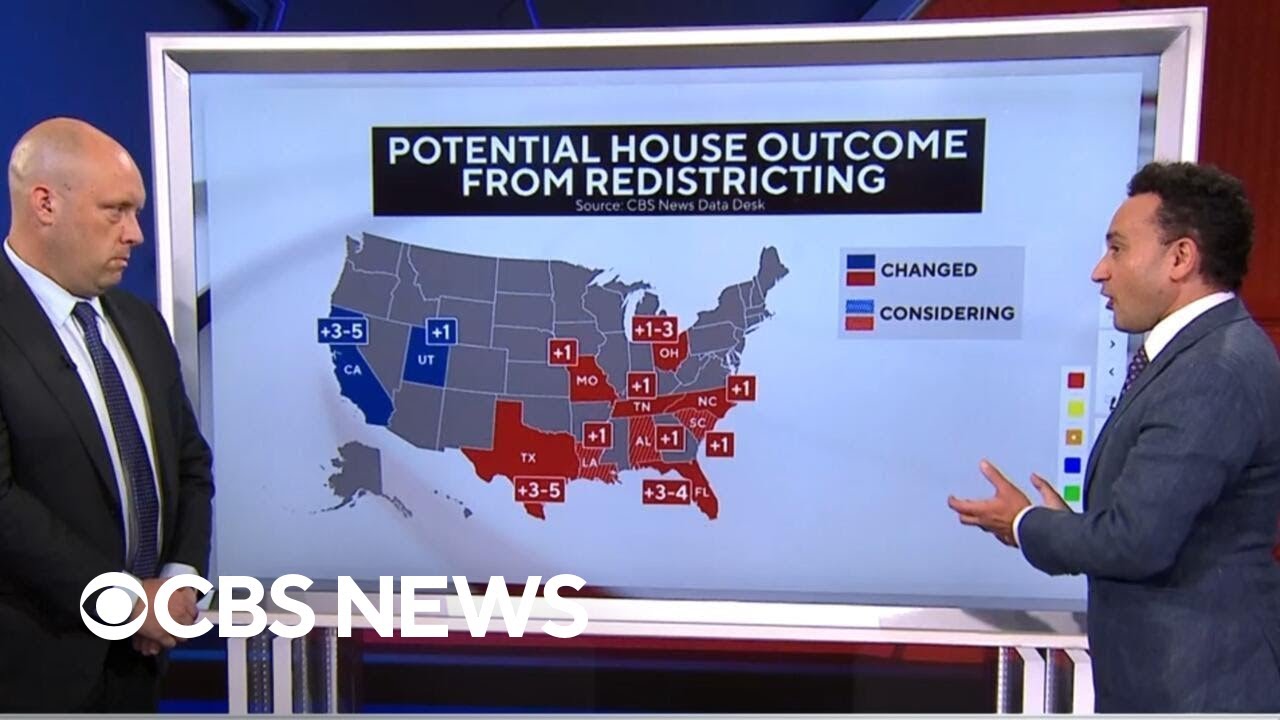
Analysis shows a stack of state plans favoring Republicans, with Texas, Florida, Ohio, North Carolina, Tennessee, and Missouri redrawing lines in ways that hand the party a sizable advantage. Those six states alone are estimated to have produced between 10 and 16 extra Republican seats, a payoff that changes the arithmetic of control in Washington. For voters who care about results, this is not abstract; map lines are now a major part of the battlefield.
On the other side, Democrats have only managed to pick up ground in a couple of places, notably California and Utah, which together might yield between four and six seats. That contrast underscores how much of the country’s redistricting energy flowed toward GOP-controlled legislatures and commissions. The net result is lopsided enough to matter in the fight for 218 seats.
Put another way, the analysis allows for a scenario where Republicans end up with as many as 12 extra seats from the recent redistricting work, while Democrats could only claw back the advantage to four if every favorable factor lined up for them. That spread is why pundits and operatives on both sides are obsessed with precinct-level math and turnout models. When control of the House can flip on single-digit margins, map changes are decisive.
There are also a few unresolved fights that could tip the balance further toward Republicans if they go the GOP way. Alabama, Louisiana, and South Carolina have pending efforts that could add seats for the party if adopted. Meanwhile, the analysts point to only about 16 real toss-up districts nationwide, and an estimate that Republicans sit around 211 to 208 right now before Election Day. Whoever crosses 218 will control the agenda in the House.
“The argument sort of goes back and forth. Is it maybe nine seats? Is it maybe six seats when this all nets out?” Salvanto . Those back-and-forth estimates reflect uncertainty about turnout, legal challenges, and how candidates perform on the ground. Even so, the trendline from the maps themselves favors Republicans, which gives them both leverage and momentum heading into the midterms.
“My best guess … is a Republican gain of seven seats, but there’s a range on that. It could be a little lower, it could be a lot higher than that.” That is Crystal Ball managing editor Kyle Kondik speaking about the likely net effect, and his estimate matches the practical sense that maps have already moved the baseline. The takeaway for Republicans is simple: the structural advantage is real, but results still depend on campaigns and turnout.
Analysts also flagged one potential blind spot for the GOP: turnout among Hispanic voters in Texas. Salvanto noted that Hispanic voters who shifted toward Republicans in 2024 may not turn out in the same numbers for the midterms, which could soften the gains in some districts. That variability is the kind of thing Democrats will bank on when they aim to shrink the map advantage through targeted mobilization and messaging.
CBS Midterm/Redistricting Update
🔴 TX: +3-5
🔴 FL: +3-5
🔴 OH: +1-3
🔴 NC: +1
🔴 TN: +1
🔴 MO: +1
—
🔵 CA: +3-5
🔵 UT: +1Total Passed:
🔴 Republicans: +10-16
🔵 Democrats: +4-6Pending:
🔴 LA: +1
🔴 AL: +1
🔴 SC: +1House Forecast:
🔴 GOP: 211
🔵 Dem: 208
🟡 Tossup: 16 pic.twitter.com/ruf6nqfgfl— OSZ (@OpenSourceZone) May 20, 2026
“Just because you change a map to benefit yourself, it’s not necessarily gonna do that,” Kondik added. “I would specifically look at the Republican redraws because 2026 is gonna stress test those maps in a way that they won’t necessarily be tested for Democrats because this is probably gonna be a Democratic-leaning year.” That warning matters: maps give a head start, but future waves and demographic shifts can expose vulnerabilities. For Republicans, the maps are a win now and a test later, and the party will have to defend both the lines and turnout to keep their edge.