
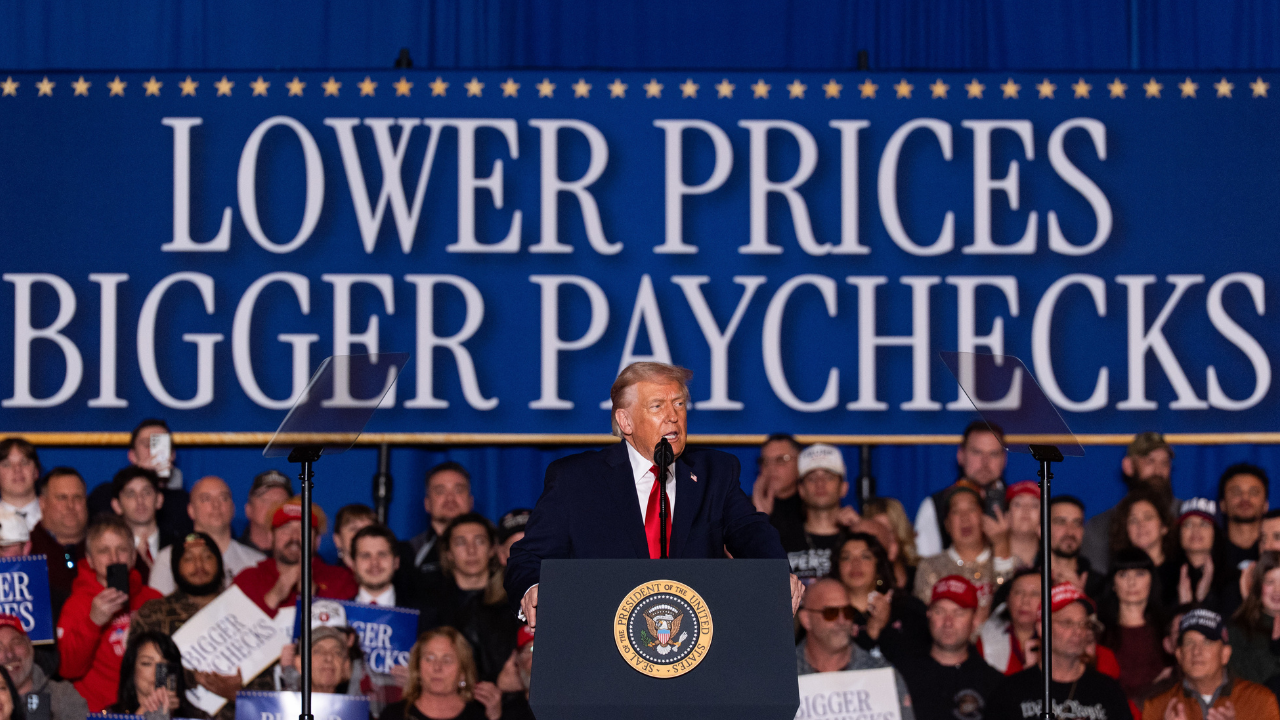
The House speaker stepped in fast to steady the boat after the president’s remark about priorities sparked a feeding frenzy, and Republicans are making the case that context matters more than a clipped sound bite. This piece looks at the gaffe, the quick rescue from the GOP, the media reaction, and why conservatives insist protecting the country from Iran’s nuclear ambitions can sit alongside attention to the economy.
It was one of those moments that animates late-night hosts and headline chasers. When a reporter asked whether the president’s diplomacy with Iran was driven by “Americans’ financial situations,” the answer that followed was short and plain: “Not even a little bit,” followed by a fuller line that stressed a single priority. “The only thing that matters when I’m talking about Iran — they can’t have a nuclear weapon. I don’t think about Americans’ financial situation. I don’t think about anybody. I think about one thing — we cannot let Iran have a nuclear weapon. That’s all.”
Predictably, the reaction was immediate and loud, and Democrats treated it like a gift. Republicans moved quicker. The speaker started his defense with the exact phrase “I don’t know the context in which he made that comment–” and then laid out a different view: that the president talks about household pocketbooks regularly and that foreign policy goals can actually help Americans at the pump.
Mike Johnson didn’t just offer spin. He said plainly, “I can tell you the president thinks about Americans’ financial situations. I talk to him on average twice a day, sometimes three or four times a day, and we talk about it constantly. He is laser-focused on trying to resolve the conflict in Iran. Because if we get the Strait of Hormuz reopened, that will alleviate pressure on gas prices and other things in the economy.” That line reframes the debate: stopping Iran’s march to a bomb has direct economic consequences.
The scene had a sitcom moment — “Cleanup on Aisle 3!” — and the press went for the sound bite, not the context. That matters because politics is theater and timing, but voters notice nuance too. Republicans argue that protecting the flow of global commerce through the Gulf is not abstract policy talk; it’s a practical step that can relieve pressure on prices at the pump and in grocery aisles.
There’s a precedent for this kind of tidy political reassurance. After the Gulf War, George H.W. Bush famously used a similar line when critics accused him of being too buttoned-up: “Message–I care.” The point then, and now, was to remind people that leaders can focus on big threats while still recognizing the everyday economic struggles of Americans.
Critics will keep pointing to grocery bills and sticker shock at the pump, and Republicans shouldn’t pretend economics can be solved by presidential will alone. Inflation has eased from its peak, with recent readings showing annual rates well below last year’s highs, a fact GOP strategists use to underline progress even as they press for lower costs and smarter policy.
Unexpected voices weighed in as well. A Democratic senator offered a defense rooted in national security, noting that the remark looked bad out of context but that the larger point was concern about Iran’s nuclear ambitions. “I mean, he said something that got clipped, saying, ‘I’m not thinking about American people financially.’ But what he really was saying, what he did say is like, ‘I am really thinking that we can’t ever let Iran building a bomb’.’”
Republicans acknowledge the comment was clumsy, but they also see the rescue effort as proof of party discipline and a sane response to media exaggeration. The party is pushing the narrative that defending America’s security and fighting for lower costs at home are not mutually exclusive, and that clarity matters more than a few seconds of sound-bite fodder.
No one seriously claims a president can instantly fix inflation. Even with a sympathetic Federal Reserve appointment in place, the levers of monetary policy move slowly. For now the debate will keep circling around priorities, optics, and which party better convinces voters it cares about both security and the family budget. Republicans insist the record and the context favor their case, even if the cable shows have a different script.
