
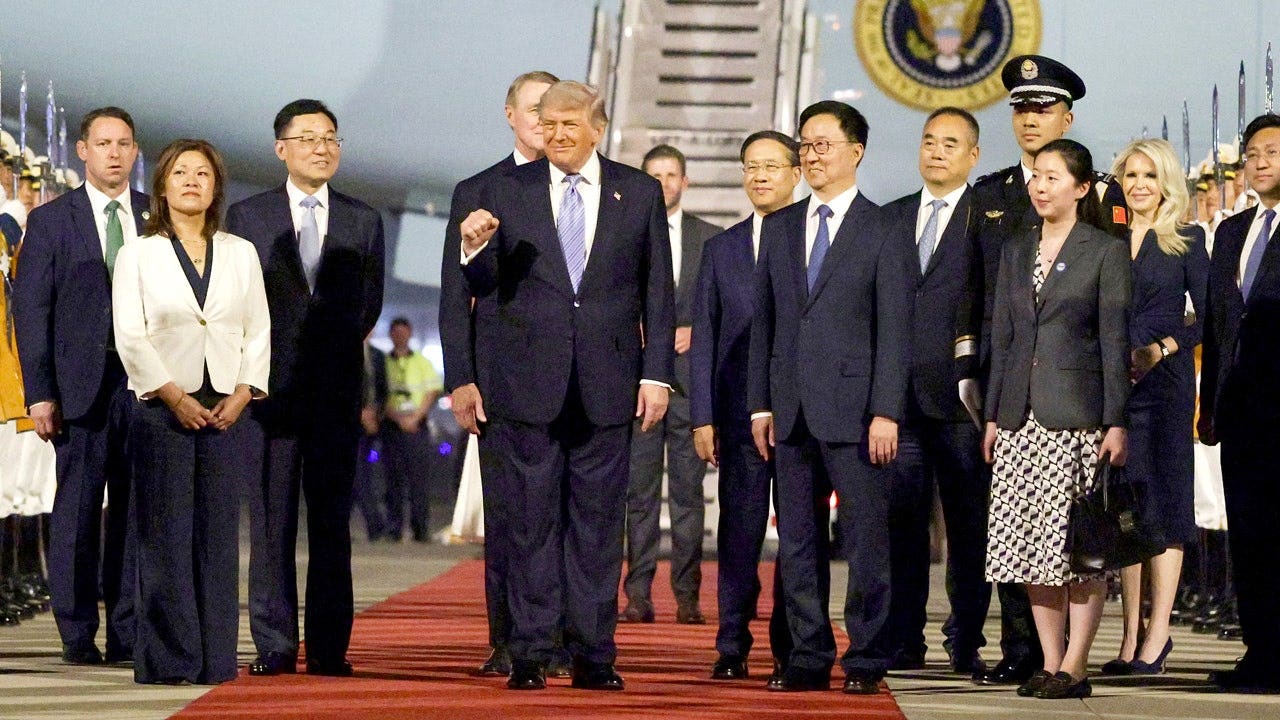
This piece lays out why the upcoming Trump-Xi meeting matters far beyond tariffs, how Beijing has woven AI and digital control into national power, the risks to Taiwan and semiconductors, the role of Iran and energy leverage, and what a clear American response should look like.
When Xi Jinping talks about artificial intelligence as “the front line and main battlefield of international competition,” he means it. That is not rhetoric; it is policy shaping Beijing’s economic, military and technological moves. Washington needs to treat those words as strategy, not hyperbole.
China has explicitly tied computing power, industrial policy, surveillance systems and military modernization into a single national project. That fusion turns chips and code into instruments of state influence, not just commerce. For Republicans, the implication is simple: we must defend American advantage where it matters most.
State-backed theft and illicit talent strategies are already real and costly. U.S. officials have accused Chinese labs of using massive fake-account campaigns to extract capabilities from American AI systems, and private research shows huge volumes of fraudulent interactions aimed at cloning advanced models. If true, that accelerates Beijing’s capacity to field cheaper versions and export them around the globe.
Exporting technology is also exporting values. China’s surveillance platforms and “Safe City” approaches come packaged with assumptions about censorship and centralized control. Nations that adopt these systems often inherit technical standards and data ecosystems that favor authoritarian governance, not individual liberty.
Taiwan sits at the center of this contest for reasons beyond sentiment. The island makes more than 90 percent of the world’s most advanced semiconductors, and access to that production is a strategic lifeline for American defense, communications and high-performance computing. Weakening our stance on Taiwan in exchange for short-term diplomatic gains would be a strategic error.
The Iran conflict and the Strait of Hormuz crisis only deepen Beijing’s leverage. China’s resilience to energy shocks has sharpened Xi’s bargaining power, and Trump must not trade lasting American security for temporary assurances. Any deal that leaves Tehran intact while strengthening China’s regional influence would be a raw deal for U.S. interests.
Diplomatic channels and crisis guardrails for autonomous systems make sense because neither superpower benefits from uncontrolled escalation. Still, stability without strength rarely endures. America should pursue reliable communication to avoid accidents, while preserving the clear capability and will to defend its interests.
Allies are watching how the United States responds to these pressures. Tokyo, Seoul, Canberra, London and others care about whether Washington defends the rules and institutions that underpin free markets and collective security. Our credibility is not a bargaining chip; it is the foundation of deterrence and partnership.
Policy must combine hard defenses with smart economics. That means safeguarding chip production, tightening protections for sensitive AI research, and countering the global spread of authoritarian digital infrastructure. It also means offering allies resilient alternatives so they are not forced into dependence on Beijing’s ecosystem.
Leadership here will be judged by clarity and resolve, not sermons or uncertainty. America needs strategy that protects critical technologies, supports partners like Taiwan, resists predatory economic practices, and uses diplomacy only from a position of strength. The choices made in Beijing will shape the balance of power for a generation, and we should enter those talks with eyes open and a firm hand.
