
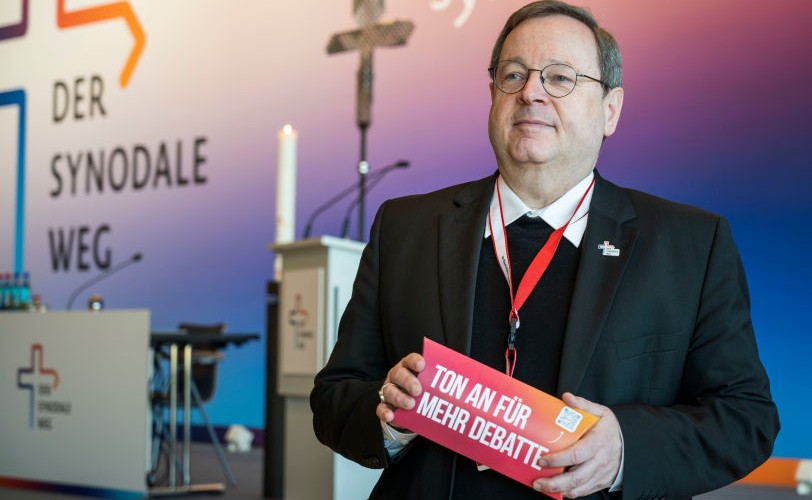
Bishop Georg Bätzing has named a woman to a post described as the equivalent of a vicar general in his diocese, a move that touches on long-standing questions about who can exercise formal authority in the Catholic Church. The appointment has sparked debate because Church law and traditional practice assign formal hierarchical authority to ordained men. This story looks at what the appointment means, the reactions it provoked, and why the issue matters for how authority is understood and exercised within the institution.
The announcement came from the diocesan offices and was presented as a step to broaden administrative leadership at the local level. In practice, a vicar general normally acts with the bishop’s ordinary power and is typically a priest with delegated jurisdiction. By calling this role an equivalent rather than giving the formal title, the bishop signaled an intent to expand who can carry out leadership tasks while navigating the boundaries of canonical norms.
Canon law and longstanding Church custom reserve certain juridical acts and offices to ordained ministers, which is why the news raised eyebrows among canonists and lay faithful alike. Many canon lawyers point out that while lay people can perform many important administrative functions, the exercise of formal, hierarchical governance has been tied to ordination. That distinction lies at the heart of the discussion, because language like equivalent or acting in an advisory capacity can mask real shifts in practice.
Supporters of the appointment argue this is a practical response to pastoral needs and the modern reality of diocesan management. Parishes and diocesan institutions increasingly rely on professionals with management skills, and women make up a large portion of that talent pool. Diocesan leaders who back the move say it allows the church to use those gifts more visibly without attempting to alter sacramental or doctrinal commitments.
Critics, however, view the step as sidestepping the spirit of the Church’s legal framework even if it does not directly change sacramental roles. For them, the worry is not only legalistic but theological, because leadership and authority in Catholic ecclesiology are tied to the priesthood in a way that shapes how decisions are made and responsibilities are assigned. That concern drives calls for clearer boundaries so administrative innovation does not blur core teachings about ministry and governance.
The episode also illustrates the tension between diocesan autonomy and universal norms set by Vatican law. Bishops have a degree of discretion in organizing their local churches, yet they operate within a legal and doctrinal fabric meant to maintain unity across the global Church. When a local experiment touches on areas linked to hierarchical authority, it raises questions about whether broader clarification or intervention from higher ecclesiastical authorities will follow.
Public reaction has come from multiple directions: clergy, lay leaders, canonists, and ordinary parishioners, each viewing the move through different lenses of pastoral need, legal fidelity, or doctrinal consistency. That variety of perspectives reflects how changes in church governance do more than shuffle titles; they shape daily pastoral life, decision making, and who is seen as a visible representative of diocesan leadership. The conversation is unfolding in parishes, on diocesan communications, and in written commentaries by legal and theological experts.
Whatever comes next, the appointment has reopened a debate about roles, authority, and the practical demands of running a modern diocese. Some will press for clearer canonical definitions to prevent ambiguity, while others will advocate for flexible leadership structures that reflect current pastoral realities. The situation is a reminder that questions about authority are not merely administrative; they touch on identity, theology, and how the Church adapts to changing circumstances without losing what many see as essential to its nature.
