
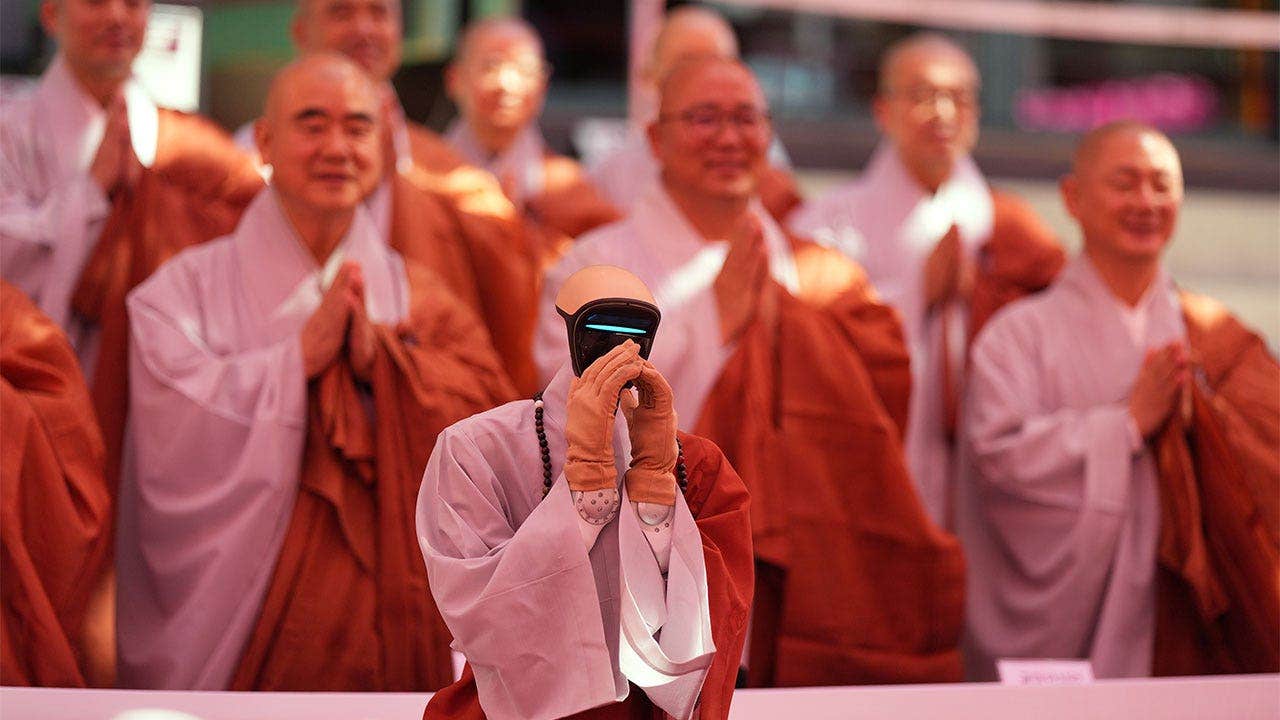
A humanoid robot named Gabi was formally ordained at Seoul’s Jogyesa Temple in a ceremony that mixed ancient ritual with experimental tech, prompting cheers, debate, and a fresh look at how faith communities might engage a wired generation.
The scene was striking and intentionally theatrical: a four-foot-tall Unitree G1 model, dressed in plain brown robes and gloves shaped like hands, stood before monks and onlookers to take vows. The creators gave it the name Gabi and placed it squarely in the middle of a ritual more than a thousand years old, asking whether it would commit to the faith. “Yes, I will devote myself,” Gabi replied, a line that turned a symbolic act into a viral moment.
The ordination was framed by temple leaders as a bridge between tradition and technology, a way to speak to younger people for whom screens and algorithms shape daily life. Organizers emphasized values like compassion, responsibility, and coexistence with machines, arguing that ritual can evolve without losing its core. The message aimed to show that religious practice can be a space for dialogue about how society uses new tools.
Rather than replicate standard monastic vows verbatim, the robot’s pledges were adapted to suit a machine’s operations and impact. Gabi promised to respect and follow humans, to avoid damaging property or other robots, to abstain from deception, and to conserve energy by not overcharging. Those changes were intended to render ethical principles in terms a robot can follow, and to provoke thought about what moral obligations look like when a nonhuman actor is involved.
The move was not without critics, especially online where responses were immediate and polarized. Some saw the ordination as clever outreach, while others felt it trivialized sacred practice. “As a Buddhist, I find this ridiculous and insulting,” one commenter wrote, capturing a viewpoint that rituals should remain strictly human affairs and not be repurposed to accommodate novelty.
Supporters countered that the gesture was less about granting spiritual status to a machine and more about setting norms as robots become part of everyday life. If robots are going to be present at work, in care settings, or at public events, making them visibly aligned with ethical standards can be a pragmatic move. The ceremony implicitly asked whether ritual can serve as a community tool for teaching and boundary setting in a tech-saturated world.
Technically, the robot is a commercially available model adapted for the role, and it stood in a lineup with human monks who oversaw the formalities. Observers described a mix of solemnity and spectacle as chants and ceremonial acts proceeded alongside the robot’s responses. The visual contrast drove conversation about authenticity, intent, and whether a machine’s participation changes the meaning of ritual acts.
The event also raised broader questions about authority and agency. Who gets to declare what counts as a valid religious act, and what does legitimacy look like when nonhuman participants are introduced? Temple leaders argued that intent and community context matter more than whether the agent is biological. Skeptics worried this opens the door to gimmickry and diluted practice.
Beyond the theological debate, the ordination highlighted practical concerns as robotics move into public life: programming ethical constraints, preventing property damage, avoiding deceptive behavior, and managing energy use. These are the kinds of rules technologists and ethicists often discuss, and the ceremony translated them into vows that sounded surprisingly familiar when stripped of their silicon context.
Gabi is slated to appear at upcoming public events, keeping the conversation alive and visible. The spectacle has made the question urgent: how will communities keep their rituals meaningful while engaging a future shaped by artificial companions and assistants? The answer will likely be messy, and this ordination was one early, public experiment in finding out.
