
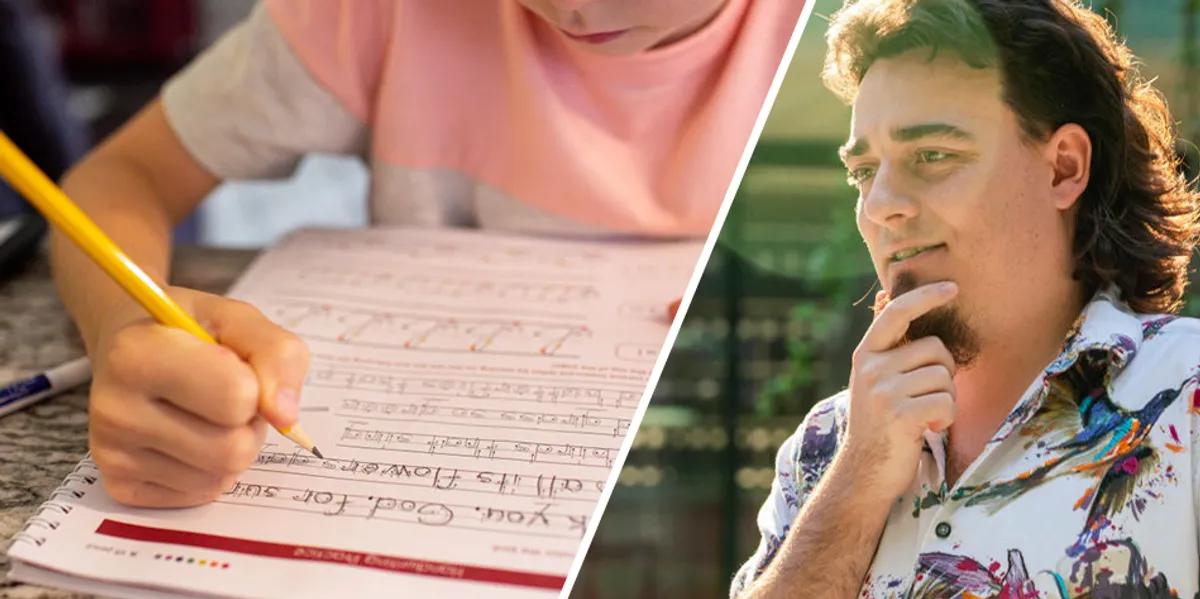
Palmer Luckey pushed back hard this week against fresh calls for stricter homeschooling oversight, arguing critics want rules they rarely demand of public schools; he warned that heavy-handed evaluations could destroy the flexibility that lets many homeschooled kids thrive. The debate surfaced after a high-profile writer urged testing and checks for families who claim superior outcomes, and a growing pile of research suggests homeschooled students often match or exceed peers on key measures. Luckey framed the controversy as a clash between tailored family education and centralized systems that favor uniform solutions over individual needs.
Writer Jill Filipovic set the tone for renewed scrutiny when she wrote, “If homeschooling is actually super high quality, then homeschooling families should not object to being evaluated, tested, and checked-in-on to make sure their kids are actually learning,” Filipovic viewed more than one million times. That argument is straightforward: if you claim better results, submit to verification. But the simplicity of the demand hides a deeper question about what testing and monitoring would look like in practice.
Luckey called out the implied bargain and then pushed the conversation toward the real trade-offs involved. ‘Ask them what the consequences should be for homeschooling parents who fail to educate children.’ That line forces people to pick a mechanism—fines, removal, forced placement—and to admit what centralized enforcement would mean for home classrooms.
He also warned that mandated evaluations would strip homeschooling of its primary strength: agility and customization. “The evaluation/testing you are talking about would almost certainly prohibit that sort of tailored education,” Luckey wrote, “especially since they would be designed and administered by a system that wants to eliminate homeschooling in almost all cases.” Those words underline a practical fear: standardized oversight often prescribes a one-size-fits-all curriculum that defeats the point of personalized learning.
Evidence cited in the public discussion gives weight to at least part of Luckey’s position. A 2022 analysis of the Classic Learning Test reported homeschool students outscored peers by margins between three and 12.1 points across several categories, including verbal and writing sections. Critics argue test selection can skew results, but the consistency of multiple studies makes the trend harder to dismiss.
Other research paints a complex picture beyond raw test scores. A 2025 Cardus report found 45 percent of short-term homeschoolers earned at least a bachelor’s degree, roughly in line with non-homeschooled peers, and it also recorded higher rates of marriage, parenthood, volunteering, and reported optimism among homeschool alumni. Those social outcomes matter to parents weighing educational models, and they complicate simple assumptions that public schools are always superior in preparing young people for adult life.
Meta-reviews add another angle: a 2026 overview of peer-reviewed studies concluded that 62 percent of investigations over thirty years found homeschool students outperformed peers in at least some measures. That doesn’t settle every question, but it suggests homeschooling is not uniformly inferior and in many cases delivers measurable academic benefits.
One frequent retort to the homeschooling defense is that schools are social crucibles where children learn to navigate a diverse world. Luckey didn’t ignore this point; he directly challenged the notion that school environments automatically prepare kids for real life. Luckey also the argument that public schools better prepare children for real-world socialization, framing current classrooms as out of step with how most adults live and work.
He was blunt about the cost of a broken system. “We are putting the vast majority of our children into madhouses that no longer have anything to do with how society works or what they will experience in said society,” he wrote. That kind of rhetoric pushes the debate from technical policy toward values: what kind of schooling best equips citizens for the future we expect our children to face?
Mainstream outlets continue to press for oversight even as enrollment figures climb and homeschooling gains wider reach. Reports since 2024 estimated roughly 1.9 to 2.7 million American children being homeschooled, a jump critics link to pandemic disruptions and parental dissatisfaction. The growth raises genuine governance questions about child welfare, educational standards, and how to monitor outcomes without crushing innovation.
The trend isn’t limited to the United States; England saw homeschooling numbers rise notably in recent years, with many observers pointing to pandemic-era shifts in parental habits. That rise has prompted calls for new oversight there as well, driven by the same mix of concern for child safety and anxiety about educational consistency. The international dimension shows the debate is not just local but part of a broader reassessment of how societies educate the next generation.
What ties these threads together is a recurring charge of double standards: critics demand accountability from families while often excusing institutional blind spots inside public systems. Luckey and others argue that if accountability is the goal, it should apply evenly and transparently, not instrumentally to one sector while leaving another untouched. That challenge forces advocates and regulators to define their objective more precisely.
The clash over homeschooling oversight is really about competing priorities—child protection, educational outcomes, family autonomy, and system stability. Tough questions remain about how to balance those priorities without trading one problem for another, and the debate shows no sign of cooling. The real test will be whether policy makers and citizens can design approaches that respect families while ensuring all children have access to meaningful learning.
