
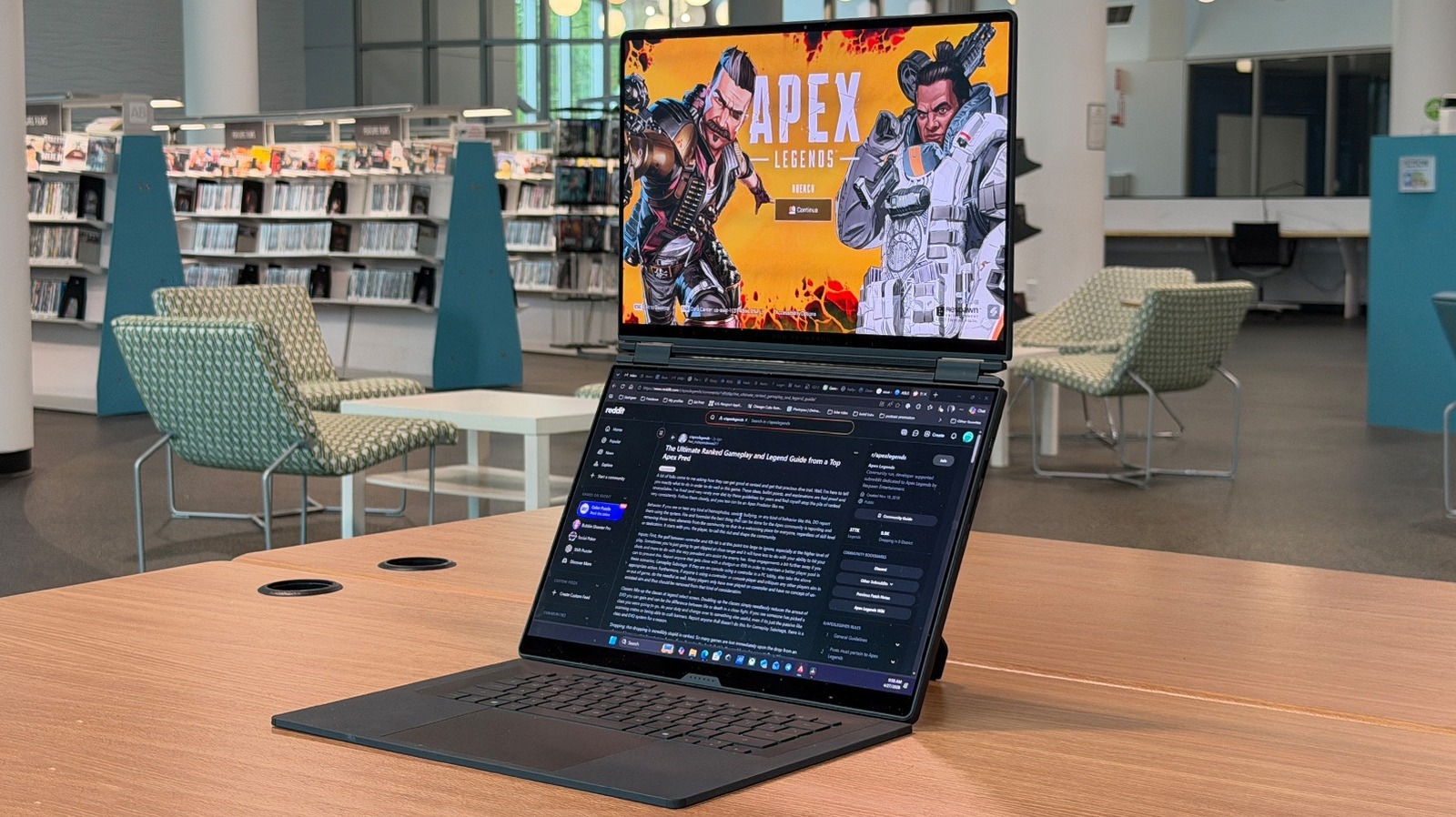
The new Asus ROG Zephyrus Duo pushes the laptop idea into loud, unapologetic territory: a dual-display powerhouse that pairs a main screen with a full secondary display, packs serious performance under the hood, and adds a built-in kickstand to lift the experience off the desk. This piece walks through how that design changes workflow, what you trade for the thrills, and who actually benefits from carrying a machine like this around.
From the moment you open it, the Duo feels like a statement. The second screen sits above the keyboard and tilts up to face you, turning what would normally be a wrist-rest into a productive canvas that almost competes with the primary panel. That hinge and kickstand combo makes the secondary display usable for real tasks instead of just being a gimmick tucked away at an awkward angle.
Display real estate is the obvious headline: two full screens mean you can keep tools, chat windows, or monitoring software visible while the main display handles the heavy lifting. Creators will love having a timeline or palettes available at a glance, and gamers can stash overlays or performance stats up top without pausing the action. The layout changes how you think about window management, and that can speed up workflows when the software supports it.
Under the skin, Asus aims this at people who need desktop-level performance in a portable package. The internals are focused on high core counts and powerful graphics, so rendering, encoding, and modern games run without wincing. That level of power also means you feel the trade-offs: weight, battery strain, and heat become part of the daily experience rather than distant concerns.
Thermals are a key piece of the puzzle, and the Duo’s design tries to be clever about airflow by raising the secondary display and creating more room for vents. That improves cooling but doesn’t eliminate the fundamental problem — squeezing high-performance components into a slim laptop always forces compromises. Expect fans to spool up during heavy workloads and the chassis to get warm in places you might touch when juggling long sessions.
Port selection and expandability are pragmatic rather than flashy. You get enough physical connections to plug in external drives, monitors, and peripherals, which keeps this useful as a desktop substitute when you’re at a desk. Upgradability tends to be limited in modern gaming laptops, so check memory and storage options up front if you care about long-term flexibility.
Battery life will not be the star of the show, and the Duo is honest about that: when you push the CPU and GPU, the runtime drops quickly. For short bursts away from an outlet it’s fine, but this is a laptop built to be plugged in for demanding tasks. If your day runs on meetings and light browsing, you’ll probably prefer something lighter and longer-lived.
The keyboard and trackpad live below the secondary display, which takes some getting used to but doesn’t break the experience. Typing feel stays solid, and the extra screen turns the palm rest into a second workspace that can hold shortcuts or preview windows. It’s an adjustment, but once you adapt the arrangement can be genuinely productive for multitaskers and creators.
Who should consider the ROG Zephyrus Duo? If you need desktop-caliber power and a unique multi-screen setup in a single laptop, this machine makes a compelling case despite its compromises. If you value lightweight portability and all-day battery life more than raw performance and screen space, look elsewhere. For people who live on heavy creative work or want a mobile gaming rig that behaves like a desktop when plugged in, the Duo is worth a serious look.
