
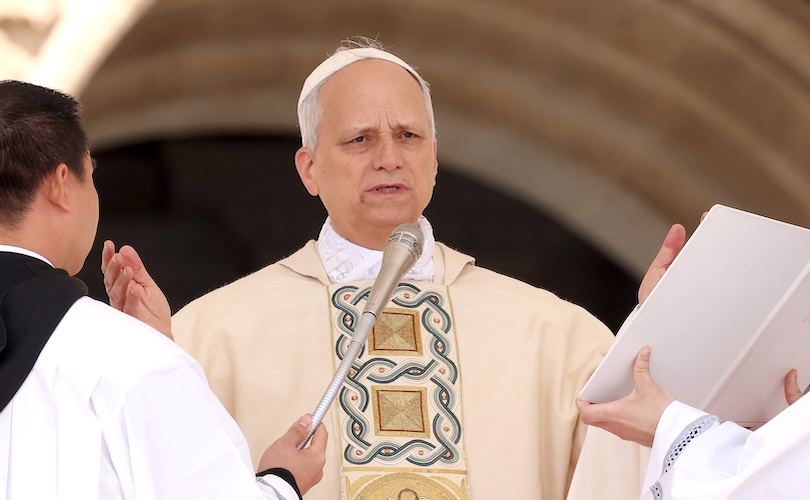
Pope Leo XIV has reiterated the approach set out in Fiducia Supplicans, endorsing informal pastoral gestures for couples in same-sex relationships while rejecting the idea of official or liturgical blessings for those unions. His stance distances the papacy from proposals to formalize blessings, clarifying that pastoral sensitivity does not equal liturgical sanction. The decision renews debate within the Church over pastoral accompaniment and doctrinal boundaries.
The Pope’s message leans on a careful distinction between pastoral care and ritual endorsement. By affirming informal gestures of blessing, he signals compassion without changing the Church’s teaching on marriage. That balance aims to address pastoral realities without redrawing doctrinal lines.
Cardinal Marx and other German prelates had proposed a formal blessing rite for same-sex couples, arguing pastoral needs required a clear liturgical response. Pope Leo’s reply pushed back on that route, saying a ritualized blessing would imply a doctrinal shift the Church is not prepared to make. The response makes clear that pastoral flexibility has limits when it intersects with sacramental theology.
Supporters of the Pope’s position say it preserves unity by offering room for pastoral accompaniment without causing doctrinal fractures. Critics argue informal gestures are ambiguous and can still be read as a form of recognition. The tension highlights how language and ritual shape perception inside and outside the community.
Practically speaking, informal blessings are meant to be private, pastoral encounters rather than public liturgical acts. Priests are encouraged to accompany people respectfully, listen deeply, and offer spiritual guidance without presiding over formal rites that resemble sacramental marriage. That pastoral stance aims to honor human dignity while maintaining theological boundaries.
The debate also exposes deeper differences about how the Church reads culture and responds to shifting social norms. Some bishops favor pastoral adaptability to keep people engaged; others worry that adapting rites risks confusing the faithful about what the Church teaches. Pope Leo’s position attempts to thread the needle by permitting pastoral care but resisting ceremonial change.
For clergy, the ruling clarifies what is and is not permissible in public worship. Homily language, counseling practices, and parish initiatives must reflect the distinction between accompaniment and liturgical blessing. That allows priests to offer mercy while avoiding actions that could be interpreted as formal approval of same-sex unions.
Laity on all sides are reacting strongly, with some praising a pastoral approach that avoids harshness and others mourning what they see as a missed opportunity for inclusion. The pastoral encouragement toward informal gestures may calm some tensions but will not erase deeply held convictions. The outcome will depend on how bishops and parish priests interpret and implement the Pope’s guidance.
Theologically, the decision reinforces the Church’s long-standing sacramental theology regarding marriage as a union between a man and a woman. At the same time, it acknowledges real pastoral challenges faced by clergy ministering to people in complex life situations. That dual focus on doctrine and mercy is familiar territory for contemporary Church leaders.
Internationally, the Pope’s stance will influence conversations in dioceses wrestling with similar questions. National episcopal conferences will likely issue clarifying guidelines so local pastors know how to act. How those guidelines are framed will determine whether the Pope’s equilibrium between care and doctrine holds or gradually tips one way or the other.
Ultimately, the move is an attempt to model a pastoral middle path: care without liturgical recognition. It invites ongoing conversation among bishops, priests, and the laity about how best to live out pastoral charity and doctrinal fidelity together. The coming months will show whether this approach stabilizes tensions or becomes a new flashpoint in Church life.
